Picking the best solar inverter for home use in India starts with one question most buyers skip entirely: what size is my system actually meant to be? Overspec the inverter and you allocate capacity that may never be used, while your panels sit idle on anything but the brightest summer afternoons. Underspec it and your panels will be clipped at peak generation, your appliances will trip through surges, and your system may repeatedly trip or suffer premature component stress the first time a geyser and an AC start together. Inverter sizing is the single decision that governs whether your rooftop solar performs reliably from the first year or runs into problems from day one. This guide walks through the sizing logic in detail and then recommends specific inverter models for the three capacity bands that cover almost every Indian home: 3 kW, 5 kW, and 10 kW.
How to size a solar inverter for your home
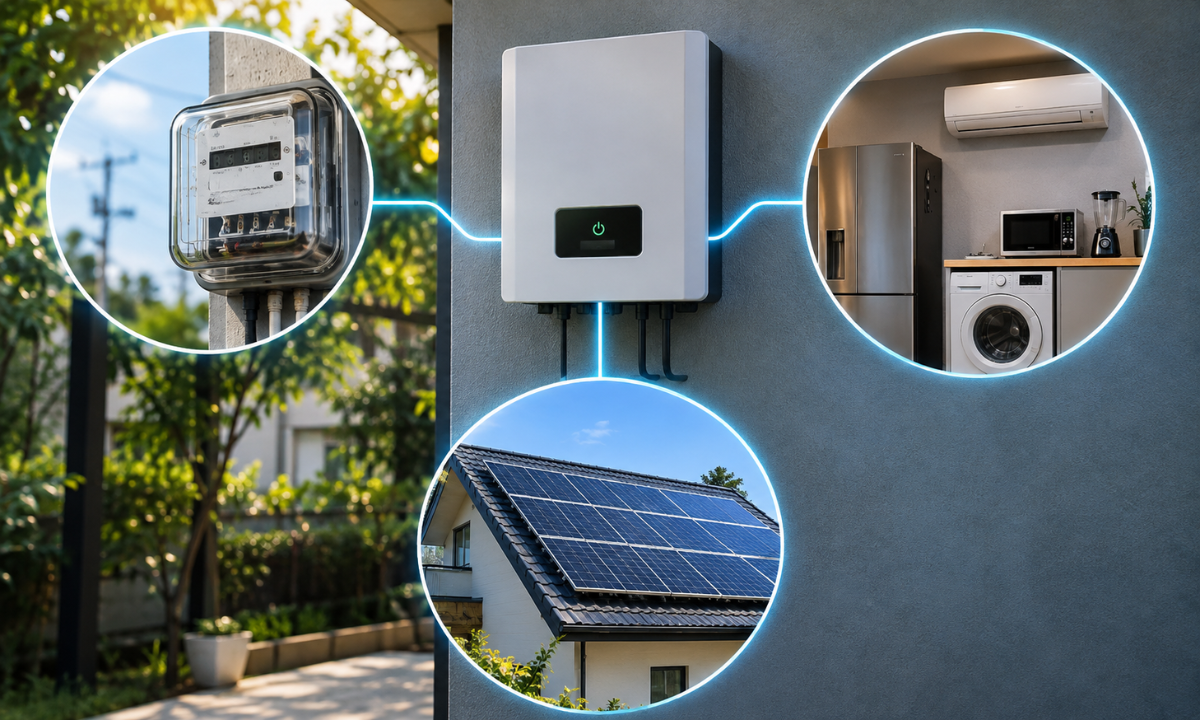
Inverter sizing is driven by three inputs: your monthly electricity consumption in units, the maximum simultaneous load that must run during an outage, and the available clean roof area for panels. A reasonable starting point for most Indian homes is to install a solar array that covers between 80 and 110 percent of monthly consumption, then match the inverter to the array within a 10 percent tolerance either way.
The second input, simultaneous load, is where many homeowners miscalculate. You do not size an inverter against your monthly units alone. You size it against the worst-case moment of your day, when the fridge compressor kicks in, the geyser is heating, the AC compressor is starting, and the kitchen mixer is running. A 5 kW inverter can comfortably sustain 5 kW continuous output, but the surge draw from a 1.5-ton AC compressor starting cold can briefly touch 8 to 10 kW. This is why surge rating matters as much as continuous rating.
The third input, roof area, sets the upper ceiling. Indian rooftop solar needs roughly 80 to 100 square feet of unshaded roof per kilowatt of panels, depending on panel technology. For a step-by-step walkthrough of load estimation including an appliance-wise worksheet, our guide on how to buy the right inverter size for the home covers the maths in full.
Why inverter sizing differs from panel sizing
A solar inverter is sized by continuous AC output in kW, while the panel array is sized by DC peak capacity in kWp. The two rarely line up exactly. Most installers oversize the array against the inverter by 10 to 20 percent, because panels seldom deliver rated output together under Indian conditions due to dust accumulation, high ambient temperatures that derate panel output, cable losses, inverter conversion losses, and shading patterns that shift through the day.
A DC-AC ratio between approximately 1.1 and 1.25 is common for Indian rooftops, but the ideal range depends on irradiance, shading, orientation, and the inverter’s thermal derating behaviour. What you must avoid is an inverter that is smaller than the largest surge load in your home, because surge handling is tied directly to continuous rating. For a deeper look at how roof area and array capacity interact, see our guide on how much roof space is required for a 10 kW solar system.
Features that matter at every capacity
Before getting into model recommendations by size, the following features are non-negotiable for any home inverter in India regardless of kW rating:
- Number of MPPTs. Two MPPTs allow panels on different roof orientations or shaded sections to generate independently without dragging each other down.
- Surge rating. Check the manufacturer’s surge and short-duration overload specification, and ensure adequate headroom for compressor and pump starting loads.
- Input voltage window. Indian grid voltage swings widely, especially in semi-urban areas. A wide input window prevents nuisance trips.
- Transfer time. For hybrid units, under 20 milliseconds is standard for critical loads like routers and medical equipment.
- Battery compatibility. For hybrid units, lithium-ion support at 48V nominal and an approved pairing list that covers reputable packs.
- Monitoring. A cloud-connected app that works beyond the first year and gives generation, consumption, and battery data in near real time.
- After-sales reach. The presence of authorised service engineers in your city matters more than any brochure figure.
For a longer breakdown of the subtle factors that quietly determine how much a home inverter actually generates in the field, our guide on five hidden factors that affect solar inverter efficiency goes deeper.
Best 3 kW solar inverter for home in India
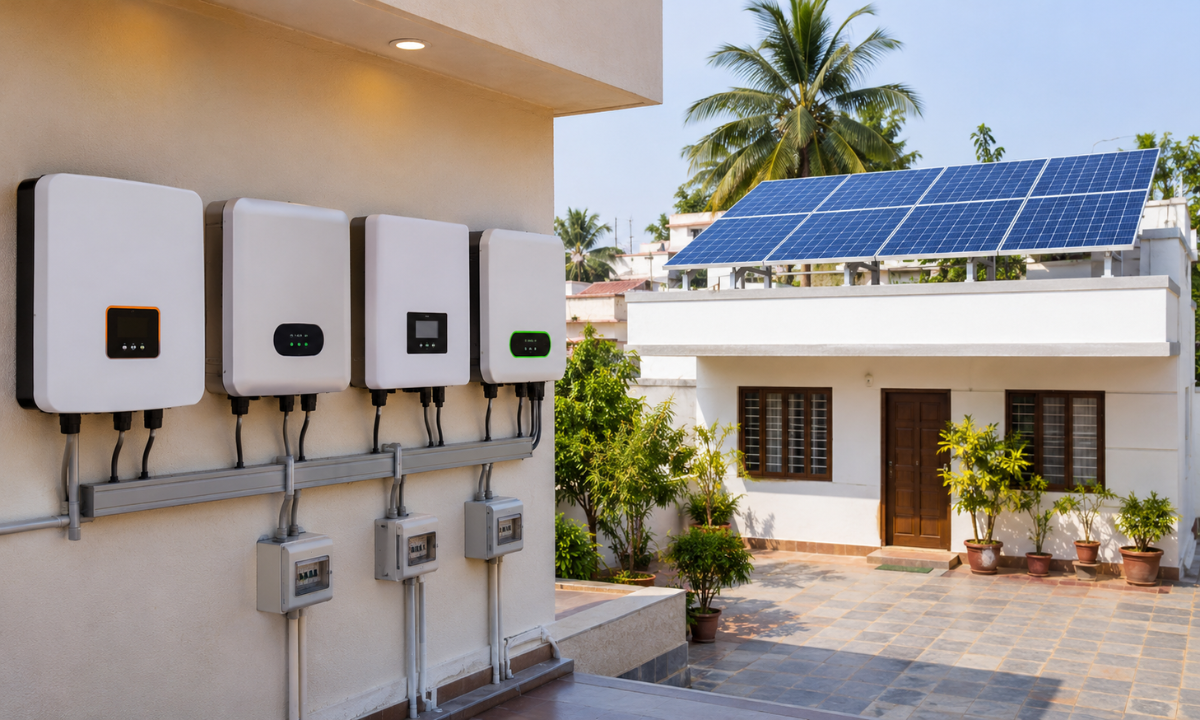
A 3 kW system is the right size for a 1 BHK or compact 2 BHK home with a modest appliance load: lights, fans, fridge, TV, mixer, one small AC, and a geyser used outside peak solar hours. Monthly generation under Indian irradiance sits between 360 and 420 units for most cities, enough to offset a substantial share of a small household’s daytime consumption when load is matched well to generation.
A 3 kW array needs roughly 240 to 300 square feet of unshaded roof. A single-phase inverter is usually appropriate at this capacity, since most sanctioned connections at this load are single-phase anyway.
Suitable inverter options:
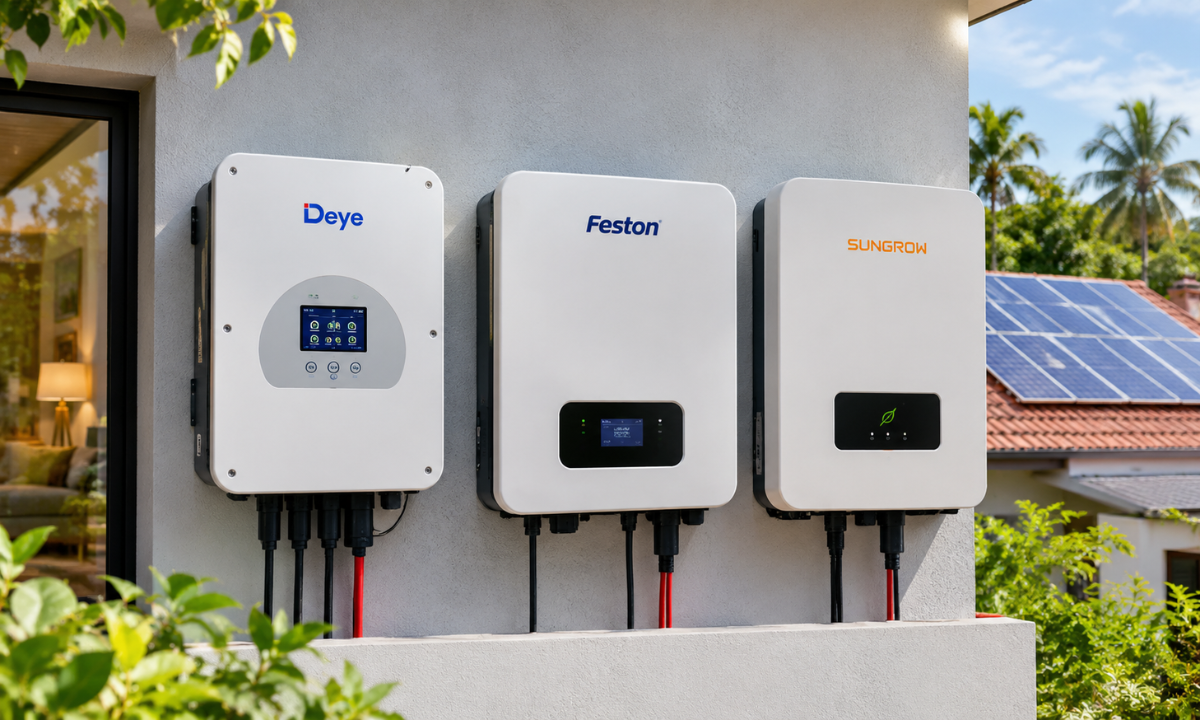
- Feston 3 kW single-phase hybrid or on-grid. Wide input voltage tolerance handles tier-two and rural grid conditions well, and the surge rating comfortably supports a 1-ton AC along with essential loads.
- Deye SUN-3K-SG04LP1 hybrid. Lithium-ready, strong MPPT performance, and genuinely useful monitoring through the Solarman app.
- Sungrow SG3.0RS on-grid. A refined on-grid option for homes with stable grid supply and no backup requirement.
When a 3 kW system does not fit: homes with two or more ACs running simultaneously, electric cooking appliances like induction hobs used daily, or EV charging. In those cases, step up to 5 kW. For a detailed look at what a 3 kW system actually powers in an Indian home, read our guide on how much solar power you really need for a 3 BHK home in India.
Best 5 kW solar inverter for home in India
A 5 kW system is the Indian residential sweet spot: standard 2 or 3 BHK homes with one to two ACs, a water pump, a geyser, and the usual kitchen load. Monthly generation ranges from 600 to 700 units, enough to offset a large share of consumption for many households, and, in some net-metering arrangements, to export surplus generation.
A 5 kW array needs roughly 400 to 500 square feet of unshaded roof. The inverter is usually single-phase, though homes with a sanctioned three-phase connection are better served by a three-phase inverter to keep the load balanced across all three legs.
Suitable inverter options:
- Deye SUN-5K-SG04LP1 hybrid. A strong default recommendation for 5 kW homes, with solid parallel-capability, a mature battery compatibility list, and strong real-world efficiency.
- Feston 5 kW single-phase hybrid. Strong surge handling, wide voltage window, ideal for homes where grid voltage fluctuates through the day.
- Sungrow SH5.0RS hybrid. Premium build quality, AFCI protection for safety, and refined monitoring through the iSolarCloud app.
- SolarEdge SE5000H on-grid with optimisers. The best choice where the roof has shading, multiple tilt orientations, or panels at different ages that would otherwise drag each other down in a conventional string inverter.
Hybrid is the strongly preferred choice at this capacity for most Indian cities, because a 5 kW system paired with a 5 kWh LFP battery covers essential loads through a 3 to 4 hour outage comfortably. For a focused brand comparison in this capacity range, see our best hybrid solar inverter for homes in India guide.
Best 10 kW solar inverter for home in India
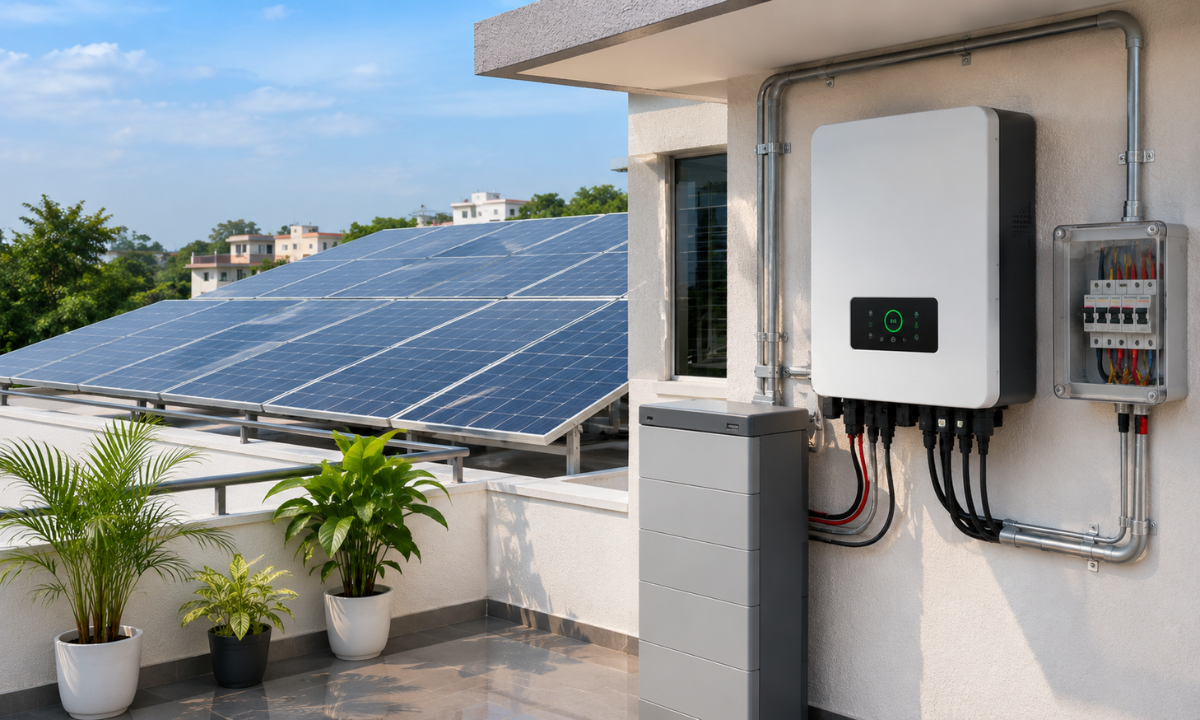
A 10 kW system fits large 3 to 4 BHK homes, villas with multiple ACs, EV charging requirements, and home-office loads that run through the day. Expected monthly generation sits between 1,200 and 1,400 units. At this size, the architectural choice usually shifts from single-phase to three-phase, especially where the sanctioned electricity connection is three-phase. Running a 10 kW single-phase inverter is technically possible but creates load imbalance that discoms increasingly flag during net-metering approval.
A 10 kW array needs roughly 850 to 1,000 square feet of usable, unshaded roof area, which usually means the entire usable terrace of a standalone house. For homes with shaded areas or chimneys, parapets, and water tanks breaking up the roof, module-level power electronics become particularly valuable.
Suitable inverter options:
- Deye SUN-10K-SG04LP3-EU three-phase hybrid. Our go-to 10 kW hybrid, with strong battery pairing options, parallel scalability up to sixteen units, and balanced three-phase output.
- Feston 10 kW three-phase hybrid. Strong surge-handling capability, wide input voltage window, and compatibility with Feston’s own LFP battery stack.
- Sungrow SH10RT three-phase hybrid. Premium pick with AFCI, high efficiency, and advanced monitoring, best suited to homeowners who prioritise refined build.
- SolarEdge three-phase with optimisers. The right call for complex roofs that need panel-level optimisation, and for homes where monitoring the output of each individual panel is useful.
For a side-by-side on how these capacity bands differ in energy output and suitability, our comparison of 3kW vs 5kW vs 10kW on-grid solar systems: power generation and savings breaks down the numbers.
Comparison at a glance
| System size | Typical home | Roof area needed | Monthly generation | Suitable inverter options |
|---|---|---|---|---|
| 3 kW | 1 BHK or small 2 BHK, low AC use | 240 to 300 sq ft | 360 to 420 units | Feston 3 kW, Deye SUN-3K-SG04LP1, Sungrow SG3.0RS |
| 5 kW | Standard 2 or 3 BHK with AC and pump | 400 to 500 sq ft | 600 to 700 units | Deye SUN-5K-SG04LP1, Feston 5 kW, Sungrow SH5.0RS, SolarEdge SE5000H |
| 10 kW | Large 3 to 4 BHK villa, multiple ACs, EV | 850 to 1,000 sq ft | 1,200 to 1,400 units | Deye SUN-10K-SG04LP3-EU, Feston 10 kW, Sungrow SH10RT, SolarEdge three-phase |
On-grid or hybrid: which architecture fits your home
On-grid systems use a grid-tied inverter with no battery. The inverter feeds surplus generation back into the grid under net-metering, and your home draws from the grid at night or in cloudy weather. On-grid systems are simpler, have fewer components, require less maintenance, and are the right pick for cities with highly reliable supply. The trade-off is zero backup during an outage; the inverter is required by law to shut off if the grid goes down, to protect line workers.
Hybrid systems use a hybrid inverter and a battery pack. They give you solar generation during the day, battery backup during outages, and grid interconnection when needed. Hybrid is the default recommendation for most Indian cities where multi-hour power cuts remain common, and for homeowners who want to insure against future grid tariff changes.
Off-grid is a third option but rarely the right call for urban or suburban Indian homes with a grid connection, because the battery capacity needed to cover monsoon weeks becomes punishingly large. For the key architectural differences between the common system types, see our guide on how an on-grid solar system works.
Common inverter sizing mistakes to avoid
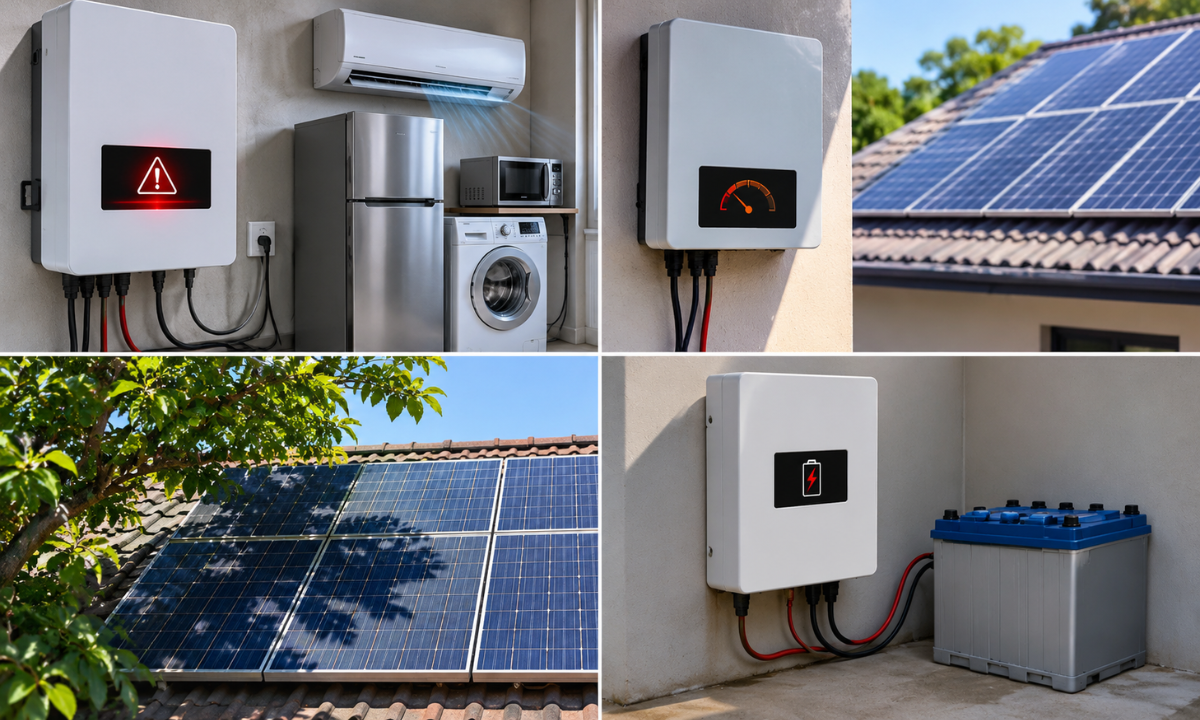
A few repeat mistakes show up in almost every home solar enquiry we handle:
- Sizing against units billed rather than appliance load. Two homes with identical monthly bills can need very different inverter ratings depending on simultaneous load.
- Picking single-phase for a three-phase connection. This creates phase imbalance and complicates net-metering approval.
- Ignoring surge rating. A continuous 5 kW rating means nothing if the inverter cannot handle the 8 to 10 kW surge of a 1.5-ton AC compressor starting cold.
- Overlooking shading. A roof with 15 to 20 percent shading on a central portion will lose far more than 15 to 20 percent of output in a string inverter setup without optimisers.
- Choosing a battery before an inverter. The inverter dictates compatible battery options. Reversing the order usually forces a compromise on one or the other.
- Skipping the AC-side disconnect and earthing specification. MNRE guidelines are clear on these and discoms check during commissioning.
For common operational issues that trace back to sizing or configuration mistakes, our breakdown of why an inverter shows overload including causes and solutions is a useful follow-up read.
What to check before finalising your inverter
- Confirm your sanctioned electricity load and whether your connection is single or three-phase.
- Map your appliance list with simultaneous starting loads in watts, not just nameplate ratings.
- Measure or estimate unshaded roof area accurately, accounting for setbacks and future obstructions.
- Decide whether backup is a must-have or a nice-to-have, since this picks on-grid vs hybrid.
- Verify the inverter model is approved in your state’s MNRE or discom list for net-metering.
- Check warranty terms, including whether the warranty is on-site or carry-in, and who holds the service contract.
Warranty terms vary widely across brands, and a quick scan of the fine print can save headaches two years into ownership. Our guide on solar inverter warranty: what every buyer should understand covers the common pitfalls.
Conclusion
The best solar inverter for your home in India is the one sized correctly against your actual load, not against a generic kW figure pulled from a top-ten list. For most Indian homes, a 5 kW hybrid system covers monthly consumption, provides reliable backup through typical outages, and leaves headroom for future appliance additions. 3 kW suits compact homes with modest load, while 10 kW is the right call for large villas, multi-AC households, and homes with EV charging. The right inverter model within each band then comes down to grid conditions, roof complexity, battery choice, and the service presence of the brand in your city. If you share your monthly units, number of ACs, connection type, and whether you need backup, our team will shortlist a specific model and battery pairing for your setup.
FAQs
Which inverter is best for a 3 BHK home in India?
For most 3 BHK homes with one or two ACs, a 5 kW hybrid inverter is the right choice. Deye SUN-5K-SG04LP1 and Feston 5 kW single-phase hybrid are both strong picks, typically paired with a 5 kWh lithium battery for backup. Larger 3 BHK homes with three or more ACs may need to step up to 7 to 10 kW.
Is a 5 kW solar inverter enough for a home with two ACs?
In most cases yes, a correctly sized 5 kW hybrid or on-grid inverter can run a home with two 1.5-ton ACs, provided the surge headroom is adequate and the compressors are not starting at the exact same instant. Real-world performance will still depend on simultaneous compressor starts, low grid voltage events, and the battery’s state of charge during backup operation.
Can I install a solar inverter larger than my sanctioned load?
In most Indian discoms the inverter capacity should not exceed the sanctioned load, though some states allow a margin of up to 20 percent. Check with your local discom before finalising capacity, since net-metering approval depends on this.
Should I pick an on-grid or hybrid inverter for home in India?
Hybrid is the better choice if your area has frequent power cuts or you want battery backup. On-grid is a reasonable fit only where supply is stable and daytime self-consumption is the primary objective. In practice, most Indian cities outside the top metros benefit from hybrid.
How long does a home solar inverter last?
A reputable home solar inverter typically lasts 10 to 15 years, with the inverter warranty covering the first 5 to 12 years depending on the brand. Batteries have their own separate warranty, usually 5 to 10 years or a defined cycle count.
Does a solar inverter need a stabiliser?
A correctly sized inverter with a wide input voltage tolerance does not need an external stabiliser. Modern hybrid and on-grid inverters from Deye, Feston, Sungrow, and SolarEdge all handle Indian grid voltage swings natively. Adding a stabiliser introduces another failure point without improving performance.
Can one inverter handle both solar panels and the grid at the same time?
Yes, that is exactly what grid-tied and hybrid inverters are designed to do. A grid-tied inverter synchronises solar output with the grid frequency and voltage; a hybrid inverter does the same while also managing a battery.
Is a three-phase inverter better than single-phase for a home?
A three-phase inverter is better only if your electricity connection is three-phase. Installing a three-phase inverter on a single-phase connection is pointless. For most homes under 7 kW with a single-phase connection, single-phase is correct.