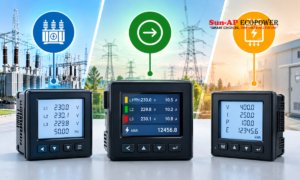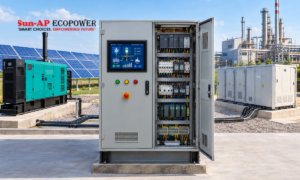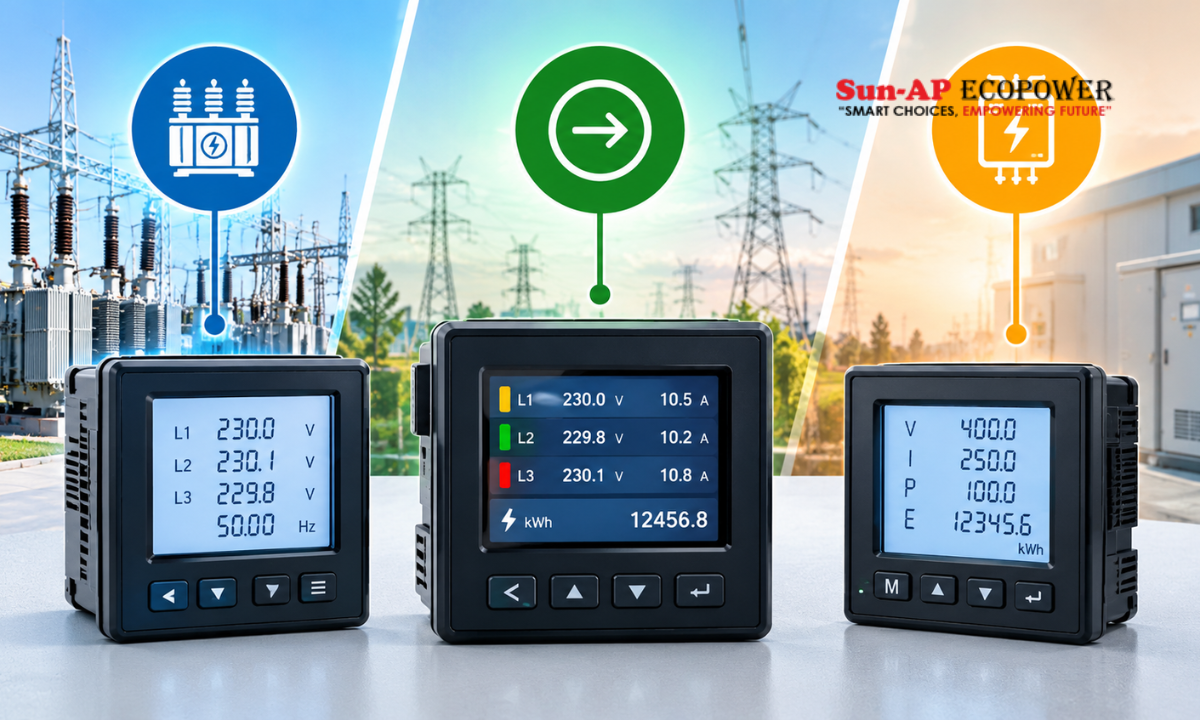
Not every energy meter does the same job. Some record a single quantity for billing, while multifunction meters report voltage, current, power, power factor and more. This guide shows where each meter type fits, from substations to rooftop solar.
What Are Multifunction Meters?
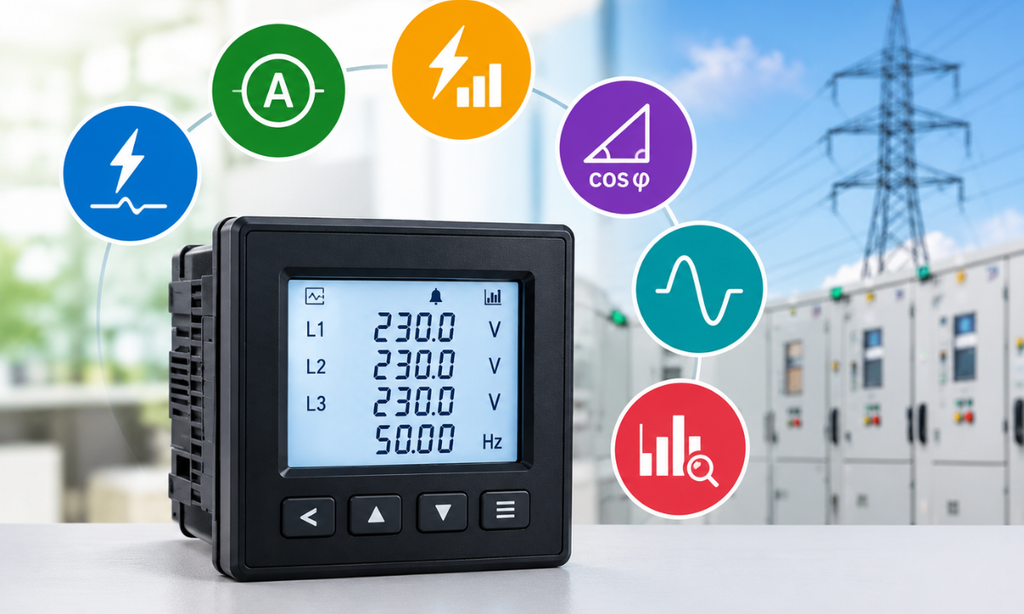
Multifunction meters measure many electrical parameters on one display and often share data over Modbus for monitoring systems. They are usually non-tariff meters, installed downstream of the billing meter for panel monitoring, sub-metering and energy audits. To understand how they differ from billing meters, read our post on tariff and non-tariff meters.
The Secure multifunction meter range on our shop shows the spread of options. The Elite 300 offers true-RMS three-phase measurement with configurable alerts, the Elite 440-445 adds Class 0.5s or 0.2s accuracy with harmonic monitoring up to the 31st harmonic, and the Elite 500 adds a graphical TFT display with multi-protocol communication for BMS and SCADA.
How Substation Meters Are Used
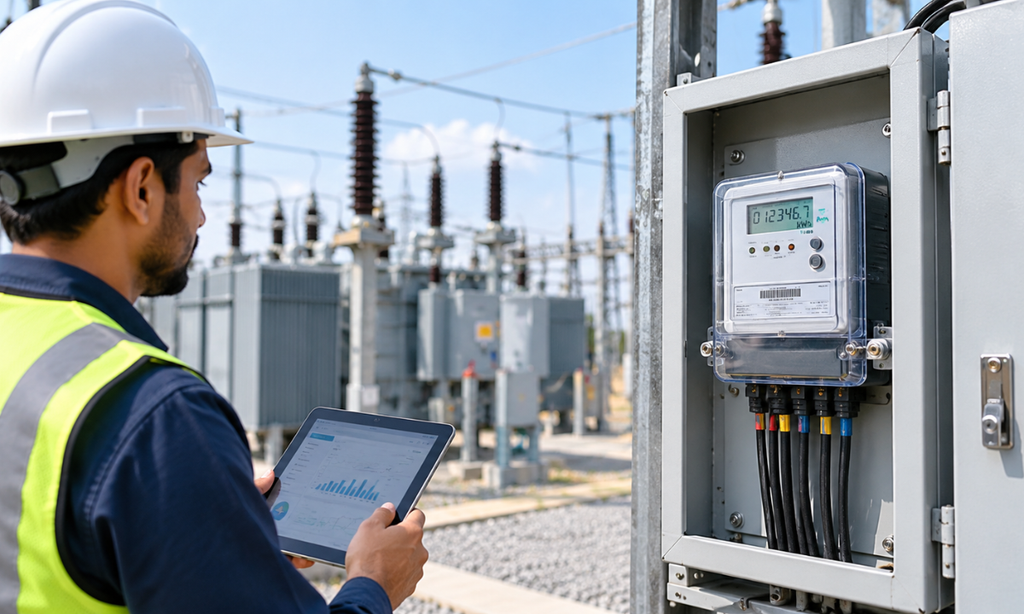
Substation meters sit on incoming and outgoing feeders to record energy flow, track loading and support loss analysis. They are usually CT and VT operated, which lets one meter measure high-voltage circuits safely, and they favour high accuracy classes and standard communication such as DLMS or Modbus. For billing and ABT requirements, see our guide to HT meters.
The Secure Premier 300 HT on our shop is a CT and VT operated bidirectional meter with DLMS communication and time-of-day billing support, which shows the kind of features a substation project looks for.
Why Uni-Directional Meters Still Matter
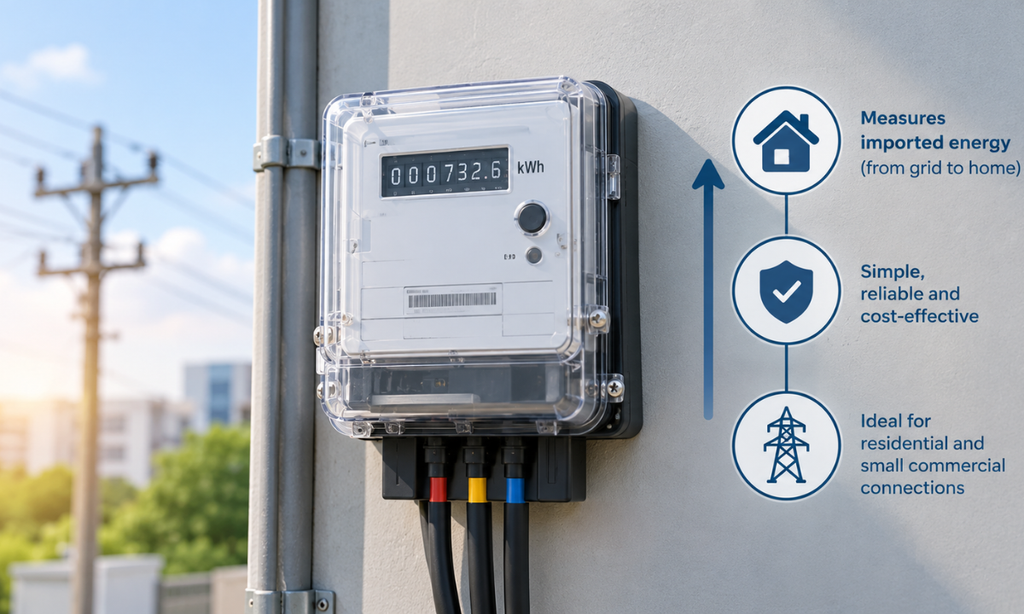
Uni directional meters record energy flowing one way only, from the grid to the load. They suit consumers without solar export, incoming feeders and sub-metering of a floor, a tenant or a machine line. Once you add rooftop solar with net metering, you need a bi-directional meter, because export must be measured as well.
Comparison: Uni-Directional, Bi-Directional and Multifunction Meters
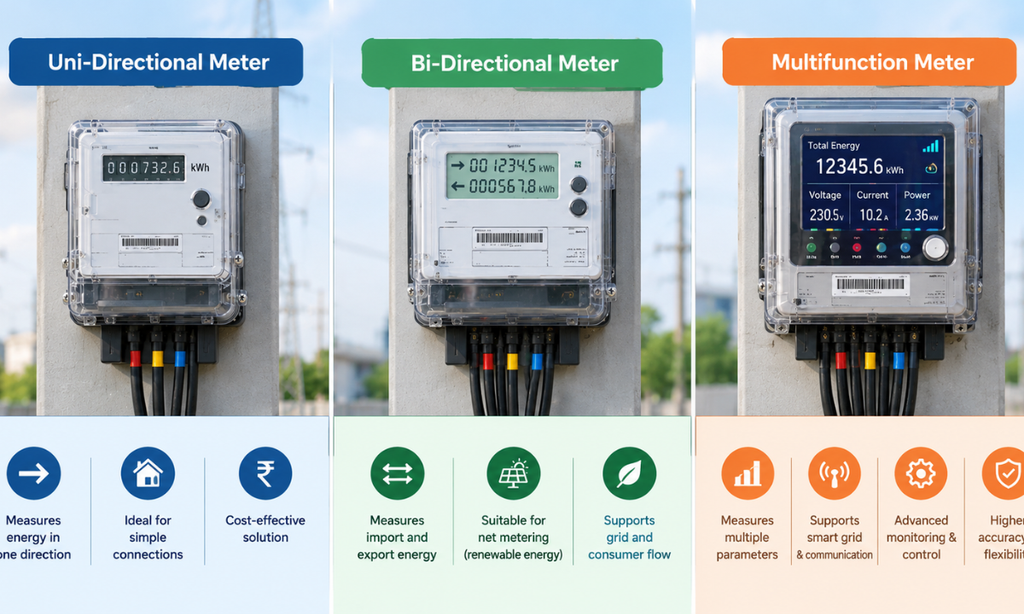
| Meter type | What it measures | Best for |
|---|---|---|
| Uni-directional | Import energy only | Consumers without export; sub-metering |
| Bi-directional | Import and export energy | Net metering and rooftop solar |
| Multifunction | Voltage, current, power, power factor, harmonics | Panel monitoring and energy audits |
HPL Meter Options for Net Metering
An HPL meter is a common choice for residential net metering. Sun-AP Ecopower is an official HPL distributor, and the HPL range on our site includes a single phase bi-directional meter with a specification sheet to download. A bi-directional energy meter like this records both import and export, which is what net metering requires.
Where to Buy Meters in India
Browse the full range in our meters and controls shop, or explore the Secure meters and HPL meters pages. For generator and solar controllers, see our DEIF controller guide.
FAQs
Can a multifunction meter be used for billing?
Usually no. Billing needs a tariff meter approved by your utility, while multifunction meters are used for monitoring, load analysis and energy audits. If you are unsure which one your project needs, read our guide on non-tariff vs tariff meters and confirm the requirement with your utility.
Do I need a bi-directional meter for rooftop solar?
Yes, if you export power under net metering. A bi-directional meter records both the energy you draw from the grid and the energy you send back. Check your utility’s requirements first, because approved meter types and specifications can differ. You can see our bi-directional and solar generation meters here.
What is the difference between a uni-directional and a bi-directional meter?
A uni-directional meter measures energy flowing in one direction only, usually from the grid to the consumer. A bi-directional meter measures both import and export. A site that only consumes power can use a uni-directional meter, while a site that exports solar power needs a bi-directional one.
What does a multifunction meter measure?
A multifunction meter shows several electrical parameters on one display, such as voltage, current, power, power factor, frequency and energy. Models differ in what they record, so check the datasheet for the parameters you need. Our multifunction meters are used in panels, plants and audit setups.
Where are meters used in a substation or HT application?
HT installations such as substations, industrial plants and solar projects use meters connected through current and voltage transformers to measure at high voltage. The meter type depends on whether you need billing-grade measurement or monitoring. Our guide on types of HT meters explains the options in detail.
What is an ABT meter, and when is it needed?
An ABT (availability based tariff) meter records energy and related data at set time intervals for grid-connected generators and larger consumers. Your utility or project agreement will say whether you need one. Secure’s meter range on our site includes ABT meters, so ask our team if your project requires it.
Which meter brands do you supply?
Our meter range includes Secure Meters and HPL. Secure covers ABT meters, multifunction meters, digital panel meters, prepaid meters and energy audit and monitoring products. Contact us for the model you need.
What should I check before choosing a meter?
Confirm these points before you order:
- Whether the meter is for billing or monitoring
- Single-phase or three-phase supply
- Direct connection or CT/PT operated
- Whether you export power (bi-directional need)
- Accuracy class and utility approval requirements
- Communication or display features you need
Choosing between these meter types is easier once you know what you need to measure. Share your application and our team will recommend the right model. You can contact us here.