Power reliability is no longer optional. Whether you are running essential home appliances during outages or integrating renewable systems, understanding inverter battery life is crucial before investing.
At Sun AP Ecopower, one of the most common customer questions is about expected performance duration. The average inverter battery lifespan varies depending on battery type, usage pattern, environmental conditions, and system configuration.
This guide explains everything in detail, including maintenance, technical factors, optimization strategies, and how your battery integrates with broader energy systems.
Average Lifespan of Different Inverter Batteries
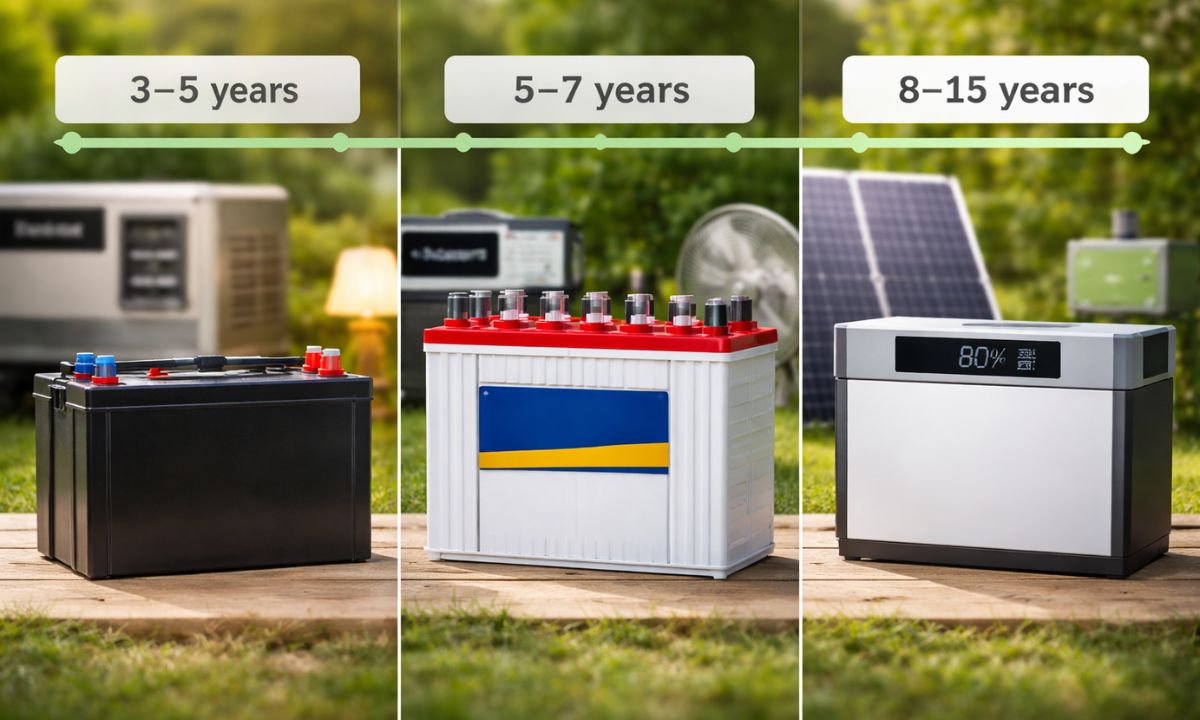
The lifespan depends largely on battery chemistry.
| Battery Type | Average Lifespan | Typical Use Case |
|---|---|---|
| Lead-acid | 3–5 years | Basic home backup |
| Tubular | 5–7 years | Frequent outages |
| Lithium-ion | 8–15 years | Solar-integrated systems |
Lithium batteries tend to last longer due to better charge cycle tolerance and lower maintenance requirements.
What Affects Inverter Battery Life?
1. Depth of Discharge (DoD)
The deeper a battery is discharged regularly, the shorter its working life. Discharging below 50 percent repeatedly reduces cycle life significantly.
Lithium batteries tolerate deeper discharge better than lead-acid systems.
2. Proper Charging Management
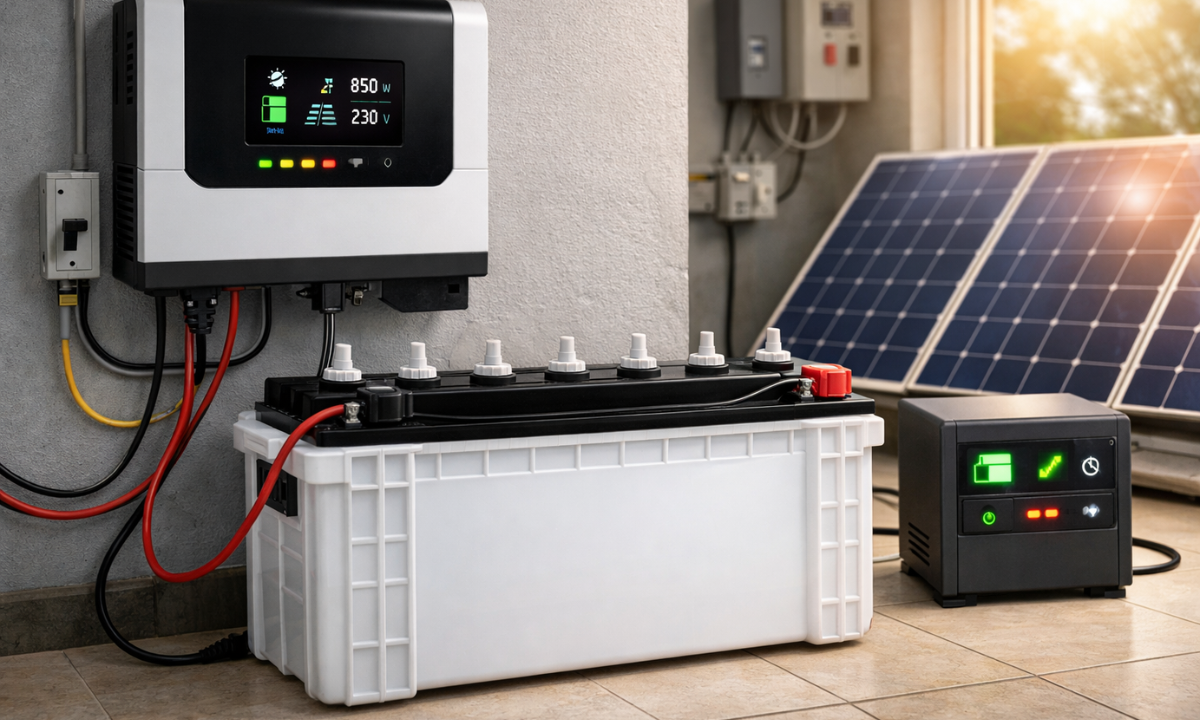
Correct inverter battery charging prevents overheating and sulphation. Overcharging corrodes internal plates. Undercharging reduces efficiency and causes long-term damage.
Modern systems integrated with advanced solar inverters regulate charging automatically to maintain optimal health.
3. Battery Capacity and Load
Choosing the correct inverter battery capacity is critical.
If the capacity is too small for your load, the battery will discharge quickly and cycle more often, reducing lifespan.
For example:
- 150Ah battery → moderate household usage
- 200Ah+ → larger appliances or longer backup
A professional load calculation ensures your system matches usage demand.
4. Voltage Configuration
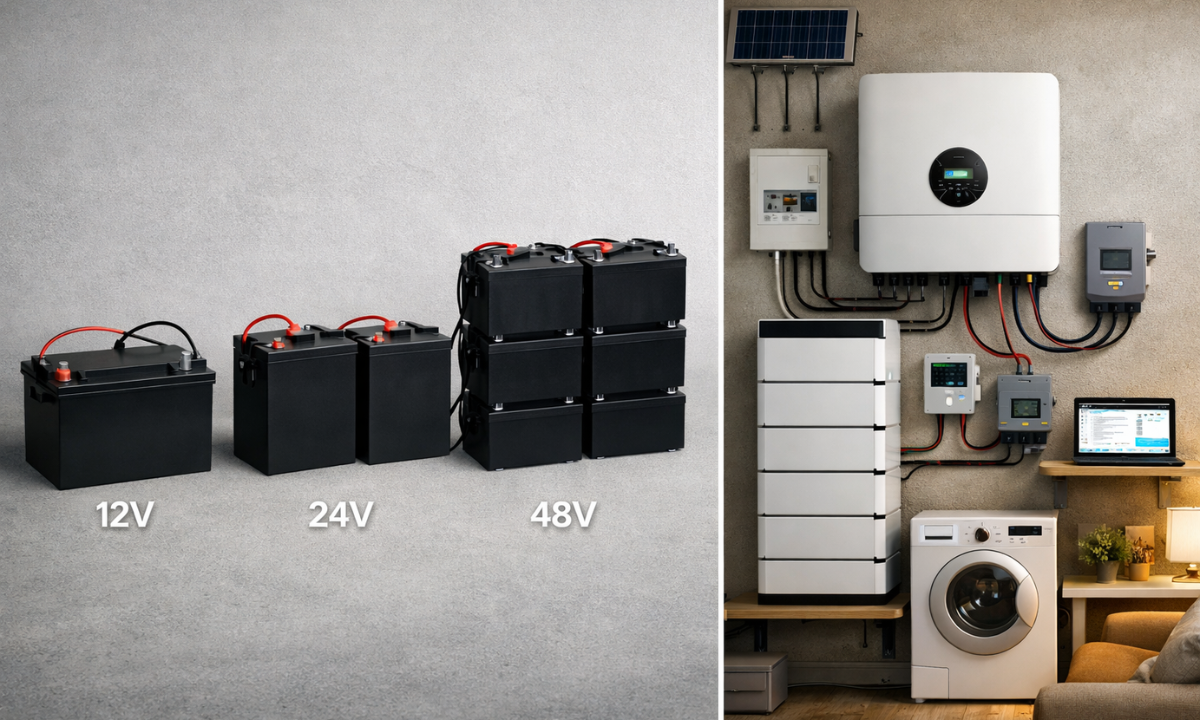
The correct inverter battery voltage must align with the inverter specifications.
Common setups:
- 12V for small homes
- 24V or 48V for larger systems
Incorrect voltage pairing stresses both the inverter and the battery, shortening lifespan.
Modern hybrid inverter with battery systems are designed to optimize voltage regulation and energy storage efficiency.
Environmental Conditions
Heat is one of the biggest enemies of battery longevity.
Ideal operating temperature:
20°C–25°C
High temperatures accelerate chemical degradation. Poor ventilation also traps heat and reduces battery efficiency.
Installation location matters. Batteries should be:
- Well ventilated
- Protected from moisture
- Away from direct sunlight
How Solar Integration Impacts Lifespan
When integrated properly with on-grid inverters, battery systems function more efficiently by managing load distribution between the grid, solar, and storage.
Smart energy management reduces deep discharge cycles, extending lifespan.
At Sun AP Ecopower, we recommend combining battery systems with high-efficiency renewable configurations available through our premium solar products online catalogue.
Signs Your Inverter Battery Is Reaching the End of Life
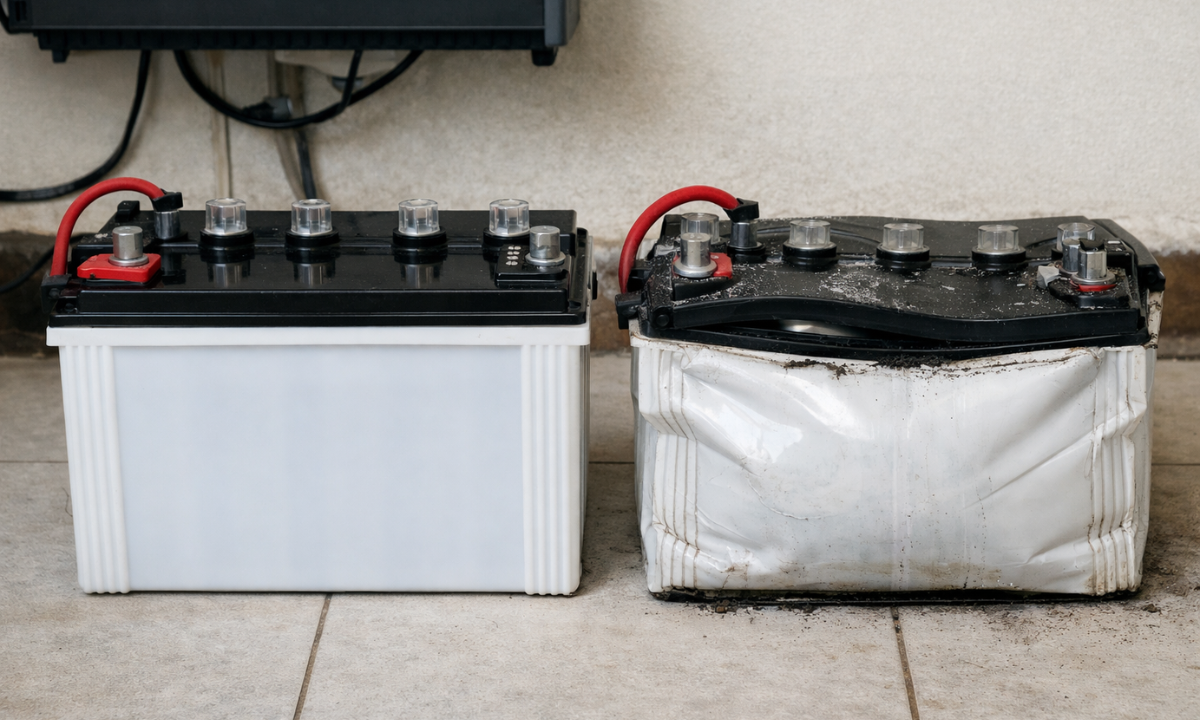
- Reduced backup duration
- Slow charging
- Bulging battery casing
- Unusual heating
- Frequent inverter alarms
Early detection prevents system failure.
How to Extend Inverter Battery Life
Regular Maintenance (Lead-Acid Only)
- Check electrolyte levels
- Top up with distilled water
- Clean terminals
- Inspect corrosion
Lithium batteries require minimal maintenance but benefit from firmware updates in smart systems.
Avoid Complete Discharge
Do not let the battery fully drain unless required. Maintaining partial discharge cycles significantly increases lifespan.
Invest in Quality Components
Cheap batteries may have a lower upfront cost but a shorter operational life.
When customers choose to buy an inverter battery online, we advise checking:
- Warranty period
- Manufacturer credibility
- Cycle life rating
- Compatibility with the inverter
At Sun AP Ecopower, we assist clients in selecting verified, high-performance batteries.
Browse our complete range of solar products online
Lifespan vs Warranty
Warranty does not equal lifespan.
A 3-year warranty battery may last 5 years with proper care. Conversely, poor maintenance can reduce a 7-year battery to 3 years.
Always review:
- Cycle life specification
- Charging recommendations
- Environmental guidelines
Conclusion
Understanding inverter battery performance is not simply about years. It is about usage patterns, charging quality, voltage compatibility, and environmental conditions.
With proper configuration and smart energy management, households can significantly improve inverter battery life while reducing long-term replacement costs.
At Sun AP Ecopower, we specialize in tailored energy solutions that combine reliable storage with advanced renewable integration, ensuring long-term performance and energy security.
Frequently Asked Questions
What is the average inverter battery lifespan?
The average lifespan ranges from 3 to 15 years, depending on battery type and usage. Lithium batteries generally last longer than lead-acid systems due to improved charge cycle tolerance and lower maintenance needs.
Environmental conditions, charging discipline, and depth of discharge significantly influence real-world performance. Regular monitoring and correct load management can extend operational life well beyond standard warranty expectations.
How does inverter battery charging affect lifespan?
Improper inverter battery charging can cause overheating, sulphation, and plate corrosion. Using smart charge controllers ensures stable voltage regulation and improves battery health over time.
Consistently undercharging reduces capacity retention, while repeated overcharging accelerates internal chemical degradation. Modern intelligent inverters optimize charging phases automatically to prevent long-term damage and maintain efficiency.
Does inverter battery capacity impact durability?
Yes. Incorrect inverter battery capacity leads to frequent deep discharge cycles. Matching capacity to household load significantly improves performance longevity.
An undersized battery works harder and depletes faster, increasing cycle frequency and internal stress. Proper load assessment ensures balanced energy usage, reducing wear and improving overall system reliability.
Can hybrid inverter systems extend battery life?
Yes. A hybrid inverter with a battery optimizes energy flow between the grid and solar sources, reducing strain on the battery and improving efficiency.
By intelligently prioritizing solar input and grid backup, hybrid systems minimize unnecessary discharge cycles. This controlled energy management significantly enhances battery stability and long-term durability.
References
- International Renewable Energy Agency (IRENA) – Battery Storage Technology Overview
- IEEE Standards Association – Battery Performance Guidelines
- MNRE India – Solar Energy Storage Best Practices
- Battery University – Charging and Discharging Best Practices
- BIS India – Electrical Safety Standards