Rooftop solar technology has transitioned from an eco-conscious alternative to a fundamental financial asset for urban homeowners and commercial enterprises alike.
Understanding the benefits of using on-grid solar inverters helps property owners maximize energy savings, reduce electricity bills, and achieve faster returns through efficient grid-connected solar power systems.
At the core of this clean energy transformation are high-efficiency on-grid solar inverters, which bridge rooftop photovoltaic (PV) arrays directly with the public utility grid. Sourcing Tier-1 solar inverters online through a trusted Solar panel dealers in India allows homeowners, businesses, and EPC contractors to optimize energy generation while reducing upfront costs without relying on costly, maintenance-heavy battery backups.
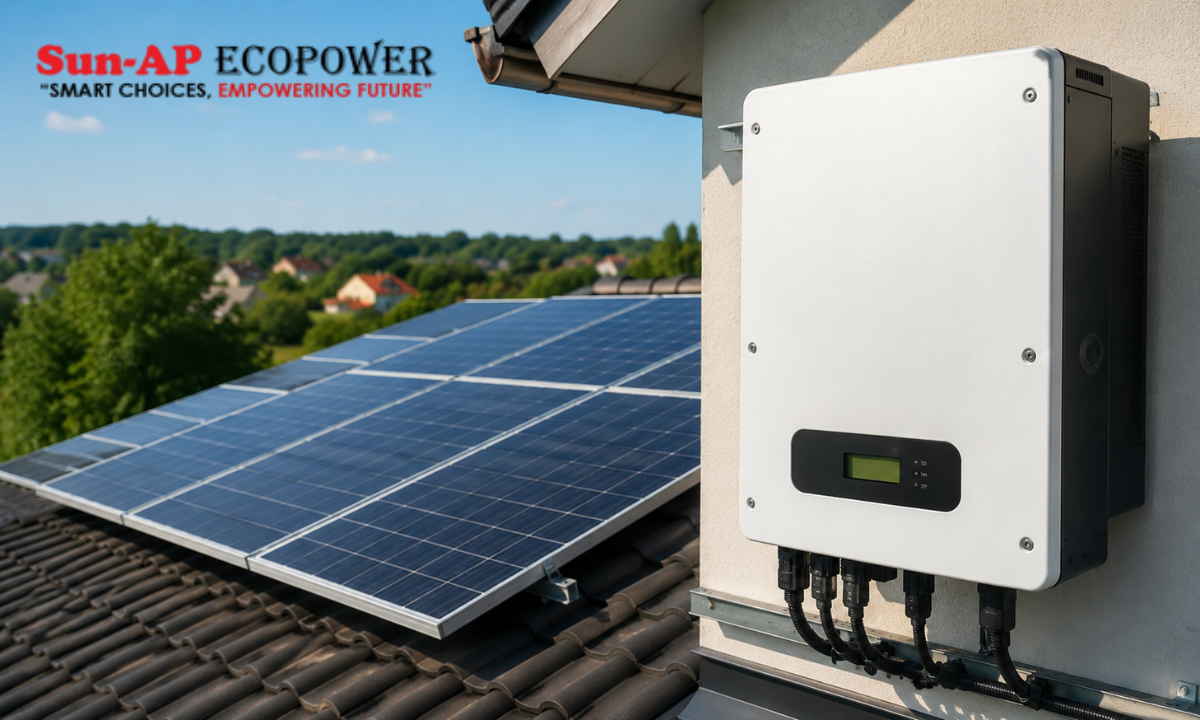
Grid-tied (or on-grid) systems have rapidly overtaken off-grid and standalone setups as the default choice for modern rooftop installations. Unlike traditional systems that store excess energy in chemical battery banks, an on-grid inverter dynamically converts the Direct Current (DC) generated by solar panels into synchronized Alternating Current (AC) electricity that matches the voltage and frequency of your local DISCOM utility line.
The Battery-Free Financial Advantage: By eliminating battery storage, on-grid rooftop systems lower initial system installation costs (CapEx) by up to 30% to 40% while avoiding the mandatory battery replacement expenses typically incurred every 5 to 7 years.
Whether you are retrofitting an existing residential rooftop or engineering a multi-kilowatt commercial solar array, understanding the operational and financial benefits of grid-tied inverter technology is essential.
The following sections break down how on-grid inverters maximize daily energy yields, ensure grid safety, and streamline long-term returns on your solar investment.
Maximizing Financial ROI: Net Metering & Battery-Free CapEx
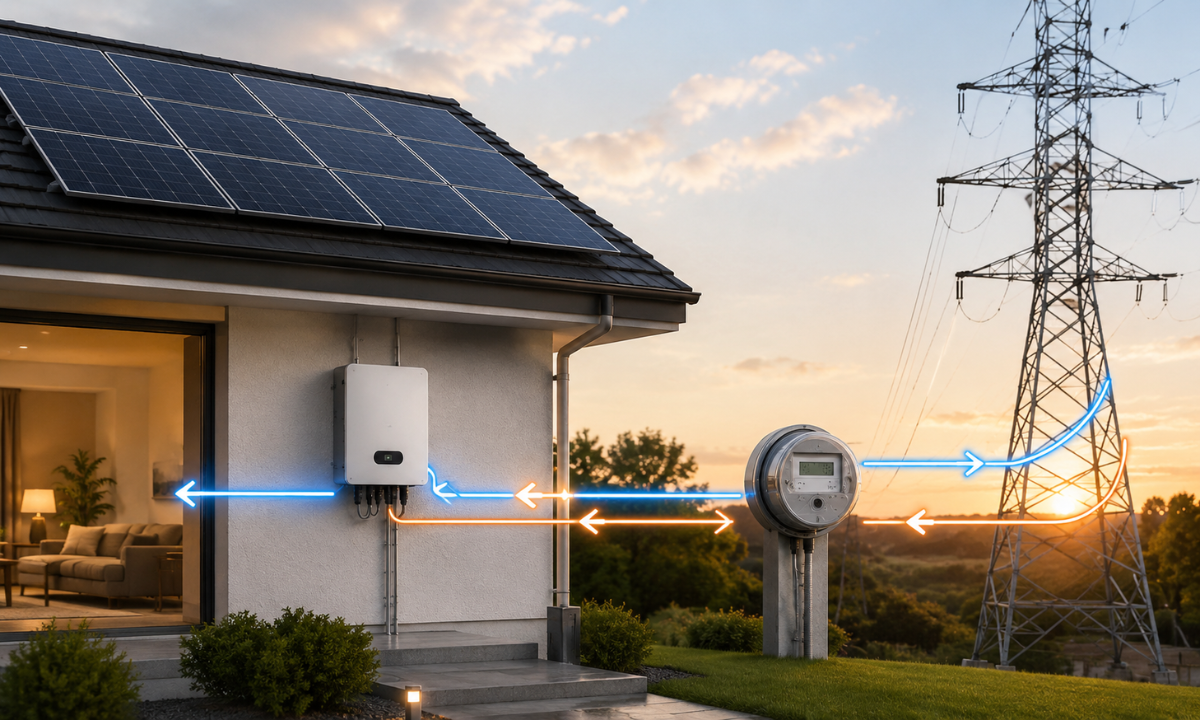
The primary driver behind the rapid adoption of on-grid rooftop solar systems is financial yield.
Routing power directly into the building’s electrical distribution board and connecting to the public grid via a bi-directional meter, on-grid inverters turn your roof into a decentralized power plant that directly reduces monthly utility bills.
The Financial Mechanics of Net Metering
Net metering is the regulatory framework that makes grid-tied solar so financially compelling. During peak daytime hours, rooftop solar panels often generate more electricity than a home or facility consumes. An on-grid inverter synchronizes this excess power and feeds it back into the local DISCOM (Distribution Company) grid.
- Bi-Directional Measurement: A smart net meter records both the energy imported from the grid (when solar output is low, such as at night) and the surplus energy exported to the grid during peak sunshine hours.
- Monthly Billing Adjustment: At the end of the billing cycle, your DISCOM charges you only for the “net” electricity consumed (Total Import minus Total Export). If your exports exceed imports, the surplus energy credits roll over to offset future electricity bills.
- Accelerated Payback Period: With net metering credits and high grid electricity tariffs, a typical rooftop system pays for itself within 3 to 4 years, delivering free electricity for the remaining 20+ years of the inverter’s operational lifespan.
Capital Efficiency: Eliminating the Battery Trap
In off-grid or hybrid solar setups, deep-cycle battery banks (Lithium-ion or Lead-acid) account for nearly 30% to 40% of the initial capital expenditure (CapEx). Furthermore, batteries represent an ongoing operational expense (OpEx) as chemical storage degrades and requires complete replacement every 5 to 7 years.
CapEx & OpEx Comparison: An on-grid inverter uses the public utility grid as a virtual, infinite storage battery. You export excess daytime energy to the grid without spending a single rupee on battery maintenance, thermal management, or periodic replacement cells.
Combining zero battery storage costs with net metering bill credits, on-grid inverters provide the highest Levelized Cost of Energy (LCOE) and the fastest return on investment available in the solar market today.
Technical Efficiency & Sizing: The 5kW Benchmark & MPPT Optimization
To understand how an on-grid solar system delivers peak energy output, it is essential to examine the core power-conversion technologies operating inside modern string inverters and microinverters.
Modern grid-tied units utilize advanced digital signal processing (DSP) and high-frequency switching circuits to ensure that every watt generated by rooftop solar panels is efficiently synchronized with your building’s electrical load.
Maximum Power Point Tracking (MPPT) Technology
Solar panel output varies continuously throughout the day based on irradiance levels, ambient temperature, and passing cloud cover. On-grid inverters use Maximum Power Point Tracking (MPPT) algorithms to actively track the optimal voltage (Vmp) and current (Imp) point on the PV curve, harvesting maximum possible energy even under diffuse lighting or early morning conditions.
- Dual-Tracker Flexibility: Premium string inverters feature multiple independent MPPT channels. This allows installers to split solar panel arrays across different roof orientations (e.g., East-West roof splits) or pitch angles without performance bottlenecks caused by uneven shading.
- Pure Sine Wave Grid Synchronization: The inverter converts raw DC power into clean, pure sine wave AC electricity with minimal Total Harmonic Distortion (THD < 3%). It matches the exact phase, frequency (50 Hz), and voltage parameters of the public grid, protecting sensitive domestic electronics, variable frequency drives (VFDs), and medical equipment.
Real-World Residential Benchmark: The 5kW Rooftop Setup
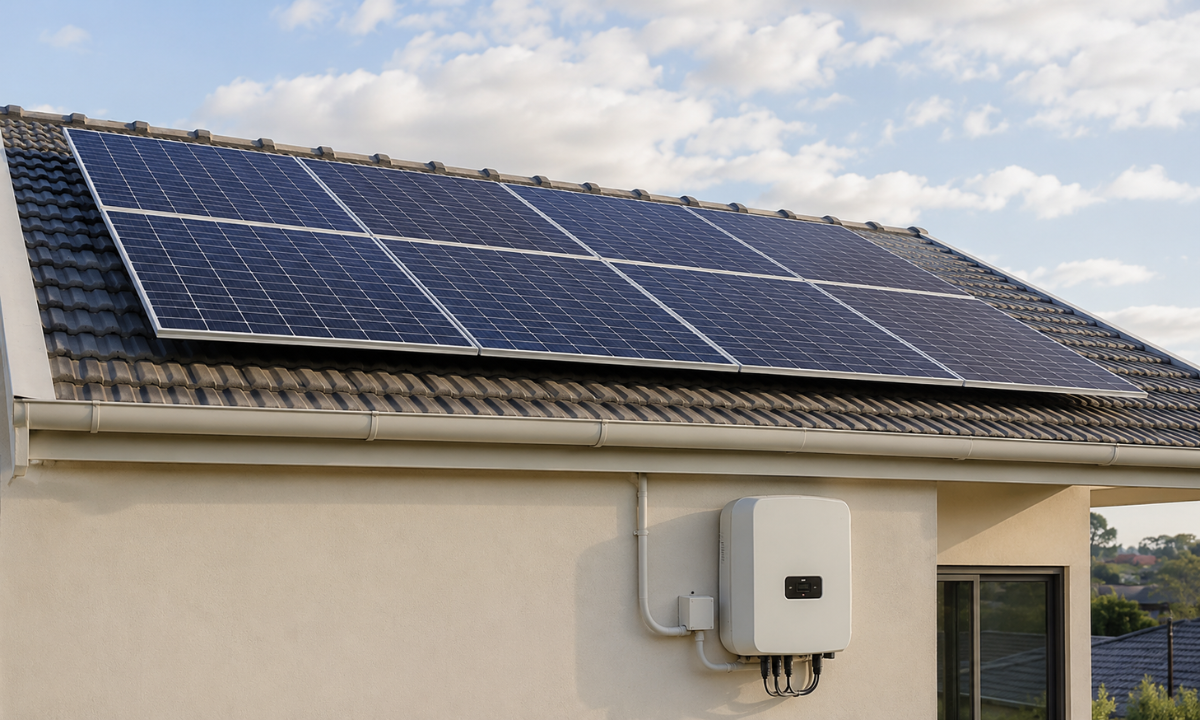
For urban 3 to 4 BHK residences, small commercial offices, and independent villas running multiple split air conditioners, a 5kW grid-tied system represents the optimal financial and operational sweet spot.
Choosing a high-efficiency on-grid solar inverter 5kw unit allows property owners to support heavy daily appliance loads while exporting substantial daytime power credits back to the utility grid.
| System Parameter | 5kW On-Grid System Specification | Real-World Performance Output |
|---|---|---|
| Typical Daily Generation | 18 to 22 kWh (units) / day | Dependent on solar irradiance & roof tilt |
| Estimated Annual Generation | 7,000 to 7,500 kWh (units) / year | Equivalent to 80% to 90% bill reduction for urban homes |
| Inverter Conversion Efficiency | 97.5% to 98.6% peak efficiency | Near-zero power loss during DC-to-AC conversion |
| Required Roof Footprint | ~300 to 400 sq. ft. shadow-free area | Accommodates 9 to 10 high-wattage (550Wp) TOPCon/Mono PERC modules |
Pairing dual-MPPT optimization with an appropriately sized inverter, rooftop installations achieve maximum performance ratios (PR), preventing clipping losses during peak solar noon while capturing low-light generation at dusk and dawn.
Grid Safety & Compliance: Anti-Islanding & Voltage Stabilization
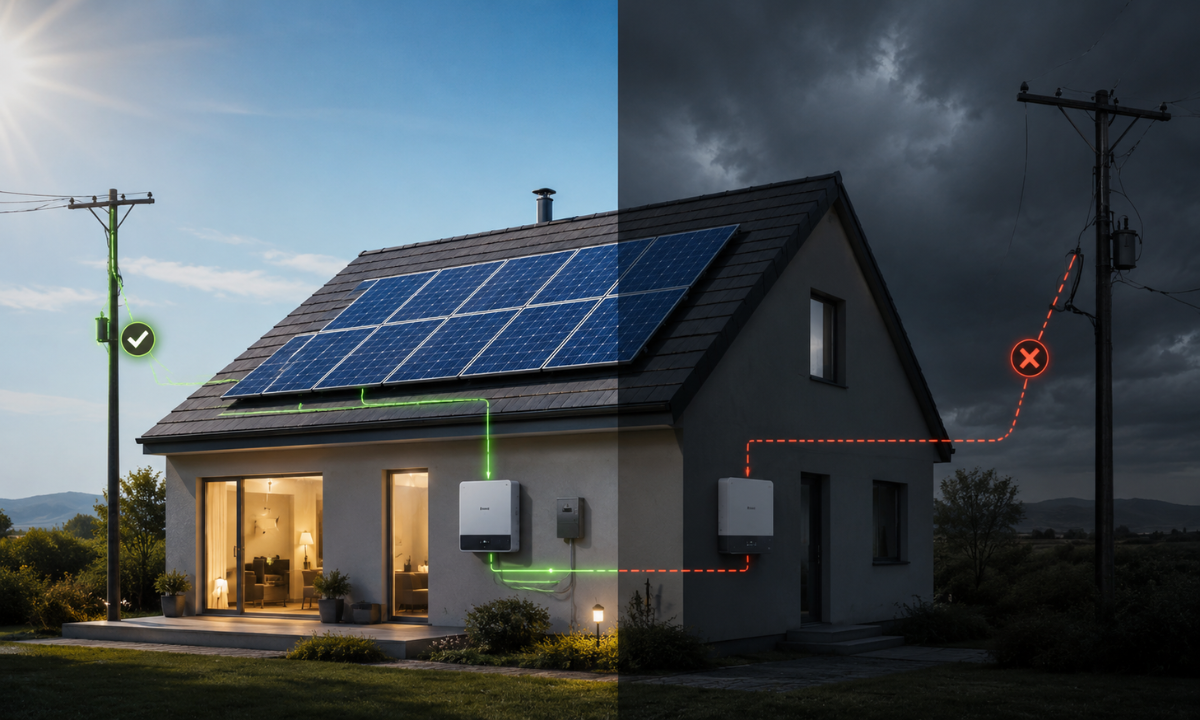
Integrating rooftop solar into the central distribution grid requires sophisticated safety protocols to protect electrical infrastructure and utility personnel.
Modern grid-tied inverters act as intelligent safety systems, constantly analyzing grid voltage, phase angle, and line frequency before allowing solar electricity to flow into your building’s panel.
Key Protective Mechanisms in Grid-Tied Inverters
- Automatic Anti-Islanding Protection: During a public grid outage, utility lines are de-energized for maintenance. An on-grid inverter detects this loss of line frequency and disconnects within milliseconds (typically under 100ms), preventing solar power from energizing dead power lines and protecting utility linemen.
- Voltage and Frequency Ride-Through: Local power grids experience minor voltage spikes and frequency sags throughout the day. Advanced inverters stabilize these fluctuations using automated active and reactive power control, smoothing out line noise before supplying power to internal building circuits.
- Integrated Surge Protection Devices (SPDs): On-grid inverters feature built-in Type II DC and AC surge arresters, shielding the entire PV system against high-voltage lightning strikes, switching transients, and unexpected electrical surges.
These integrated safety mechanisms ensure that your solar array interacts seamlessly with utility infrastructure without harming sensitive appliances or creating electrical hazards. By maintaining these high safety standards, grid-tied setups make adopting clean renewable energy both safe and reliable for distribution companies (DISCOMs).
Regulatory Compliance Standards: In India, state electricity boards mandate that all grid-connected inverters carry BIS, IEC 61727, and IEC 62116 certifications for anti-islanding and power quality. Installing uncertified equipment can lead to net-metering rejection during final DISCOM inspection.
Ensuring that your power conversion equipment meets these statutory standards is crucial during the approval phase.
Sourcing certified equipment guarantees that every inverter unit includes the exact test reports required by DISCOM inspectors, ensuring a smooth transition from installation to net-metering commissioning.
Seamless Installation, Low Maintenance & Long Service Life
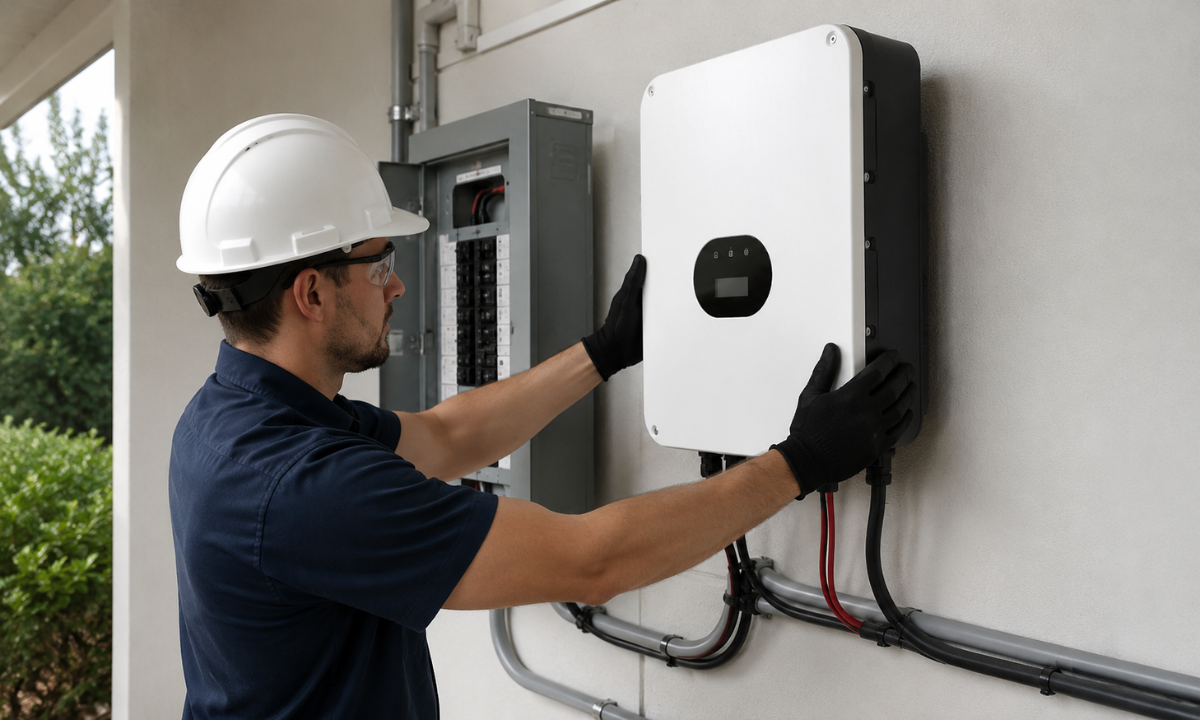
Beyond financial yields and protective grid safety, the structural simplicity of grid-tied technology simplifies the physical solar installation process for residential rooftops and commercial industrial facilities alike. As on-grid systems eliminate heavy battery racks, complex charge controllers, and dedicated battery room ventilation, mechanical mounting and electrical wiring require significantly fewer components.
Operational Advantages of Grid-Tied Inverter Architecture
- Minimal Balance of System (BoS) Footprint: Wall-mounted string inverters or panel-level microinverters free up valuable floor space, reducing structural dead-load on residential roof trusses and commercial decking.
- Solid-State Silent Operation: With zero chemical battery cycling and advanced passive heat-sink cooling, grid-tied units operate virtually noiselessly without producing hazardous fumes or corrosive off-gassing.
- Real-Time IoT Monitoring & App Control: Integrated Wi-Fi, Ethernet, and 4G communication dongles stream detailed generation metrics, string-level diagnostics, and alert notifications directly to smartphone apps and web portals.
- IP65/IP66 Weatherproof Enclosures: Engineered for harsh outdoor environments, modern inverter chassis protect delicate power electronics against dust ingress, heavy rainfall, high humidity, and extreme ambient temperatures.
These design innovations dramatically reduce the ongoing maintenance burden for property owners.
Rather than performing periodic battery acid top-ups or monitoring cell voltage degradation, maintaining an on-grid inverter requires only routine visual checks, keeping heat-sink fins clear of dust debris, and occasionally wiping down the outer casing to maintain optimal thermal dissipation.
Inverter Lifespan & Technology Comparison
| Inverter Technology | Typical Operational Lifespan | Standard Warranty Coverage | Ideal Application Scope |
|---|---|---|---|
| Centralized String Inverters | 10 to 15 Years | 5 to 10 Years (Extendable) | Standard residential rooftops & large C&I facilities |
| Advanced Microinverters | 20 to 25 Years | 12 to 25 Years | Shaded roofs, multi-oriented arrays & premium residential setups |
While solar panels are rated to deliver clean power for 25 to 30 years, selecting a high-grade string inverter or panel-level microinverter ensures that your core power conversion hardware operates at peak efficiency throughout the system’s payback window.
Partnering with established clean energy suppliers guarantees access to official manufacturer warranties, firmware updates, and local technical support over the long haul.
Why Source Your On-Grid Inverters from Sun-AP Ecopower?
Selecting the right power conversion hardware is only half the equation; sourcing equipment through an authorized value-added partner ensures long-term system reliability, valid warranty coverage, and seamless DISCOM grid integration.
Based in Bengaluru, Sun-AP Ecopower operates as one of India’s premier authorized distributors of clean energy technology, bridging global Tier-1 manufacturers with EPC contractors, commercial developers, and solar installers.
The Sun-AP Ecopower Distribution Advantage
- Authorized Tier-1 Brand Portfolio: Direct distribution partnerships with international leaders including Enphase microinverters, FIMER/ABB string inverters, Deye hybrid/on-grid units, DEIF controllers, and Panasonic/REC modules.
- BESCOM & DISCOM Net-Metering Compliance: All inverter stock meets strict grid compliance standards (IEC 61727, IEC 62116) and carries pre-approval for net metering across BESCOM, CESC, and southern state utilities.
- PM Surya Ghar Scheme Eligibility: Fully compliant inventory eligible for central residential subsidy processing, complete with required documentation support for B2B installers.
- One-Stop Balance of System (BoS) Supply: Complete project kits from grid-tied inverters and high-efficiency PV modules to bi-directional net meters, ACDB/DCDB protection boxes, and mounting structures.
- Full Concessional GST Invoicing & Export Capability: Fully compliant GST invoicing (5% concessional rate for solar power generating systems) with full Input Tax Credit (ITC) eligibility, alongside export capabilities for overseas projects.
Technical & Warranty Assurance: Sourcing through an authorized partner eliminates gray-market risk, guaranteeing factory-backed 10-to-25-year warranties, direct manufacturer technical escalation, and local firmware configuration support.
By partnering with an experienced distributor, solar installers and commercial clients streamline procurement, lower logistics overhead, and ensure every rooftop installation complies with local utility grid interconnection codes.
Conclusion
Grid-tied rooftop solar inverters represent the gold standard for modern clean energy installations, offering an unbeatable combination of rapid financial payback, zero battery maintenance costs, and robust grid protection. By converting daylight directly into synchronized grid power and utilizing net metering to bank surplus generation, on-grid systems transform vacant roof space into a dependable, high-yield financial asset.
Whether you are an EPC contractor executing multi-kilowatt commercial builds or a homeowner upgrading your energy infrastructure, choosing high-efficiency, utility-approved inverter hardware ensures your system delivers maximum kWh yield for decades to come.
Ready to Upgrade Your Rooftop Solar Infrastructure?
Consult with the technical engineering team at Sun-AP Ecopower to select the ideal string inverter or microinverter architecture for your next project.
B2B Procurement & Quotes: Reach out via marketing@sunapecopower.com or call +91 88844 90100 for bulk pricing, technical datasheets, and DISCOM approval documentation.
Corporate Office: Sun-AP Ecopower Private Limited, 393, 2nd Cross, Dollars Colony, JP Nagar 4th Phase, Bengaluru, Karnataka 560078.