Your electric geyser is quietly eating up more electricity than almost any other appliance in your home. Most people never think about it until they see the bill.
A heat pump fixes exactly that problem. It does not generate heat the way a geyser does. Instead, it pulls heat from the surrounding air and transfers it to your water, using a fraction of the electricity. The result is the same hot water, the same comfort, but with up to 70% lower running costs every single month.
And if you pair it with solar energy, the savings go even further. A solar heat pump runs the entire heating process on solar power during the day, bringing your water heating cost close to zero for those hours.
No complicated setup. No compromise on hot water supply. Just a smarter way to heat.
But how does the technology actually work under the hood? This guide breaks it down from scratch, no engineering background needed.
What Is a Heat Pump?
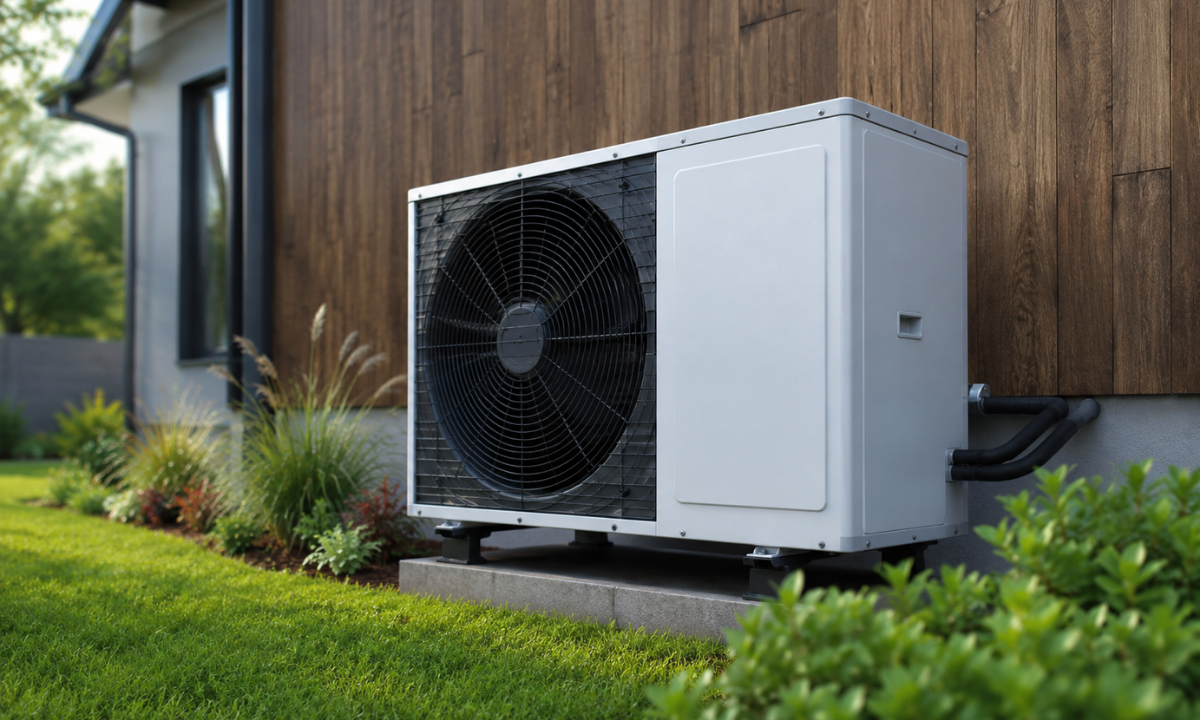
A heat pump is a device that transfers heat from one place to another instead of generating it. For heating purposes, it pulls heat from the outdoor air and moves it into your home, water tank, or commercial space.
The name can be a little misleading. A heat pump does not pump hot air in. It pumps heat energy, which is a very different thing. Even air that feels cold to you still contains a significant amount of thermal energy, and a heat pump is designed to extract and use exactly that.
This is what separates a heat pump heating system from a conventional electric geyser or room heater. A heater converts electricity into warmth at a 1:1 ratio. A heat pump uses electricity only to run the mechanism that moves heat, which means for every 1 unit of electricity it consumes, it delivers 3 to 5 units of usable heat.
That ratio is called the Coefficient of Performance, or COP, and it is the reason heat pumps cut heating electricity costs by up to 70%.
Where Does a Heat Pump Get Its Heat?
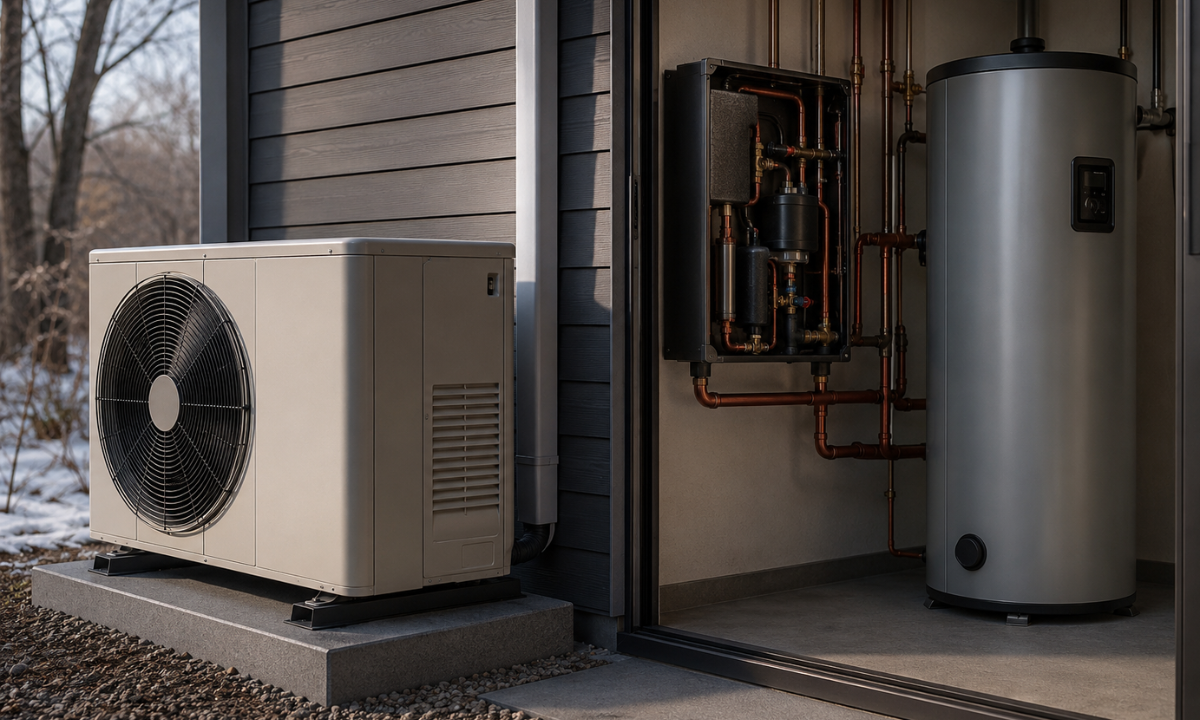
A heat pump gets its heat from the surrounding environment. The most common type used in homes and businesses is an air-source heat pump, which draws heat directly from outdoor air.
Here is the step-by-step process:
Step 1 — Fan draws in outdoor air: The outdoor unit pulls ambient air in using a built-in fan. The air does not need to be warm. Heat pumps can extract usable heat from air as cool as 5 to 7 degrees Celsius.
Step 2 — Refrigerant absorbs the heat: Inside the unit, a refrigerant fluid runs through a coil called the evaporator. Even at low temperatures, the outdoor air has enough energy to warm the refrigerant and convert it from a liquid into a gas.
Step 3 — Compressor raises the temperature: The gas refrigerant is compressed. Compressing a gas raises its temperature significantly. This step uses a small amount of electricity but dramatically increases the heat available.
Step 4 — Heat transfers to your water or space: The hot refrigerant passes through a heat exchanger connected to your water tank or indoor unit. The heat moves across, and your water or room reaches the temperature you need.
Step 5 — Cycle resets and repeats: The refrigerant cools back into a liquid and flows back to the outdoor unit. The cycle continues as long as heating is needed.
Other types of heat pumps source their heat differently. Ground-source heat pumps extract heat stored in the earth, which stays at a stable temperature year-round. Water-source heat pumps draw heat from a nearby water body. However, for most residential and commercial applications in India, air-source remains the most practical and cost-effective choice.
Can You Heat a House with a Heat Pump?
Yes, completely. A heat pump can serve as the primary heating system for an entire home.
In countries like the UK, Germany, and Japan, heat pumps have already replaced gas boilers as the standard home heating solution. In India, the adoption is growing rapidly, particularly for water heating in homes, apartments, hotels, and hospitals.
A home heating heat pump can be set up to deliver:
- Hot water for bathrooms and kitchens via a connected storage tank
- Warm air through a ducted system or fan coil units in individual rooms
- Underfloor heating in villas and premium residential projects
- Central hot water supply for apartment complexes and commercial buildings
The capacity of the system scales with your requirements. A single-family home needs a smaller unit, while a hotel or hospital running a 24-hour hot water supply needs a larger commercial-grade system. Sun-AP Ecopower is one of the leading solar heat pump dealers in India, working with clients across both residential and commercial applications to size and recommend the right setup.
One common concern is whether a heat pump can keep up on particularly cold days. Modern heat pumps are designed to perform reliably even when outdoor temperatures drop, and in the Indian context, where temperatures rarely go below 10 degrees even in winter, performance remains consistently strong throughout the year.
Heat Pump vs Traditional Heating Systems
Understanding how a heat pump compares to what you already have makes the decision much clearer.
| Factor | Heat Pump | Electric Geyser | Gas Boiler |
|---|---|---|---|
| How it produces heat | Moves heat from the air | Generates heat from electricity | Burns gas to create heat |
| Efficiency (COP) | 3 to 5 | 1 | 0.85 to 0.95 |
| Electricity consumption | Very low | High | Low gas cost is high |
| Running cost | Up to 70% lower than a geyser | High | Depends on gas prices |
| Works without sunlight | Yes | Yes | Yes |
| Carbon emissions | Very low | Moderate | High |
| Can also cool | Yes (reversible models) | No | No |
| Lifespan | 10 to 15 years | 5 to 8 years | 10 to 15 years |
For most Indian households and businesses, the comparison that matters most is heat pump vs electric geyser, since gas-fired boilers are not widely used in residential settings here. In that comparison, the heat pump wins on every metric except upfront installation cost, which it recovers within 2 to 4 years through electricity savings.
Pairing a heat pump with solar panels makes the economics even stronger. When the compressor runs on solar energy during the day, the effective cost of heating drops close to zero for those hours. A hybrid solar inverter with battery storage extends this benefit into the evening as well.
Benefits of Heat Pump Heating
Dramatically lower electricity bills: The biggest reason people switch. A heat pump delivering hot water for a family of four can save anywhere from ₹2,000 to ₹5,000 per month compared to a conventional geyser, depending on usage and local electricity tariffs.
Works year-round: Unlike solar water heaters that depend on direct sunlight, a heat pump operates reliably on cloudy days, at night, and through the monsoon season without any backup heating element kicking in.
One system for heating and cooling: Reversible heat pump models can both heat and cool a space, making them a full-year comfort solution without needing separate systems for summer and winter.
Environmentally responsible: Because a heat pump moves heat rather than burning fuel, its carbon footprint is significantly lower than gas boilers and meaningfully lower than electric resistance heating when powered by solar panels sourced from trusted solar products distributors in India like Sun-AP Ecopower, the system becomes nearly carbon-neutral.
Low maintenance: The primary maintenance requirements are periodic cleaning of the outdoor unit and an annual refrigerant level check. There are no burners, no fuel lines, and no combustion components to service.
Long operational life: A well-maintained heat pump runs reliably for 10 to 15 years, which is nearly double the lifespan of a typical electric geyser.
Scalable for any application: From a single household to a large hotel or hospital, heat pump systems scale cleanly. The same technology that heats your bathroom water also serves high-volume commercial hot water demands with consistent efficiency.
Are Heat Pumps Efficient in Winter?
Yes, and this is one of the most common misconceptions worth clearing up directly.
Heat pumps do not require warm outdoor air to function. They require outdoor air that contains heat energy, and almost all air does, even on a cold morning. The technology is designed to extract thermal energy from air temperatures as low as 5 degrees Celsius, which covers even the coldest winter days across the vast majority of India.
In cities like Bangalore, Hyderabad, Mumbai, and Chennai, winter temperatures rarely fall below 15 to 18 degrees, meaning a heat pump in these cities operates at near-peak efficiency all year with virtually no seasonal drop in performance.
Even in cooler parts of India like Pune, parts of Rajasthan, or hill stations in Karnataka and Tamil Nadu, where temperatures can touch 8 to 10 degrees in January, a modern air-source heat pump maintains a COP of 2.5 to 3, which still means 2.5 units of heat for every 1 unit of electricity consumed. That is still far more efficient than a geyser.
The efficiency does reduce slightly as outdoor temperature drops, but for Indian conditions, it remains significantly better than any conventional heating alternative throughout the year.
Common Heat Pump Questions Answered
What is the difference between a heat pump and an air conditioner?
They work on the same refrigeration principle. An air conditioner only moves heat in one direction: out of your home to cool it. A heat pump has a reversing valve that allows it to run the cycle in both directions, cooling in summer and heating in winter with the same unit.
How much does it cost to run a heat pump in India?
Running costs depend on your local electricity tariff and the capacity of the system. As a rough benchmark, a heat pump producing the same amount of hot water as a 2kW electric geyser running for 2 hours a day would consume approximately 30 to 40% of the electricity, translating to significant monthly savings at any tariff rate.
Can I connect a heat pump to my existing solar setup?
Yes. A heat pump can be connected to your solar inverter system so it prioritises solar power during the day. With a hybrid solar inverter and battery storage, you can extend solar-powered operation into the evening and further reduce grid electricity dependence.
Does a heat pump work during a power cut?
No. Like any electrically powered appliance, a heat pump requires electricity to run the compressor. However, if paired with a battery storage system, it can continue operating on stored energy during short outages.
How long does installation take?
A standard residential heat pump water heater installation typically takes one day. Larger commercial installations may take two to three days, depending on the scope.
Is a heat pump noisy?
Modern heat pumps are designed to operate quietly. The outdoor unit produces a low hum comparable to a split air conditioner, which is generally not audible from inside the home.
Do I need to replace my entire plumbing system?
No. A heat pump water heater connects to your existing hot water plumbing and storage tank setup in most cases, with minimal modification required.