If you are an EPC contractor, solar installer, commercial developer, or industrial buyer searching for a reliable solar panel supplier in Bangalore — this page covers everything you need to know about Sun AP Ecopower’s B2B supply capabilities, brand portfolio, pricing structure, and logistics support.
Sun AP Ecopower is an authorised distributor and dealer for multiple premium solar panel brands in Bangalore — supplying solar panels, solar inverters, lithium batteries, meters, and complete balance-of-system components to B2B buyers across India and internationally.
Why B2B Solar Buyers in Bangalore Choose Sun AP Ecopower
Getting true wholesale pricing requires buying directly from authorised master distributors rather than sub-dealers — avoiding middleman margins. Sun AP Ecopower operates as an authorised distributor for multiple international and Indian solar panel brands — providing EPC contractors and commercial developers direct access to competitive bulk pricing with full manufacturer warranty and GST-compliant invoicing.
What makes Sun AP Ecopower different from other solar panel suppliers in Bangalore:
Multi-brand authorised portfolio
Sun AP Ecopower is authorised to supply solar panels from Panasonic, Adani, Novasys, and REC — alongside inverters from Fimer ABB, Feston, DEYE, Sungrow, Enphase, SolarEdge, Fuji Electric, and Si-Neng. A single procurement relationship covers multiple premium brands — reducing the need to manage multiple vendor accounts.
BESCOM and CESC approved products
All inverters and panels supplied by Sun AP Ecopower are compliant with BESCOM net metering requirements for Karnataka — and CESC requirements for other southern states. This is critical for EPC contractors whose projects require DISCOM approval for grid-connected systems.
PM Surya Ghar Scheme eligible products
Sun AP Ecopower supplies solar panels and inverters eligible for PM Surya Ghar Muft Bijli Yojana subsidy — and assists B2B buyers with documentation requirements for subsidy processing.
GST-compliant invoicing
All supply is fully GST-compliant with proper HSN codes. Solar panels, inverters, and mounting structures attract 5% GST under the concessional rate for solar power generating systems — ensuring full Input Tax Credit (ITC) eligibility for registered B2B buyers.
International supply capability
Sun AP Ecopower supplies solar panels and equipment to EPC contractors and developers in the GCC countries, East Africa, West Africa, and North Africa — in addition to domestic Indian supply. For Indian contractors executing international solar projects — Sun AP Ecopower provides a single supply point for both domestic and export requirements.
Solar Panel Brands Available Through Sun AP Ecopower Bangalore
| Brand | Panel Type | Best Application | Authorised |
|---|---|---|---|
| Panasonic | High-efficiency HIT panels | Premium residential, commercial | ✅ |
| Adani | Monocrystalline, bifacial | Utility, large commercial rooftop | ✅ |
| Novasys | Monocrystalline | Residential, commercial | ✅ |
| REC | TwinPeak, Alpha series | Premium residential, commercial | ✅ |
| Enphase (panels + microinverters) | High-efficiency modules | Shaded rooftops, complex installations | ✅ |
For capacity-specific requirements — contact Sun AP Ecopower at +91 88844 90100 for availability, specifications, and current bulk pricing.
Who We Supply—B2B Buyer Categories
EPC Contractors and Solar Installers
EPC contractors and solar installers in Bangalore and across Karnataka are among Sun AP Ecopower’s primary B2B buyers. We supply complete project requirements — panels, inverters, mounting structures, cables, connectors, ACDB/DCDB, and meters — from a single procurement point.
What EPC contractors get from Sun AP Ecopower:
- Pre-qualified brand portfolio with BESCOM net metering approval
- Technical support for system design and component selection
- Competitive bulk pricing with structured payment terms
- Reliable inventory availability for projects of all sizes
- GST-compliant invoicing for full ITC claim
Commercial and Industrial Developers
Businesses developing commercial rooftop solar projects — factories, warehouses, office complexes, hospitals, educational institutions — require reliable supply of certified components with full manufacturer warranty.
Sun AP Ecopower supplies commercial and industrial projects with:
- High-efficiency monocrystalline and bifacial panels suitable for commercial rooftops
- String inverters and hybrid inverters from Fimer ABB, Feston, Sungrow, and DEYE
- Energy Storage Systems (ESS) with lithium batteries for industrial backup applications
- Metering and monitoring solutions including DEIF controllers and Secure meters
Wholesalers and Regional Distributors
Solar equipment wholesalers and regional distributors looking for a reliable Bangalore-based source for premium international brands can access Sun AP Ecopower’s full inventory. We supply to distributors across Karnataka, Tamil Nadu, Andhra Pradesh, Telangana, and Kerala.
International Importers and Exporters
Sun AP Ecopower has an established international supply network — supplying solar panels and equipment to buyers in UAE, Dubai, Bahrain, Zambia, Zimbabwe, Ghana, Botswana, Tanzania, Ivory Coast, Ethiopia, Somalia, Johannesburg, Lagos, Nairobi, Cairo, Cape Town, Casablanca, and Lusaka.
Indian EPC contractors executing international projects can procure all equipment through a single authorised source with proper export documentation and logistics support.
Solar Panel Technical Specifications — What B2B Buyers Need to Know
Panel Types Available
Monocrystalline Solar Panels The most widely used panel type for commercial and residential rooftop projects in Bangalore. Monocrystalline panels offer efficiency ratings of 19–22% — providing more power output per square metre than polycrystalline alternatives. Ideal for rooftops with limited available space where maximum power density is required.
Bifacial Solar Panels Bifacial panels generate power from both the front and rear surfaces — capturing reflected light from rooftop surfaces, ground, or adjacent structures. Efficiency gain of 5–20% over standard monocrystalline depending on installation conditions. Preferred for large commercial rooftops, carports, and ground-mounted utility systems.
High-Efficiency HIT Panels (Panasonic) Panasonic’s HIT (Heterojunction with Intrinsic Thin layer) technology delivers industry-leading efficiency above 22% with superior performance in high ambient temperature conditions — making them particularly suitable for Bangalore’s warm climate where standard panels experience efficiency degradation.
Performance in Indian Climate Conditions
B2B buyers in Bangalore and Karnataka should consider these India-specific performance factors:
Temperature coefficient: Bangalore’s ambient temperature regularly reaches 35–42°C in summer. Higher temperatures reduce solar panel output. Look for panels with low temperature coefficient (below -0.35%/°C) for better summer performance.
Humidity resistance: Monsoon humidity affects panel degradation over time. Panels with IP68-rated junction boxes and anti-PID (Potential Induced Degradation) certification perform significantly better in Karnataka’s monsoon conditions.
Dust soiling: Bangalore’s dry seasons cause significant dust accumulation on panels. Self-cleaning glass coating or anti-soiling surface treatment reduces output degradation between cleaning cycles.
Sun AP Ecopower advises on the right panel specification for your specific project location and conditions. Call +91 88844 90100 for a technical consultation.
Bangalore B2B Solar Market — Why Demand Is Growing
Bangalore Electricity Supply Company (BESCOM) is the electricity supplier serving the entire Bengaluru area and is actively expanding the city’s solar supply capacity — with approximately 55% of buildings in the city now consuming electricity from renewable sources. nih
This rapid adoption is being driven by:
Rising electricity tariffs: BESCOM commercial and industrial tariff increases are making solar energy increasingly competitive with grid power. For commercial buyers consuming above 500 units/month — solar ROI is typically 4–6 years.
Net metering policy: Karnataka’s net metering policy allows commercial solar installations to export surplus power to the grid and earn credits — improving project economics significantly for daytime-heavy commercial consumers.
PM Surya Ghar Scheme: Government subsidy of ₹78,000 for 3 kW systems and higher subsidies for larger installations is driving residential demand — creating project pipeline for EPC contractors across Bangalore.
Corporate sustainability targets: Bangalore’s large IT and manufacturing sector is increasingly subject to ESG and sustainability commitments — driving demand for verified green energy through rooftop solar installations.
How to Order Solar Panels from Sun AP Ecopower in Bangalore
Step 1 — Share your requirement Contact us with project details — system capacity, panel type preference, inverter requirement, location, and timeline. Call +91 88844 90100 or email marketing@sunapecopower.com
Step 2 — Receive technical recommendation Our technical team reviews your requirement and recommends the optimal panel and inverter combination for your specific application — with specifications, efficiency data, and warranty details.
Step 3 — Receive commercial proposal We provide a detailed commercial proposal with unit pricing, bulk discount structure, GST breakdown, payment terms, and delivery timeline.
Step 4 — Confirm order and delivery Upon order confirmation — we coordinate delivery to your project site or warehouse with proper packaging and transport documentation.
Step 5 — Post-supply support Sun AP Ecopower provides after-sales technical support for all supplied equipment — including inverter configuration assistance, BESCOM documentation support, and warranty claim coordination.
Contact Sun AP Ecopower — B2B Solar Panel Supply Bangalore
Sun AP Ecopower Private Limited 393, 2nd Cross, Dollars Colony JP Nagar, 4th Phase Bangalore, Karnataka — 560078
Phone: +91 88844 90100 +91 88844 66393 +91 88844 11530
Email: marketing@sunapecopower.com
WhatsApp: +91 88844 90100
Working Hours: Monday to Saturday, 9 AM to 6 PM
What are the Main Components of a Solar Energy System?
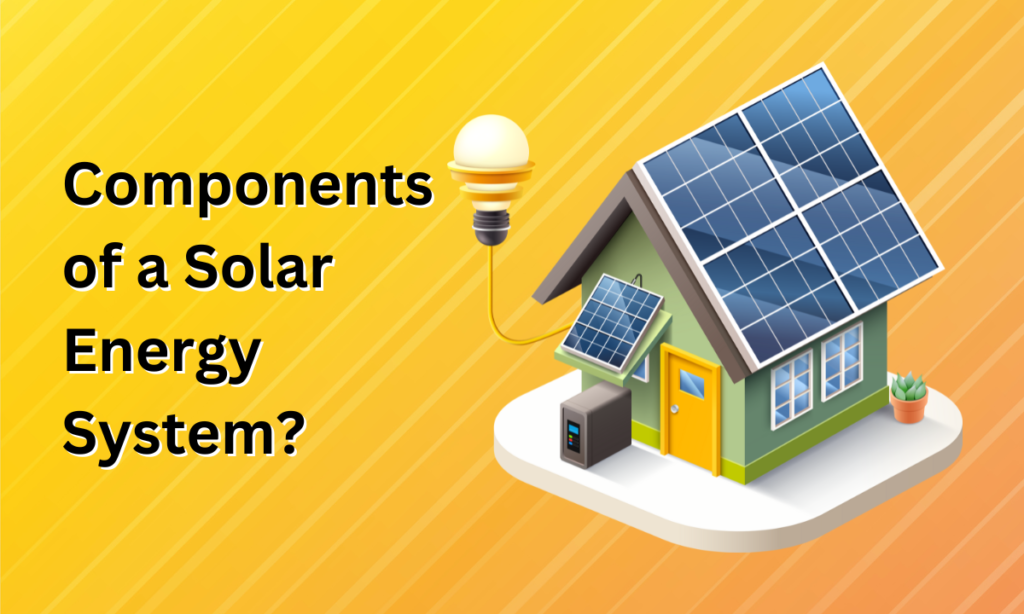
The main components of a residential solar energy system include:
- Solar Panels – Also called photovoltaic (PV) panels, these convert sunlight directly into electricity through solar cells. PV panels come in different sizes and efficiencies
- Solar Inverters- Changes over the immediate flow (DC) power produced by solar panels into exchanging current (AC) that can control home devices.
- Mounting Hardware – Racks or rails that securely attach solar panels to your home’s roof or the ground. Popular options include roof mounts, ground mounts, and pole mounts.
- Wiring and Electrical Components – Cables, junction boxes and circuit breakers that safely integrate the solar electric system with your home’s electrical wiring and distribute power.
- Monitoring System- A device that tracks energy production and lets you monitor your system’s performance through a web portal or app.
Together, these parts fill in as a coordinated framework to reap sun based energy and supply clean capacity to your home. Appropriate establishment is significant for most extreme execution and wellbeing.
How Big of a Solar Panel System Do You Need?
The size of your solar array—the collection of solar panels—depends on several factors:
- Your home’s energy usage – Larger homes use more power, so they generally require more solar panels. Analyze past utility bills to estimate yearly kilowatt-hour (kWh) needs.
- Available roof or yard space – You need adequate area to install the required number of panels without overcrowding. Most residential systems occupy 25-50 square meters.
- Location and sun exposure – More sunlight means higher solar output. Consider factors like shading, altitude and climate zone when sizing the system.
- Desired self-sufficiency – Most homeowners aim for a system that covers 70-100% of annual usage, though any production lowers bills. Consider battery storage for more off-grid capabilities.
Reputable solar companies offer system designing software and on-site assessments to accurately size a setup based on your specific home and energy profile. Oversizing is generally not recommended due to higher upfront costs.
Solar Panel Maintenance Requirements
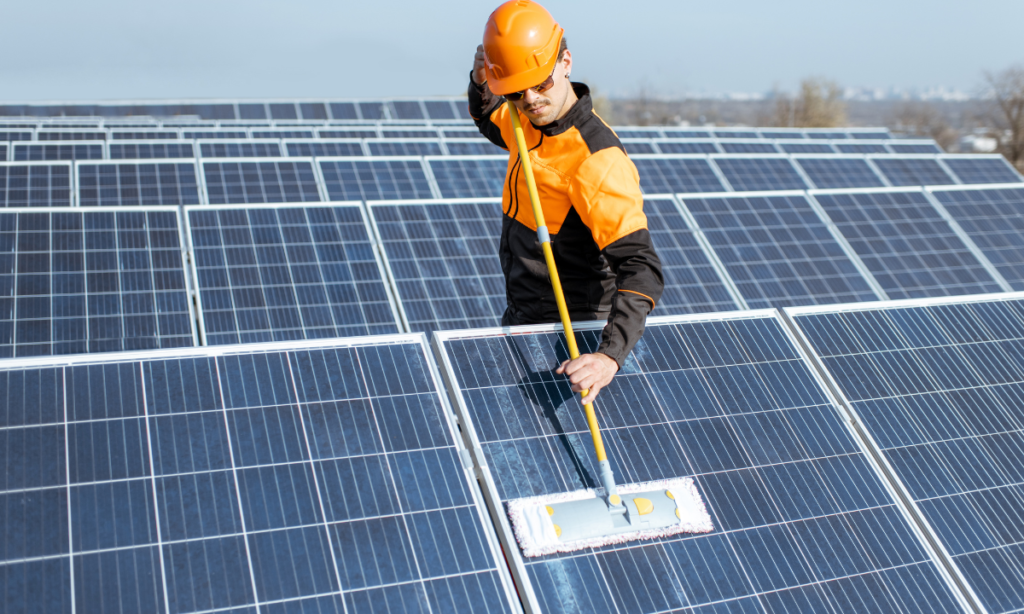
Once installed, solar panels are designed to require very little maintenance over their multi-decade operational period. However, some basic upkeep is recommended:
- Annual panel cleaning – Use water and a soft brush to remove dust, leaves or other debris that can reduce output.
- Quarterly equipment checks – Inspect electrical connections, wiring and structural mounts for any issues like corrosion or wear.
- System monitoring – Check inverter readings monthly. Consider monitoring hardware to catch small problems before they escalate.
- Tree trimming – Make sure nearby foliage doesn’t cast shade on panels, especially during peak sun hours.
- System servicing – Professionals should inspect hardware every 5-10 years and replace components near end-of-life.
With some minor cleaning and basic checks, solar systems are engineered for long-term reliable power production with minimal maintenance headaches for homeowners.
Making the Switch to Solar Power
For many homeowners, the prospect of lower electricity bills, stable energy costs, environmental benefits and independence from the utility grid makes solar power an attractive long-term investment. Just be sure to work with a top-rated local solar installer to size the right system for your needs and budget. Ask family and friends for solar provider referrals as well.
With federal tax incentives available through 2023, plus the rapid payback timelines offered by today’s technology, now is an excellent time to go solar. Contact installers for free site assessments to explore if solar power is the right clean energy solution for your home. With a very much arranged framework, you’ll tackle the sun’s inexhaustible abundance into the indefinite future.
How Solar panels convert daylight into power?
Certainly, here’s a more point by point clarification of how solar panels convert daylight into power:
- Solar panels are photovoltaic (PV) cells that comprise semiconducting materials, most usually silicon. Silicon is chosen because it readily absorbs photons, the particles that make up light.
- When sunlight hits the solar cells, the photons are absorbed by the silicon atoms. This interaction causes electrons in the silicon to break free from their atomic bonds. But the electrons don’t just float around loosely – the PV cells are designed with a positive and negative layer on either side, like a basic battery.
- The electrons that broke free start flowing towards the positive layer, also known as the P-type layer. But they can’t pass through it due to the material’s composition. Instead, they get trapped between the positive and negative layers (the N-type layer).
- This process of sunlight knocking electrons loose and trapping them between the P and N layers produces direct current (DC) electricity. However, the type of electricity that homes and appliances is alternating current (AC).
- So to make the solar-generated DC useful, it gets passed to an inverter. The inverter transforms the DC into AC that syncs with the frequency of your local power grid. Then it can be used immediately by electronics in the home or exported back to the grid through the electrical panel.
This seamless process allows solar panels to continuously collect photons from the sun and spontaneously produce electricity that powers our lights, TVs and more without the need for fossil fuels. It’s genuinely a rich clean energy arrangement made conceivable by the PV impact in semi-leading materials.
Are there any constraints or downsides to use solar panels for power age?
Yes, there are a few limitations and drawbacks to be aware of with solar power:
- Intermittency refers to the fact that solar panels can only generate electricity when the sun is shining. On cloudy or low light days, panel output is reduced. Some areas may not get enough annual sunlight for high solar yields.
- High upfront costs – The installation and equipment for a solar energy system represents a significant initial investment. Costs have declined but can still be a barrier for some homeowners.
- Limited lifespan – Currently, solar panels are rated to generate usable power for around 25 years. After that their efficiency decreases until replacement is needed. Batteries have even shorter lifespans.
- Roof damage – Some mounting techniques, especially on poorly installed flat roofs, have potential to cause small leaks that compromise roof integrity over decades. Regular inspections are important.
- Shading – Panel performance drops sharply if any portion is shaded by trees, chimneys or other objects even part of the day. Proper site analysis is critical.
- Reliance on grid – Most solar installations still depend on utility power at night or on cloudy days. Batteries add substantial expense for full energy independence.
- Technology improvements – The pace of progress means newer solar cells may more efficiently utilize sunlight a few years after installation.
However, these limitations are generally outweighed by solar’s clean, renewable energy benefits for most homeowners. With legitimate preparation and support, solar power stays a beneficial venture for the future.
Sun-AP Ecopower is one of the leading solar panel distributors in India, providing high-quality solar products nationwide.