When evaluating a renewable energy asset, it is easy to focus entirely on the physical footprint: the rows of silicon photovoltaic cells catching sunlight on a roof or the clean casing of a central inverter. However, in the modern landscape of clean energy, hardware is only half the equation.
The true differentiator between a system that merely functions and one that operates at its absolute peak performance lies in the processing of data.
As premium Solar Product dealers in India, we have witnessed a massive shift in how energy assets are managed. The introduction of advanced solar monitoring systems has turned standard arrays into smart, data-generating nodes, shifting the industry away from passive power generation and toward predictive energy optimization.
For a long time, residential and commercial solar setups operated on a blind trust model. An array was installed, and unless a major component completely failed or the monthly utility bill unexpectedly surged, the asset owner had no idea if the panels were operating at peak capacity. Minor structural degradations, localized shading, and string failures could go completely unnoticed for months, quietly eating away at your return on investment.
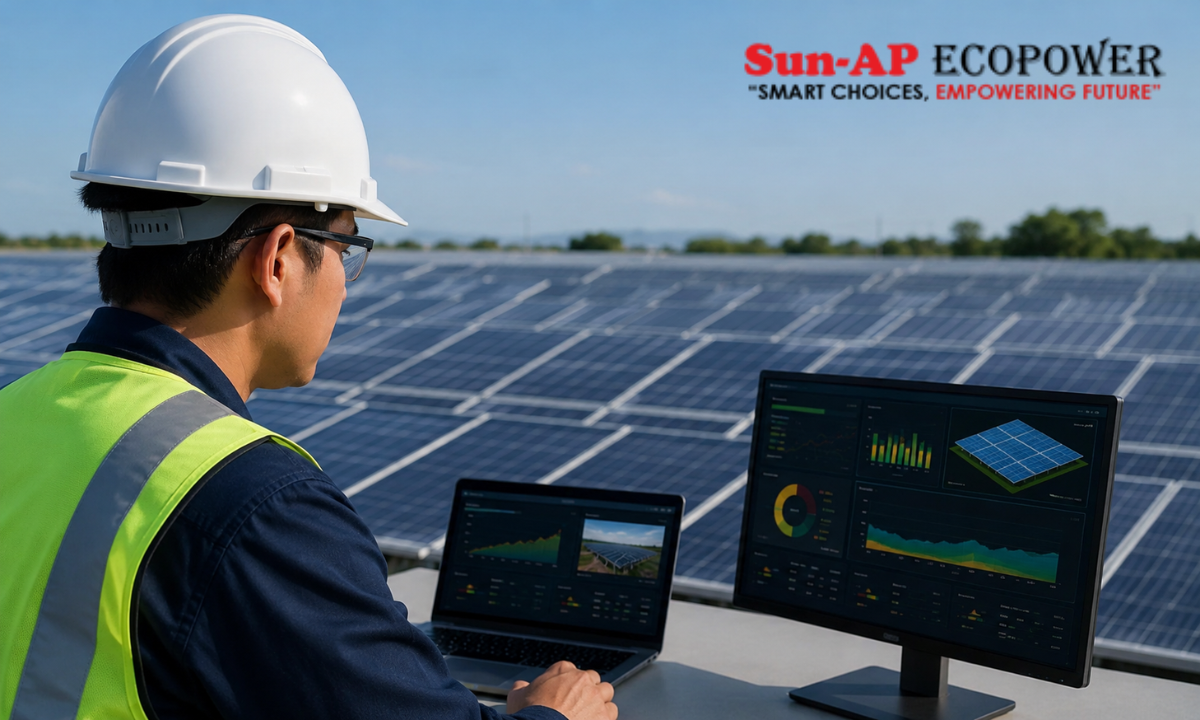
Integrating intelligent cloud-based monitoring into your system, you gain an active digital twin of your solar array. This software infrastructure continuously analyzes production metrics, paving the way for maximum efficiency and long-term asset security.
Telemetry vs. Intelligence: The AI Shift
The solar industry suffers from a severe case of buzzword fatigue. Today, almost every standard Wi-Fi dongle attached to an inverter is aggressively marketed as “smart.”
However, as engineering professionals and EPC contractors, we must draw a hard technical line between basic telemetry and actual artificial intelligence in solar energy.
The Telemetry Baseline
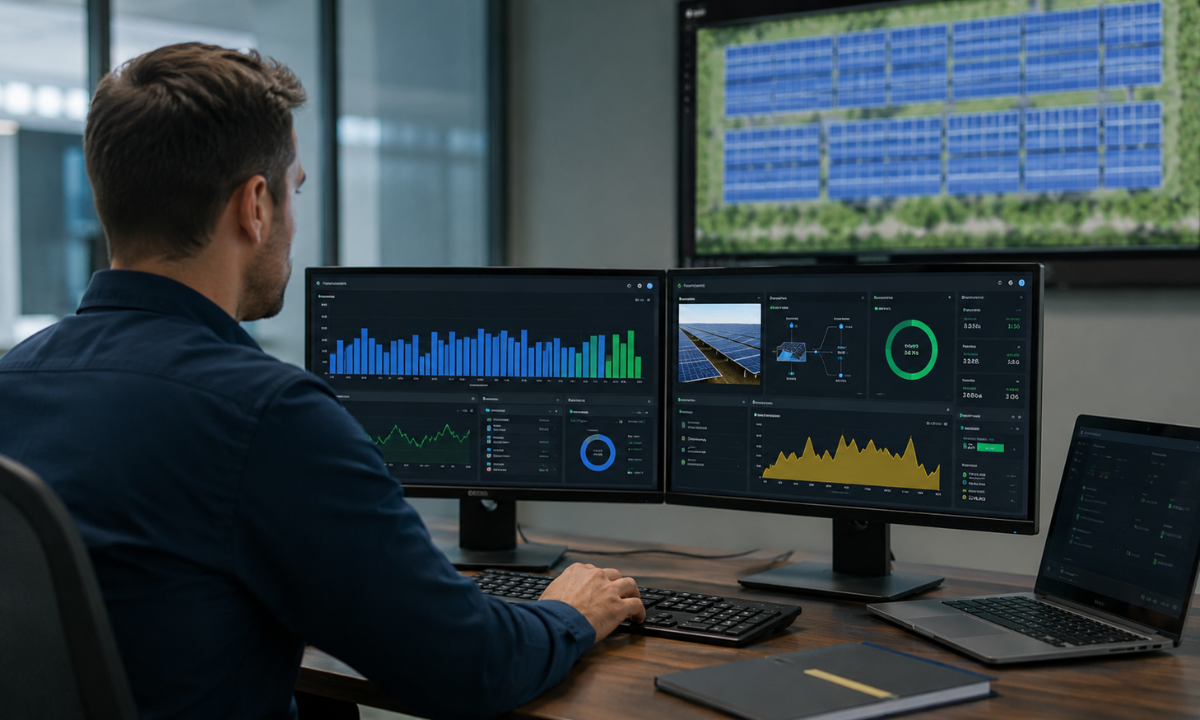
Basic real-time solar monitoring is essentially a digital ledger. It captures raw output data, such as the total kilowatt-hours generated today or the current battery state-of-charge and displays it on a dashboard.
While this provides a basic level of peace of mind, it is an inherently reactive technology. Telemetry can only tell you what has already happened. If a specific string of panels underperforms by 15% due to a failing connector, a standard monitoring app will likely not flag the issue.
It leaves the asset owner or O&M team to manually deduce the discrepancy weeks later when the utility bill fails to reflect the expected savings.
The True AI Shift
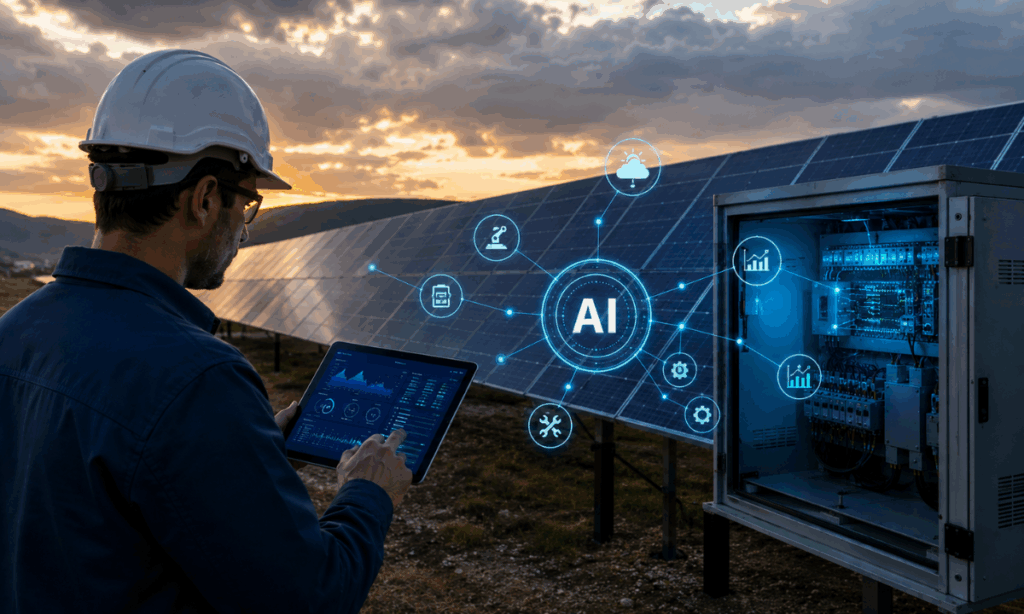
Artificial intelligence transforms the solar array from a passive hardware asset into an active, self-diagnosing network. Much like how a sophisticated computer vision application parses raw image pixels to automatically extract and automate complex physical measurements, a true AI solar platform parses thousands of micro-voltage and current data points per second to extract distinct behavioral signatures from your hardware.
It does not just display numbers; it actively interprets the physics of your system using predictive machine learning models:
- Dynamic Baseline Modeling: The AI cross-references your specific panel and inverter models with real-time satellite weather forecasting (like cloud cover and localized irradiance) to calculate exactly what your system should be producing at any given second.
- Electrical Signature Recognition: Machine learning algorithms are trained to recognize the exact electrical footprints of different system faults. The AI instantly knows the difference between a voltage drop caused by a passing rain cloud and a voltage drop caused by a burnt bypass diode.
- Proactive Interventions: Instead of waiting for a total inverter shutdown to trigger an alarm, the algorithm flags micro-degradation trends weeks in advance, allowing for precision maintenance before revenue is lost.
Bridging the gap between raw hardware telemetry and intelligent data processing, AI completely shifts the paradigm of asset management from reactive repair to predictive optimization.
Micro-Level Analytics & Anomaly Detection
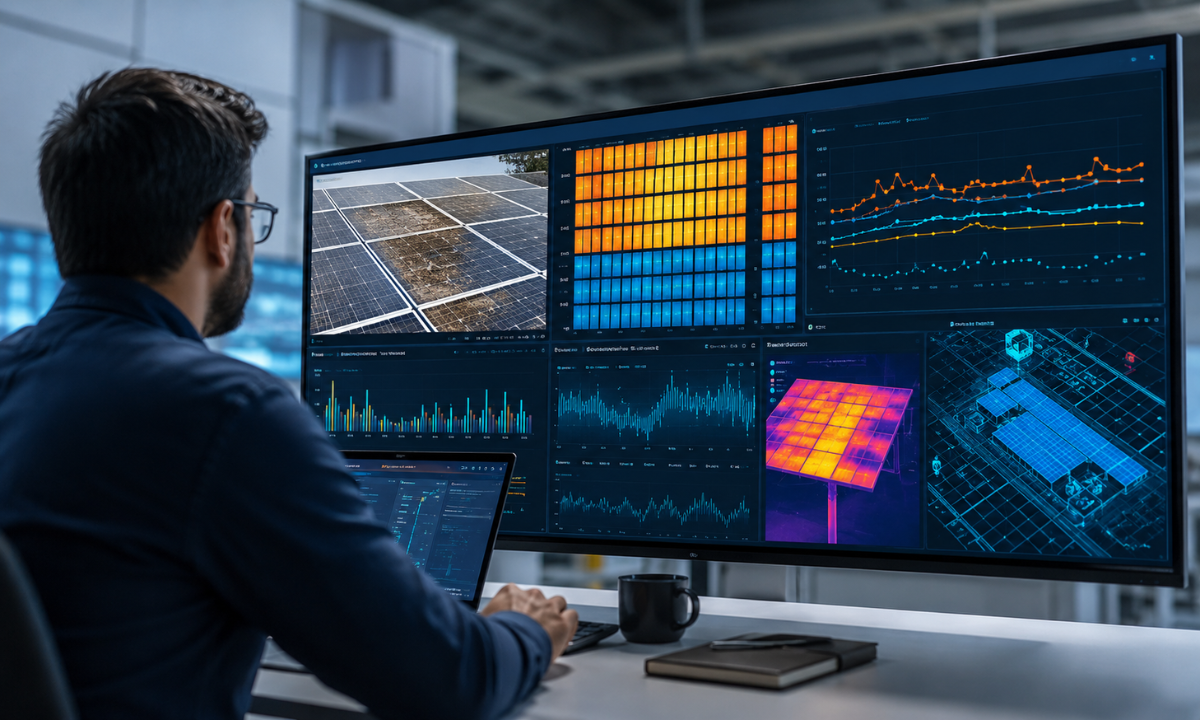
To understand how software directly unlocks greater generation from your hardware, you have to look at the physics of a solar array.
A typical solar installation is a highly interconnected electrical circuit. In traditional string configurations, individual photovoltaic cells are wired together in series; if just a single cell underperforms due to dirt, a fallen leaf, or localized damage, it acts as a bottleneck, dragging down the solar panel efficiency of the entire string.
This is where AI-driven smart solar monitoring shifts the math in your favor. Instead of looking at the system as a single, massive power source, the algorithm continuously analyzes individual modules, strings, and micro-inverters.
1. Predictive Soiling Analysis
Dust and bird droppings are major challenges for solar output in India, causing gradual generation drops that can easily slip under the radar. AI models continuously cross-reference your array’s production curves with localized weather patterns and nearby solar systems. By calculating the exact rate of dust accumulation, the system eliminates guesswork.
Instead of cleaning your panels on a rigid, arbitrary schedule, the platform alerts you at the exact moment the cleaning cost matches the value of the lost power generation.
2. Thermal Stress and Micro-Crack Tracking
When a solar panel is subjected to physical stress, whether from strong winds or intense thermal expansion, microscopic cracks can form within the silicon cells.
These micro-cracks are completely invisible to the naked eye but introduce severe electrical resistance into the circuit. Over time, this resistance creates highly localized “hotspots” that can permanently degrade the panel or melt internal components.
AI monitoring platforms continuously evaluate the voltage-current ($I\text{-}V$) curve of the system. If a hotspot begins to develop, the algorithm instantly flags the exact panel location. This allows you to catch the damage early, isolate the affected hardware, and swap it out under warranty long before it escalates into a fire hazard or forces a full system shutdown.
3. Intelligent Shading Compensation
Trees grow, and urban buildings change over time. When a new shadow touches your roof line, traditional systems experience severe efficiency losses.
An AI-optimized energy platform tracks these shadow patterns as they move across your array throughout the day. It then communicates directly with smart optimizers or micro-inverters to isolate the shaded panels, ensuring the remaining unshaded modules continue to pump out power at full capacity.
Revolutionizing Solar Operations and Maintenance (O&M)
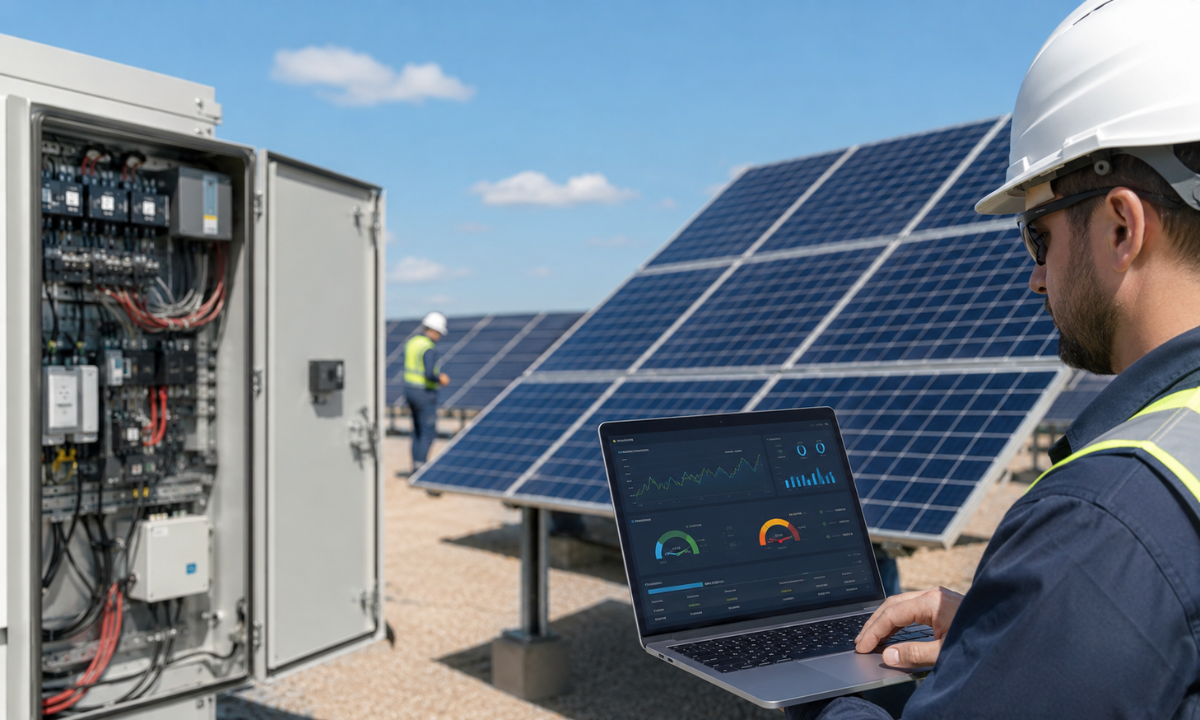
For commercial property managers, industrial facilities, and solar EPC contractors, the long-term financial return of a solar array is heavily dependent on a single metric: uptime. Every hour an inverter sits offline, or a string runs at sub-optimal capacity, directly erodes the project’s financial payback period.
Traditionally, managing this risk required a heavy commitment to physical solar operations and maintenance (O&M), a reactive workflow that involved dispatching technical crews with handheld multimeters and thermal imaging cameras to manually trace faults across hundreds of panels.
AI-powered solar performance monitoring completely rewrites this operational playbook, shifting O&M from an expensive, reactive necessity to a highly streamlined, predictive science.
1. Zero-Touch Remote Diagnostics
When a traditional solar installation experiences a drop in generation, an O&M team must first travel to the site simply to diagnose the root cause. This “truck roll” costs significant time and money.
An AI-driven monitoring platform eliminates this initial step through autonomous remote diagnostics. Because the system continuously tracks real-time data across every piece of hardware, it can instantly isolate the specific component causing the issue. For instance, instead of a vague “system underperforming” alert, the software issues a highly precise ticket: “String 3, Inverter 2: Voltage drop detected.
Probable cause: Loose MC4 connector at Panel 12.” This level of granular insight ensures that when a technician is dispatched to the site, they arrive with the exact replacement part required, resolving the issue on the very first visit.
2. Automated Smart Workflows
Managing multi-site solar assets can quickly overwhelm operational teams if they rely on manual oversight. AI monitoring engines solve this by automating the entire ticket-generation process.
When an anomaly matches a known fault signature, the platform automatically generates an O&M service ticket, prioritizes it based on the financial impact of the lost power generation, and routes it directly to the nearest field engineer.
3. Transitioning to True Predictive Maintenance
The ultimate value of artificial intelligence lies in its ability to look ahead. By tracking subtle changes in inverter temperatures, grid-coupling impedances, and harmonic distortions, machine learning algorithms can detect components that are on the verge of failing weeks before they actually break down.
This predictive window allows asset owners to schedule repairs during routine, low-irradiance nighttime hours, completely avoiding costly daytime generation outages.
The Hardware Prerequisite for Smart Management
It is a common misconception that you can simply download a sophisticated AI app and force your existing, budget-grade solar array to become smart.
In reality, software is entirely limited by the physical hardware feeding it. You cannot run high-fidelity analytics if your inverter’s internal sensors are only capable of transmitting low-resolution data once every ten minutes.
To achieve true smart solar energy management, the physical backbone of your system must be explicitly engineered for high-bandwidth data transmission.
The Communication Gateway
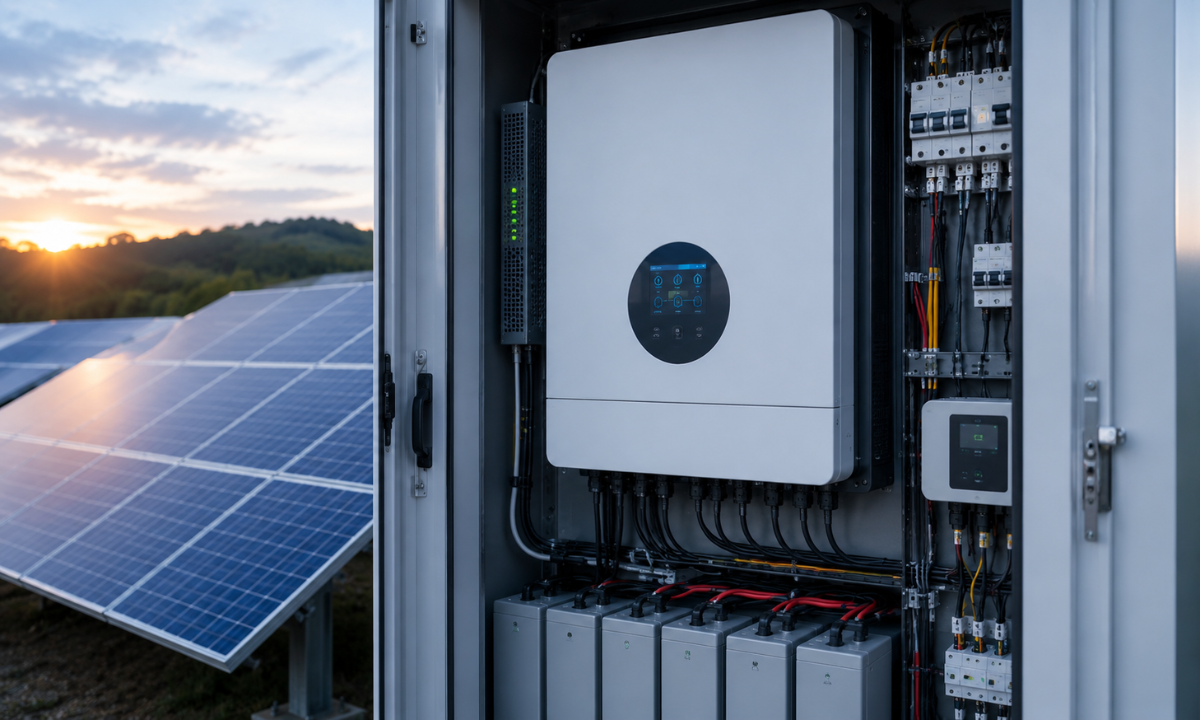
The brain of an AI-optimized solar array is the communication gateway built into (or attached to) the inverter. Tier-1 manufacturers prioritize this hardware just as much as the power conversion components.
1. Micro-Inverter Ecosystems: Brands like Enphase utilize advanced communication hubs (such as the IQ Gateway) that communicate with every single micro-inverter on the roof via Power Line Communication (PLC).
This allows the AI platform to pull real-time, per-panel generation data, enabling granular anomaly detection and automated grid-export limiting.
2. Smart Hybrid Architecture: Leading hybrid inverter manufacturers, such as Deye, integrate robust Wi-Fi and Ethernet data loggers directly into their chassis.
These gateways do not just track solar generation; they monitor the battery’s State of Charge (SoC), track the localized grid voltage, and even monitor diesel generator inputs. This multi-stream data allows their cloud platforms to execute complex, AI-driven peak-shaving and dynamic load-shifting strategies.
The ALMM and BIS Mandate
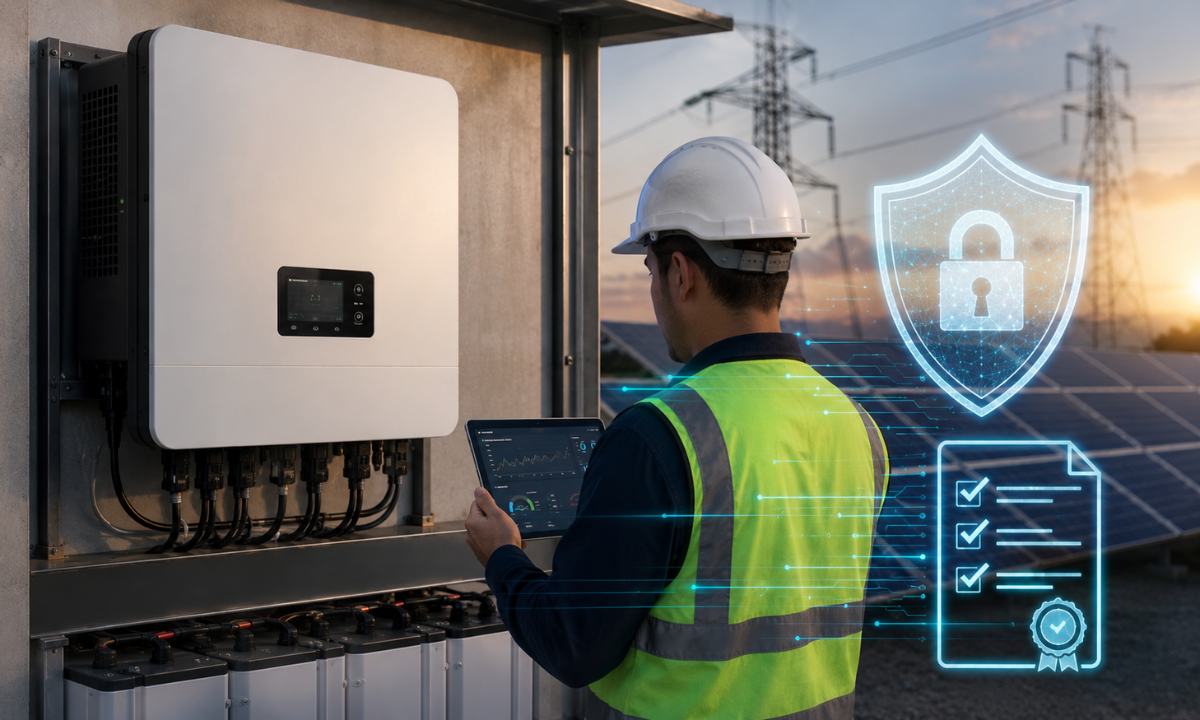
Beyond technical capability, there is a compliance factor. If you are a commercial EPC or a homeowner looking to integrate grid-tied analytics, your hardware must be legally permitted to communicate with the local DISCOM (Distribution Company). As authorized distributors, we ensure that every smart inverter we supply is rigorously BIS-certified and features cybersecurity protocols that protect your home network from external vulnerabilities.
Ultimately, true AI monitoring requires a symbiotic relationship between elite software and certified, high-resolution hardware.
Why Choose Sun-AP Ecopower for Smart Solar Integration?
Upgrading a solar array with artificial intelligence is not a software patch; it is an architectural commitment. As we have seen, true predictive analytics cannot function on cheap, isolated hardware.
If you are a commercial EPC contractor looking to guarantee uptime for your clients, or a premium homeowner looking to maximize your roof’s yield, your system must be built on a foundation of certified, high-bandwidth technology.
This is where your choice of distribution partner becomes critical. As one of the premier authorized Solar Product dealers in India, Sun-AP Ecopower operates at the exact intersection of premium hardware and advanced software integration.
- The Elite Technology Stack: We do not distribute basic, legacy string inverters. Our portfolio is anchored by global pioneers in smart energy management, including Enphase Energy (the benchmark in micro-inverter telemetry) and Deye (the leader in high-bandwidth smart hybrid architecture).
- Guaranteed ALMM & BIS Compliance: Every piece of hardware we supply meets the strict regulatory requirements of the Indian grid. This ensures that your system is legally permitted to export data and power seamlessly, completely protecting your asset from regulatory shutdowns.
AI platforms fail when inverters cannot communicate with battery management systems (BMS). Our engineering team ensures that the Tier-1 solar modules, smart inverters, and lithium storage solutions we supply feature flawlessly synchronized communication protocols straight out of the box.
Conclusion
The era of passive “install and forget” solar generation is officially over. By leveraging AI-driven solar monitoring systems, asset owners can finally eliminate the hidden costs of undetected micro-faults, localized shading, and reactive maintenance. Software is now the ultimate lever for maximizing hardware ROI.
However, this intelligence must be built from the ground up. To deploy true machine learning analytics, you must start with an inverter and a communication gateway capable of delivering the data.
Stop guessing about your system’s performance. Elevate your next solar installation from a passive power generator to an intelligent, self-diagnosing energy network. Connect with the technical team at Sun-AP Ecopower today to explore our portfolio of smart-grid-ready inverters, authorized Tier-1 panels, and advanced monitoring solutions.