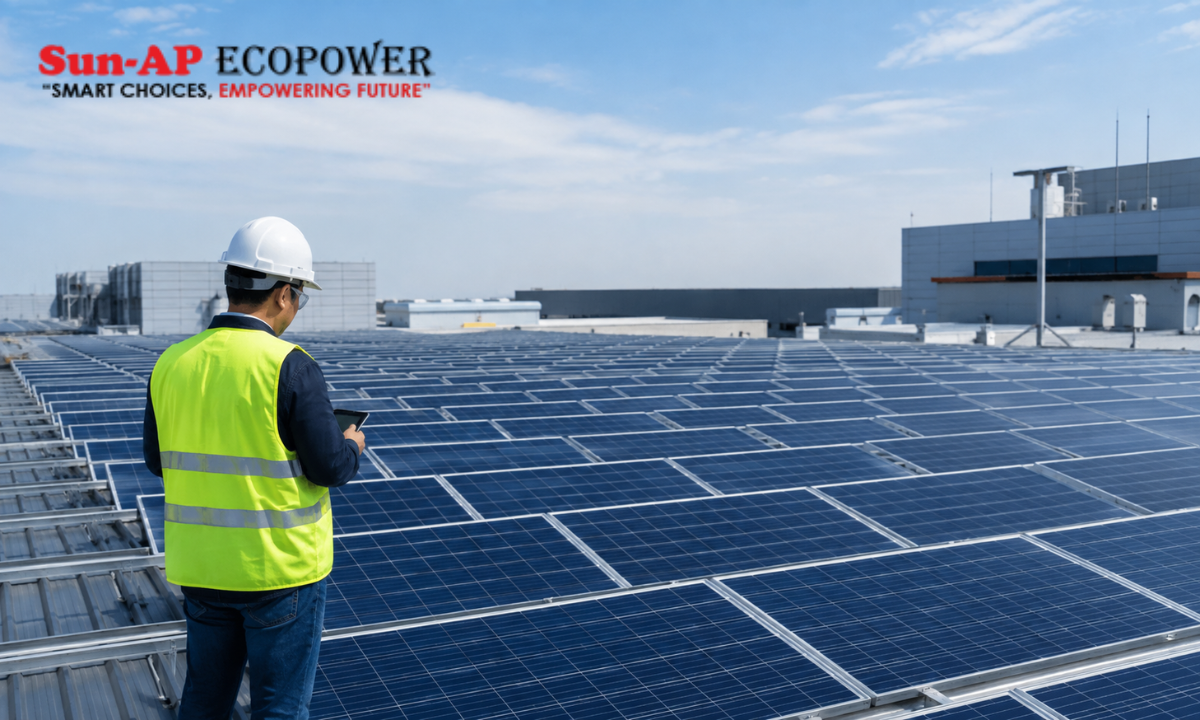
Transitioning to commercial solar energy is the most viable strategy for enterprises seeking to hedge against escalating utility tariffs and fulfill corporate sustainability targets. Procuring high-efficiency solar panels through authorized solar panel distributors in India guarantees maximum energy yield from limited industrial rooftop footprints while significantly accelerating payback periods.
For EPC contractors, commercial developers, and facility managers, prioritizing higher module efficiency lowers balance-of-system (BOS) capital costs and secures multi-decade asset performance.
Commercial and Industrial (C&I) power tariffs in India range between ₹8 and ₹12 per kWh. Because industrial shed space is finite, high-efficiency modules turn constrained rooftops into high-yield power generation assets:
- Higher Power Density: Generates 25% to 30% more capacity (kWp) per square meter than legacy polycrystalline systems.
- Reduced BOS Capital Expenditure: Fewer modules cut racking, DC cabling, combiner box, and civil installation costs.
- Rapid Capital Amortization: Combines high specific generation with 40% accelerated depreciation to reach ROI within 3 to 4 years.
- Multi-Decade Durability: Tier-1 build materials minimize degradation, maintaining steady generation across 25 to 30 years.
Sourcing modules through authorized channels ensures verified factory flash tests, valid OEM warranties, and smooth DISCOM grid approvals.
Commercial Solar Economics: LCOE, BOS Optimization & ROI

“Solar adoption is an economic decision evaluated through Levelized Cost of Energy (LCOE), Internal Rate of Return (IRR), and capital recovery speed. Commercial solar economics favor high-performance panels that deliver superior long-term yields, helping offset higher initial equipment costs.
1. Levelized Cost of Energy (LCOE) Compression
LCOE represents the total lifetime plant cost divided by the total generated electricity:
- Higher Specific Generation: Advanced cell architectures produce more kilowatt-hours per installed kWp, especially in high-heat and low-light environments.
- Low Annual Decay: Linear degradation capped at 0.40% annually (versus 0.70%+ in legacy setups) protects long-term project cash flows.
- Sub-₹3.50/kWh Power Cost: High-yield arrays routinely generate clean electricity at an LCOE below ₹3.50/unit, yielding wide margins over grid power.
2. Balance-of-System (BOS) Savings
Using higher-wattage modules (550Wp to 600Wp+) directly reduces physical installation hardware across 500 kWp+ installations:
| BOS Component | Impact with High-Efficiency Modules (580Wp vs. 400Wp) |
|---|---|
| Total Panel Count | Reduced by ~31% (862 modules vs. 1,250 modules) |
| Mounting Hardware | 20% to 25% reduction in aluminium rails and clamps |
| DC Cabling & Combiners | Fewer strings, reducing specialized solar cabling and junction boxes |
| Installation Labor | Shorter civil execution timelines and reduced crane/handling requirements |
3. Tax and Tariff Advantages
- Accelerated Depreciation: Claiming up to 40% depreciation in Year 1 under Section 32 of the Income Tax Act reduces taxable business revenue.
- Peak Tariff Shaving: Direct solar generation during peak daytime Time-of-Day (ToD) tariff windows displaces the most expensive grid power slabs.
Understanding Solar Module Efficiency & Core Performance Metrics

Auditing technical datasheets requires looking beyond nameplate wattage to evaluate solar panel efficiency and how panels convert sunlight under real-world operating conditions.
| Core Performance Metric | Evaluation Standard & Impact |
|---|---|
| 1. Module Efficiency (%) | [Pmax (W) / (Area (m²) × 1000 W/m²)] × 100 |
| 2. Temperature Coeff. (Pmax) | Power loss percentage per °C rise above 25°C |
| 3. Degradation Profile | LID resistance + Annual linear decay curve |
Key Technical Parameters
- STC vs. NMOT Operating Realities: Standard Test Conditions assume a 25°C cell temperature, whereas Indian rooftops operate at Nominal Module Operating Temperatures (NMOT) of 45°C to 65°C. High-efficiency panels maintain stability in real operating conditions.
- Temperature Coefficient of Power: Modules with low negative coefficients (-0.26% to -0.30%/°C) retain significantly more power during sweltering midday summer operations than legacy panels (-0.38%/°C).
- Degradation Profiles: Phosphorus-doped N-type silicon eliminates initial Light-Induced Degradation (LID), while POE encapsulation prevents Potential-Induced Degradation (PID) in DC arrays.
Evaluating these metrics ensures that actual generation matches financial forecasts over the project lifecycle.
Technology Deep-Dive: Mono PERC, N-Type TOPCon & Heterojunction (HJT)
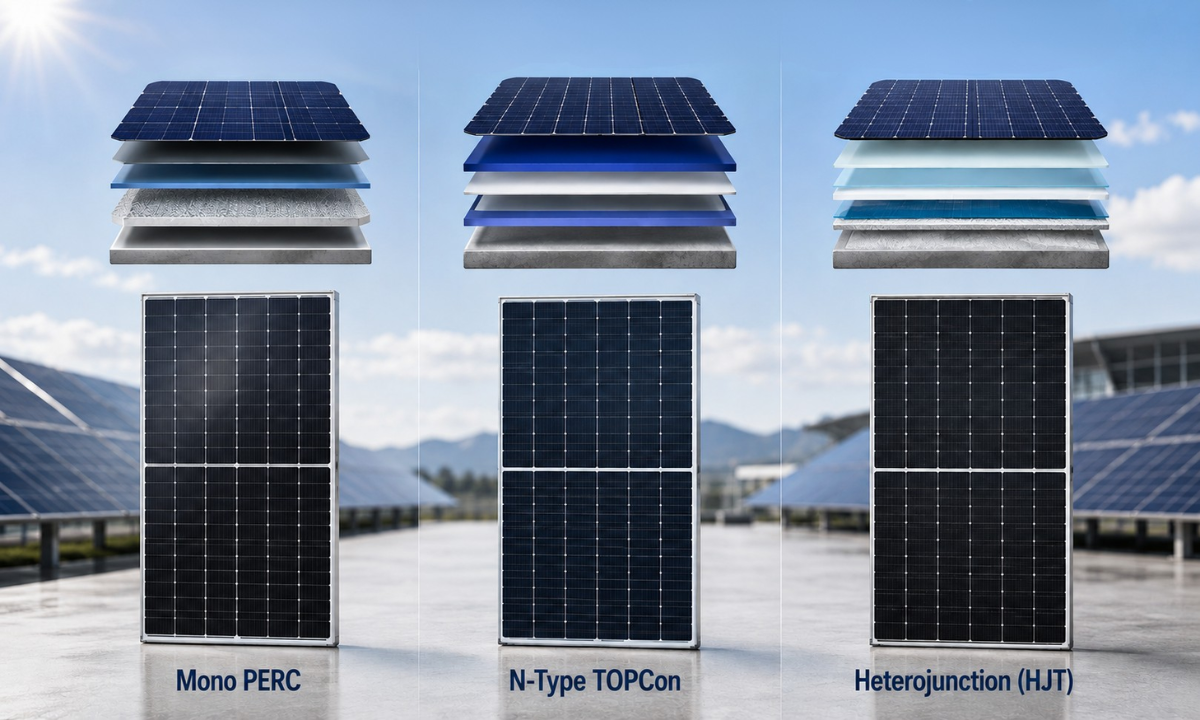
The solar market has shifted from P-type wafers to high-density N-type technologies. Choosing the right solar panel types depends on available roof space, ambient temperatures, and target ROI.
1. P-Type Mono PERC Modules
- Overview: Adds a rear passivation layer to reflect unabsorbed light back into the silicon.
- Performance: 20.8% to 21.6% conversion efficiency; standard capacity.
- Fit: Well-suited for ground-mount or budget-sensitive projects where surface area is unconstrained.
2. N-Type TOPCon (Tunnel Oxide Passivated Contact)
- Overview: Uses an ultra-thin oxide tunnel layer to minimize electron recombination.
- Performance: 22.0% to 23.2%+ efficiency; high power output; 80% to 85% bifaciality.
- Fit: Ideal for high-density commercial rooftops seeking fast capital payback and high albedo energy gains.
3. N-Type Heterojunction (HJT)
- Overview: Combines crystalline N-type silicon with thin-film amorphous silicon layers.
- Performance: 22.5% to 23.8% efficiency; lowest temperature coefficient (-0.26%/°C); >85% bifaciality.
- Fit: Best for space-constrained, high-heat locations demanding maximum energy output per square meter.
Cell Architecture Comparison
| Engineering Metric | P-Type Mono PERC | N-Type TOPCon | N-Type HJT |
|---|---|---|---|
| Module Efficiency | 20.8% – 21.6% | 22.0% – 23.2% | 22.5% – 23.8% |
| Temp. Coefficient | -0.35% to -0.38%/°C | -0.30% to -0.32%/°C | -0.26% to -0.28%/°C |
| Bifaciality Factor | 65% – 70% | 80% – 85% | 85% – 92% |
| Year 1 Degradation | ~1.5% – 2.0% | ≤ 1.0% | ≤ 1.0% |
| Annual Degradation | 0.55%/year | 0.40%/year | 0.25% – 0.35%/year |
| Warranty | 25 Years | 30 Years | 30 Years |
Scale & System Design: Commercial vs. Residential Systems
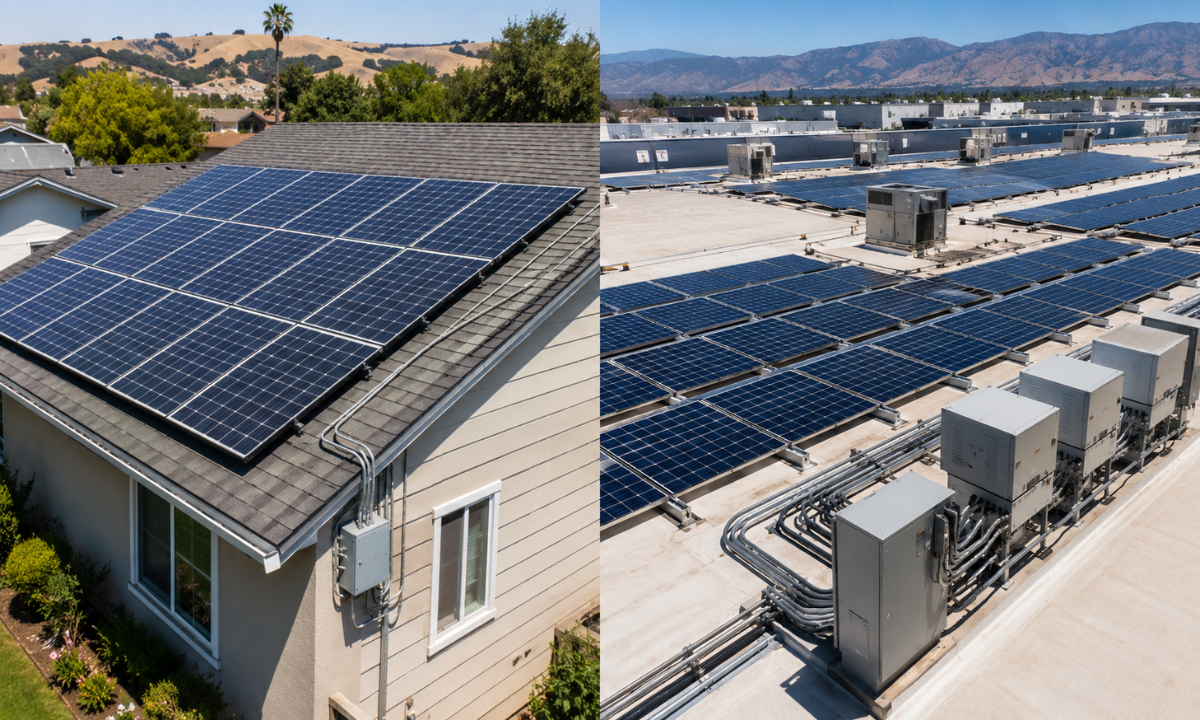
Commercial solar installations operate on distinct electrical, structural, and regulatory principles compared to standard residential solar panels.
1. Form Factors & Structural Load
- Module Form Factor: Residential arrays rely on lightweight 108-half-cut modules (400Wp to 450Wp), while commercial projects deploy large 144/156-half-cut formats (550Wp to 620Wp+) to maximize power per racking attachment.
- Structural Engineering: Commercial mounting systems must withstand wind uplift on industrial sheds using non-penetrating seam clamps or ballasted concrete mounts.
2. Electrical Topologies
- 1500V DC Architecture: Commercial systems use 1500V bus voltages instead of 1000V residential designs, allowing longer strings (28 to 32 modules), lower cabling losses, and fewer combiner boxes when paired with industrial solar inverters.
- Multi-MPPT Inverters: Commercial string inverters (50kW to 350kW) utilize 6 to 12 MPPTs to manage varying roof pitches, localized shading, and uneven roof layouts.
3. Grid Interconnection & Statutory Compliance
- HT Metering & Transformers: Systems over 100 kWp step up power to 11kV or 33kV High-Tension (HT) lines.
- CEIG & Safety Approvals: Commercial installations require drawing clearance from the Chief Electrical Inspector to Government (CEIG), bidirectional Class 0.5S smart net-meters, and fast-acting zero-export/anti-islanding relays.
Tier-1 Technology Focus: Panasonic Modules & Bankability
Sourcing Tier-1 hardware like Panasonic solar panels ensures verified bill-of-materials (BOM) quality and institutional financial bankability for multi-kilowatt arrays.
- N-Type TOPCon Bifacial Output: Delivers up to 585Wp+ with 22.66% module efficiency, collecting an extra 10% to 30% of energy from rear-side albedo reflections.
- Heavy-Duty Construction: Dual-glass / POE packaging provides PID resistance, IP68 junction enclosures, and dynamic mechanical ratings of 5400 Pa (snow/static) and 2400 Pa (wind).
- Industrial Certifications: Certified under IEC 61215, IEC 61730, IEC 61701 (Salt Mist), and IEC 62716 (Ammonia Resistance) for long-term use in coastal and industrial areas.
Guarantees over 87.4% retained power at Year 30, supported by quick debt approvals from financial institutions.
Mitigating Shading Losses in Commercial Arrays
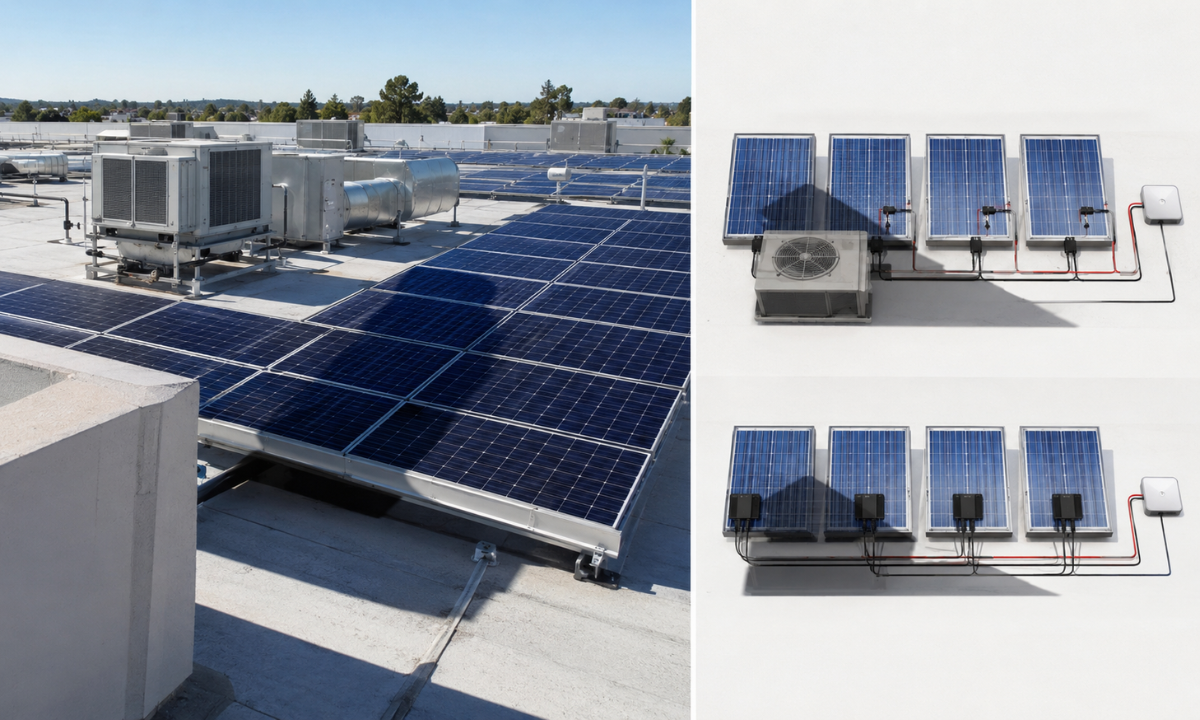
Shading is perhaps the most underestimated challenge for EPC contractors on commercial rooftops. HVAC units, utility ducts, parapet walls, and neighboring buildings can cast shadows that disproportionately impact system output.
In conventional string inverter designs, shading on a single cell acts like a kinked hose, restricting the electrical flow for the entire module string.
Strategic Mitigation Approaches
- Module-Level Power Electronics (MLPE): Deploying optimizers or microinverters isolates shaded modules, ensuring that only the obstructed area loses power while the rest of the array operates at full capacity.
- Bypass Diode Architecture: Modern half-cut modules utilize multiple internal bypass diodes that “bridge” around shaded sub-strings, effectively reducing the active cell footprint within an obstructed panel.
- Design-Phase Shadow Profiling: Conducting site surveys to map permanent obstructions allows engineers to arrange rows with optimal spacing, minimizing self-shading during low sun-angle winter months.
Unmitigated shading not only causes immediate generation losses but also induces thermal “hotspots” that permanently degrade panel busbars and backsheets over time, leading to early component failure.
Commercial Solar Procurement Checklist
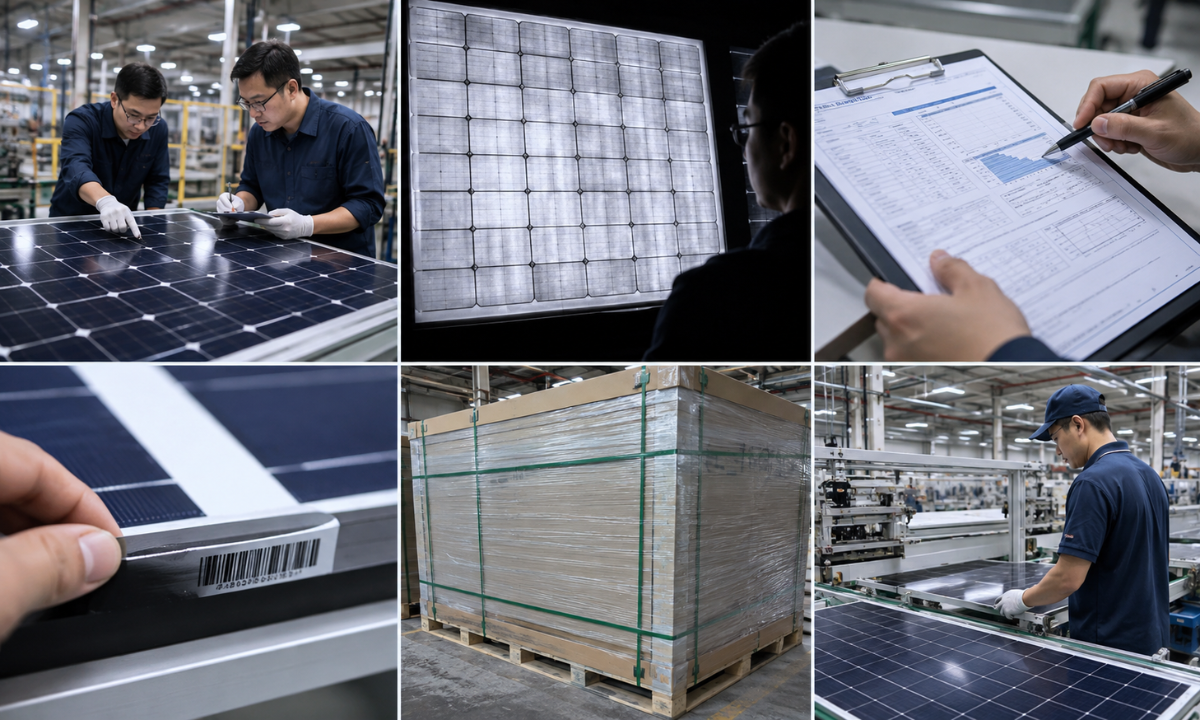
EPC contractors and procurement teams should audit this checklist prior to issuing purchase orders:
1. Technical Datasheets & Factory Verification
- Serialized Flash-Test Data: Confirm positive power tolerance (0 to +5W) on all delivered modules.
- EL Defect Imaging: Verify zero post-lamination micro-cracks or disconnected cell fingers.
- Certified Bill of Materials: Check for POE encapsulants, ARC front glass, and verified IEC compliance (61215/61730/61701).
2. Inverter & BOS Integration
- Maximum String Voltage: Ensure winter open-circuit voltage (Voc) stays within inverter input thresholds (1100V / 1500V).
- MPPT Current Limits: Match the module operating current (Imp/Isc) with the inverter’s maximum input current.
- DC Drop & Protection: Size XLPO copper/aluminum cables to restrict voltage drop to <1.5%, accompanied by Type II DC SPDs.
3. Regulatory & Grid Compliance
- DISCOM Grid Sanction: Secure capacity feasibility sanction and net-metering interconnection approval.
- CEIG Inspection Approval: Submit single-line diagrams (SLDs) and protective relay schemes for state electrical clearance.
- DG Synchronization: Calibrate reverse-power relays and zero-export controllers for facilities running diesel backup generators.
4. Logistics & Handling
- Authorized Sourcing: Procure via authorized distributor channels to safeguard OEM warranty validity.
- Pallet Packaging & Transit Insurance: Requires heavy-duty vertical packaging with complete transit insurance coverage.
- Cold Commissioning Checks: Conduct polarity and multimeter tests prior to inverter connection.
Why do EPCs Partner with Sun-AP Ecopower?
Sun-AP Ecopower provides solar EPCs, developers, and commercial enterprises with a reliable, single-source distribution network for Tier-1 equipment:
- Authorized Multi-Brand Supply: Authorized distributor for Tier-1 PV modules (Panasonic, REC, Adani, Novasys), inverters (Enphase, FIMER, Livguard), and energy storage solutions.
- Turnkey Balance-of-System Kits: Pre-assembled kits eliminate multi-vendor delays and component mismatches.
- Centralized Logistics: Hubs in JP Nagar, Bengaluru, facilitate prompt dispatches across India and export corridors in the GCC and Africa.
Full GST invoicing, serial-number-tracked warranties, and dedicated post-sales RMA support.
Conclusion
Deploying high-efficiency solar modules allows commercial enterprises to protect operating margins, optimize roof assets, and reduce carbon footprints. Prioritizing high conversion efficiency, robust temperature coefficients, and Tier-1 hardware ensures that solar assets operate reliably across their multi-decade lifespans.
Procurement & Technical Consultations
For commercial BOQ pricing, datasheet verification, or complete BOS kits, get in touch with our technical team:
- Headquarters: Sun-AP Ecopower Private Limited, #393, 2nd Cross, Dollars Colony, JP Nagar 4th Phase, Bengaluru, Karnataka 560078
- Website: sunapecopower.com
- B2B Procurement Helpline: +91 88844 90100 / +91 88844 66393
Inquiries: marketing@sunapecopower.com