Selecting the top solar panels in India is no longer just an environmental choice; it is a critical 25-year financial investment for residential homeowners, commercial enterprises, and industrial facilities.
As government initiatives like the PM Surya Ghar scheme accelerate rooftop adoption across the country, choosing the right solar photovoltaic (PV) modules dictates your long-term return on investment, daily energy yield, and system reliability. However, with hundreds of module series flooding the market, partnering with authorized Solar panel distributors in India ensures you receive authentic Tier-1 technology, valid factory warranties, and full compliance with local utility regulations.
The Indian solar manufacturing landscape is undergoing its most rapid technological evolution to date. Traditional P-Type Mono PERC panels are fast giving way to next-generation N-Type cell architectures, specifically Tunnel Oxide Passivated Contact (TOPCon) and Heterojunction Technology (HJT).
These advanced technologies deliver module efficiencies well above 22%, significantly lower degradation rates, and superior heat tolerance during scorching Indian summers where cell temperatures routinely cross 60°C.
The 25-Year Performance Reality: A solar panel’s nameplate wattage at Standard Test Conditions (STC) only tells half the story. Real-world energy production depends heavily on the panel’s temperature coefficient, low-light performance, and resistance to Potential Induced Degradation (PID). Investing in high-efficiency, heat-tolerant modules yields up to 12% to 15% more electricity over a 25-year system lifespan.
Navigating this vast ecosystem requires a structured, data-driven approach. Whether you are seeking DCR-compliant domestic panels for government subsidies, space-efficient modules for a compact residential roof, or high-bifaciality arrays for an industrial plant, this guide breaks down the highest-performing solar panels in India based on efficiency, heat tolerance, build quality, and total cost of ownership.
The Evaluation Methodology: How We Ranked the Top 10
Rankings should never be based on marketing claims or simple brand recognition. In a country as geographically and climatically diverse as India, a solar panel that performs well in mild conditions may experience severe power loss on a hot industrial rooftop in Rajasthan or Gujarat. To provide an objective, data-backed assessment, we evaluated every solar module series using a weighted 10-point scoring formula known as the “Is It Worth It?” Score.
This mathematical evaluation balances four critical operational pillars, with each pillar accounting for 25% of the overall rating:
Total Score = 0.25 × Module Efficiency + 0.25 × Temperature Coefficient + 0.25 × Warranty & Durability + 0.25 × Price-to-Performance Value
The Four Pillars of the “Is It Worth It?” Score
- Module Efficiency & Cell Technology (25%): Measures the panel’s ability to convert sunlight into usable electricity per square meter under Standard Test Conditions (STC). Modules scoring highest in this category achieve efficiencies of 21.5% or higher through advanced half-cut cells and multi-busbar (MBB) designs that reduce internal electrical resistance.
- Temperature Coefficient & Heat Tolerance (25%): Evaluates the percentage of power lost for every degree Celsius rise in cell temperature above 25°C. Panels with lower negative coefficients (e.g., -0.26%/°C vs. -0.35%/°C) maintain significantly higher real-world yields during hot peak afternoon hours.
- Warranty & Mechanical Durability (25%): Assesses the manufacturer’s product craftsmanship warranty (12 to 25 years) and linear performance warranty (25 to 30 years with less than 0.4% annual degradation). It also evaluates resistance to Potential Induced Degradation (PID) and wind/snow load tolerance rated in Pascals (Pa).
- Price-to-Performance & Regulatory Value (25%): Analyzes the levelized cost per watt against long-term energy generation. This pillar incorporates compliance with the Approved List of Models and Manufacturers (ALMM) and Domestic Content Requirement (DCR) eligibility for government rooftop subsidies.
Understanding how these core metrics interact is essential, as cell architecture directly impacts performance across every pillar. Evaluating the different solar panels types from legacy P-Type Mono PERC to modern N-Type TOPCon and Heterojunction (HJT) cells reveals why next-generation architectures consistently top our performance benchmark.
Why Cell Architecture Matters: P-Type Mono PERC modules are reliable and cost-effective, but they suffer from higher initial Light-Induced Degradation (LID) and steeper thermal losses. N-Type TOPCon and HJT panels feature virtually zero LID, higher bifaciality rates (harvesting reflected light from the rear), and superior low-light performance during cloudy days or early morning hours.
Applying this standardized evaluation across all major manufacturers, our framework filters out marketing noise to highlight panels that deliver maximum real-world kWh per kilowatt installed, ensuring long-term financial returns for your rooftop system.
Premium Global Tier-1 Leaders (Ranked 1 to 3)
At the pinnacle of the Indian market are global flagship modules powered by Heterojunction (HJT) and high-efficiency N-Type TOPCon architectures. These top-three modules are engineered for extreme durability, delivering high kWh generation per square meter even under high ambient heat.
1. REC Alpha Pure-R Series (HJT Half-Cut)
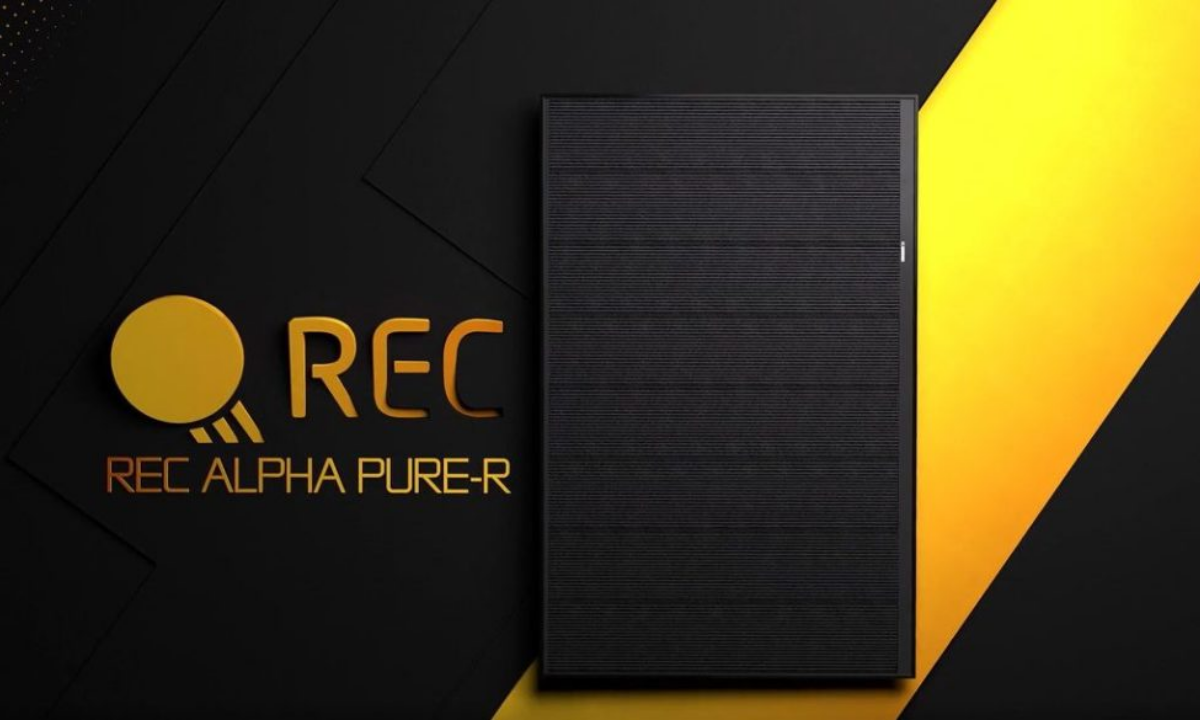
Widely recognized as a global technological benchmark, the REC Alpha Pure-R Series utilizes gapless heterojunction (HJT) cell technology. By combining thin-film amorphous silicon layers with crystalline silicon, REC achieves exceptional module efficiency while eliminating Light-Induced Degradation (LID).
- Peak Efficiency: 22.3%
- Temperature Coefficient (Pmax): -0.26% °C
- Cell Architecture: 80 half-cut HJT cells with lead-free gapless design and 4-part junction box.
- Warranty: 25-year product warranty and 25-year linear power warranty (guaranteeing 92% or higher power output at year 25).
- “Is It Worth It?” Score: 9.8 / 10
Why It Leads the Market: With a temperature coefficient of just -0.26%/°C, the Alpha Pure-R panel loses minimal output when roof temperatures rise during hot summer months. Its lead-free, eco-friendly construction and 7000 Pa front load rating make it a premier choice for high-end residential and commercial installations.
The Alpha Pure-R is ideal for space-constrained rooftops where maximizing kilowatt-hour yield per square foot is the primary objective. Its four-section junction box design ensures that localized shading across one section does not compromise the power generation of the entire module.
2. Panasonic EverVolt H-Series 410W

Panasonic continues its legacy of solar engineering by pairing advanced heterojunction cell architecture with industry-leading warranty coverage. Designed specifically to perform in hot climates, Panasonic solar panels in the EverVolt H-Series feature half-cut HJT cells that minimize internal resistance and maximize solar conversion efficiency.
- Peak Efficiency: 22.2%
- Temperature Coefficient (Pmax): -0.26% °C
- Cell Architecture: 66 half-cut N-type HJT cells with gapless connections.
- Warranty: TripleGuard 25-year warranty covering product, performance, parts, and labor (guaranteeing 92% or higher power output at year 25).
- “Is It Worth It?” Score: 9.6 / 10
Why It’s a Top Contender: The EverVolt H-Series excels in high-temperature environments where traditional panels experience significant power drop-offs. Supported by Panasonic’s decades of manufacturing experience, its low annual degradation rate (0.25%/year after year 1) ensures long-term yield stability.
For homeowners seeking absolute peace of mind, this series offers complete protection across both hardware craftsmanship and performance longevity. Its sleek, black-frame aesthetics make it especially popular for high-end residential rooftops where visual integration is as important as power generation.
3. Adani Elan / Shine TOPCon Series (550W–575W Bifacial)
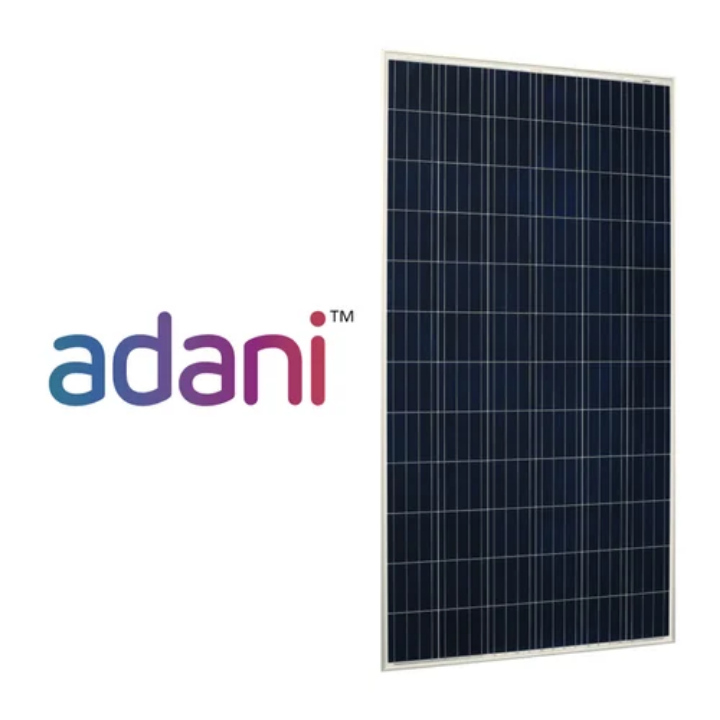
As India’s flagship domestic manufacturer, Adani Solar has made a major technological leap with its Elan / Shine TOPCon Series. Leveraging N-Type Tunnel Oxide Passivated Contact technology on M10 gallium-doped wafers, these high-wattage bifacial glass-glass modules deliver top-tier power density for large residential roofs and commercial arrays.
- Peak Efficiency: 22.1% (up to 22.3% on 575W variants)
- Temperature Coefficient (Pmax): -0.30% °C
- Cell Architecture: 144 half-cut N-Type TOPCon cells with 16 multi-busbar (16BB) design.
- Bifaciality Factor: 80 ± 5% (yielding up to 10% to 25% additional rear-side power gain).
- Warranty: 12-year product warranty and 30-year linear power performance warranty (0.40% annual degradation).
- “Is It Worth It?” Score: 9.4 / 10
Why It Stands Out: The Elan / Shine TOPCon series combines domestic manufacturing scale with global technological efficiency. Its dual-glass construction provides superior mechanical resistance against moisture, dust, and PID degradation.
As this series is produced locally by Adani Solar, it offers strong ALMM compliance and excellent availability across Indian distribution channels. Its high wattage output (up to 575Wp) reduces the total number of mounting structures, clamps, and cables required, lowering overall Balance of System (BOS) costs.
Comparative Summary: Tier-1 Flagship Modules
| Feature / Metric | REC Alpha Pure-R | Panasonic EverVolt H-Series | Adani Elan TOPCon |
|---|---|---|---|
| Cell Type | HJT Half-Cut | HJT Half-Cut | N-Type TOPCon |
| Max Efficiency | 22.3% | 22.2% | 22.1% |
| Temp. Coeff. (Pmax) | -0.26% °C | -0.26% °C | -0.30% °C |
| Linear Warranty | 25 Years (≥ 92%) | 25 Years (≥ 92%) | 30 Years (≥ 87.4%) |
| Primary Advantage | Highest heat tolerance & density | Comprehensive labor & hardware warranty | Bifacial gain & local ALMM supply |
Evaluating these three flagship modules demonstrates that while HJT technology leads in pure thermal efficiency, N-Type TOPCon offers an attractive combination of high efficiency, bifacial rear-side gain, and domestic availability. Selecting among these top-tier options depends on your rooftop space constraints, local shading conditions, and project budget.
Commercial & Residential Workhorses (Ranked 4 to 7)
While global flagship modules lead in pure efficiency, the backbone of India’s solar deployment consists of high-durability workhorse panels. These modules strike an optimal balance between high power density, competitive cost per watt, and full compliance with government subsidy schemes.
4. Goldi HELOC Plus Series (N-Type TOPCon Dual-Glass)
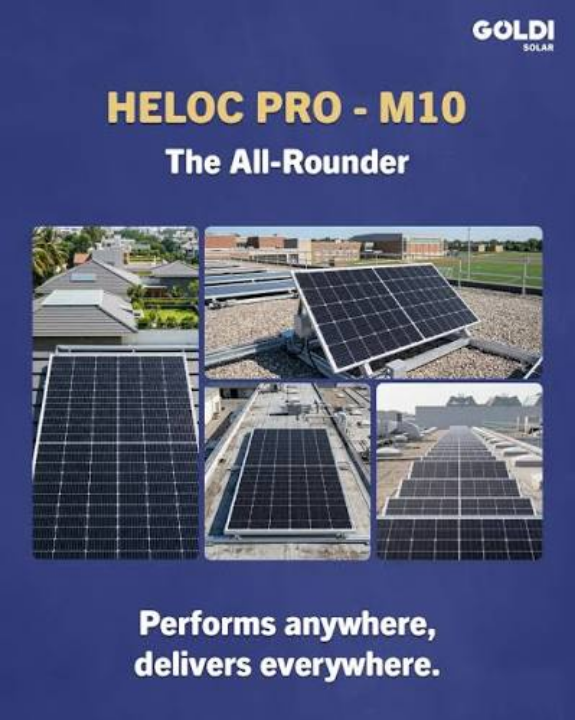
Manufactured in Gujarat, the Goldi HELOC Plus Series leverages N-Type TOPCon half-cut cell technology to deliver high conversion efficiency and low Levelized Cost of Energy (LCOE). Its dual-glass architecture provides superior mechanical stability and environmental protection against dust, humidity, and PID degradation.
- Peak Efficiency: 22.0%
- Temperature Coefficient (Pmax): -0.30% °C
- Cell Architecture: 132/144 half-cut N-Type TOPCon cells with multi-busbar design.
- Warranty: 12-year product warranty and 30-year linear power warranty (0.40% annual degradation).
- “Is It Worth It?” Score: 9.2 / 10
Why It’s a Strong Value Pick: Goldi’s advanced surface texturing ensures excellent performance during early morning and late afternoon hours. Its dual-glass structure prevents micro-cracking caused by heavy thermal cycling in hot industrial zones.
5. Tata Power Solar Mono PERC / TOPCon (DCR Compliant)
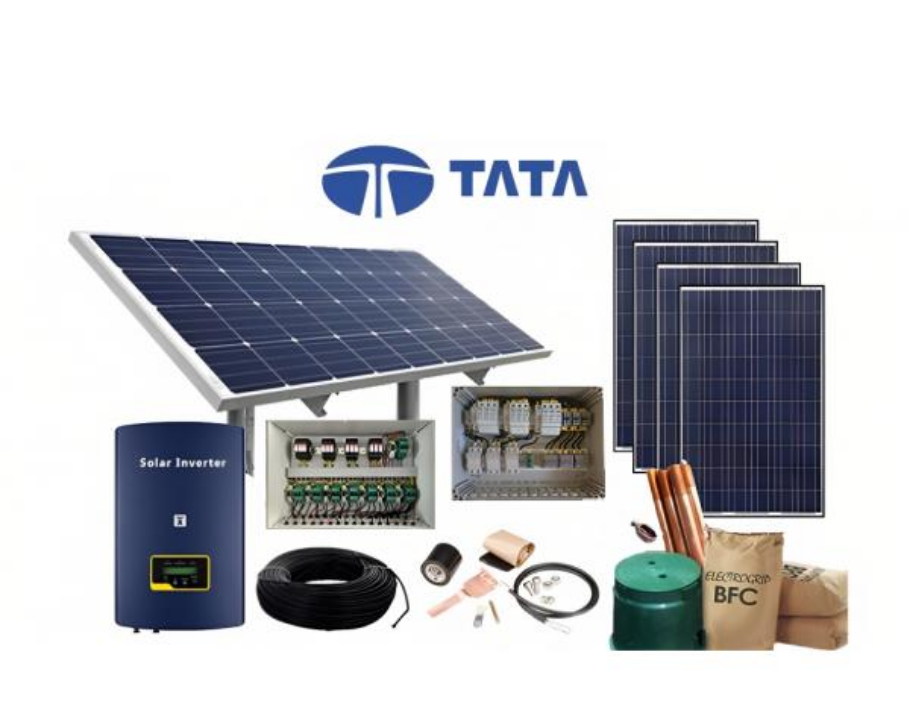
Tata Power Solar remains one of India’s most trusted solar brands. Their Domestic Content Requirement (DCR) series utilizes domestically manufactured cells and wafers, making them fully eligible for government central financial assistance. For homeowners applying for subsidies under the PM Surya Ghar Muft Bijli Yojana, choosing DCR-certified solar panels for home setups ensures seamless net-metering approvals and direct financial rebate transfers.
- Peak Efficiency: 21.8%
- Temperature Coefficient (Pmax): -0.35% °C
- Cell Architecture: 144 half-cut Mono PERC / TOPCon cells (DCR cell variants).
- Warranty: 10 to 12-year product warranty and 25 to 30-year linear performance warranty.
- “Is It Worth It?” Score: 9.0 / 10
The Subsidy Advantage: As government subsidy regulations strictly require domestic cell fabrication, Tata Power’s DCR-certified modules eliminate regulatory hold-ups during DISCOM net-metering inspections.
6. Waaree Arka / Aditya TOPCon Series
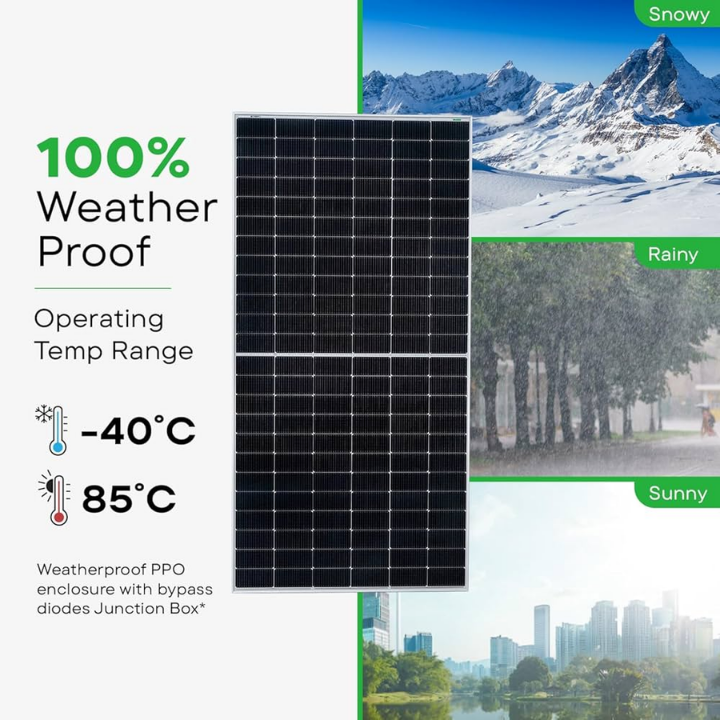
Waaree Energies, India’s largest solar module manufacturer by installed capacity, engineered the Arka / Aditya TOPCon Series for high power output in high-density installations. Featuring zero Light-Induced Degradation (LID) and an 80% bifaciality factor, these panels capture significant ground-reflected light on flat RCC roofs.
- Peak Efficiency: 21.7%
- Temperature Coefficient (Pmax): -0.32% °C
- Cell Architecture: 144 half-cut M10 N-Type TOPCon cells.
- Warranty: 12-year product warranty and 30-year linear performance warranty.
- “Is It Worth It?” Score: 8.8 / 10
Why It’s Popular: Waaree’s extensive nationwide distribution network ensures ready availability of replacement modules and localized technical support for large commercial projects.
7. Vikram Solar Paradea Series (Bifacial Mono PERC)
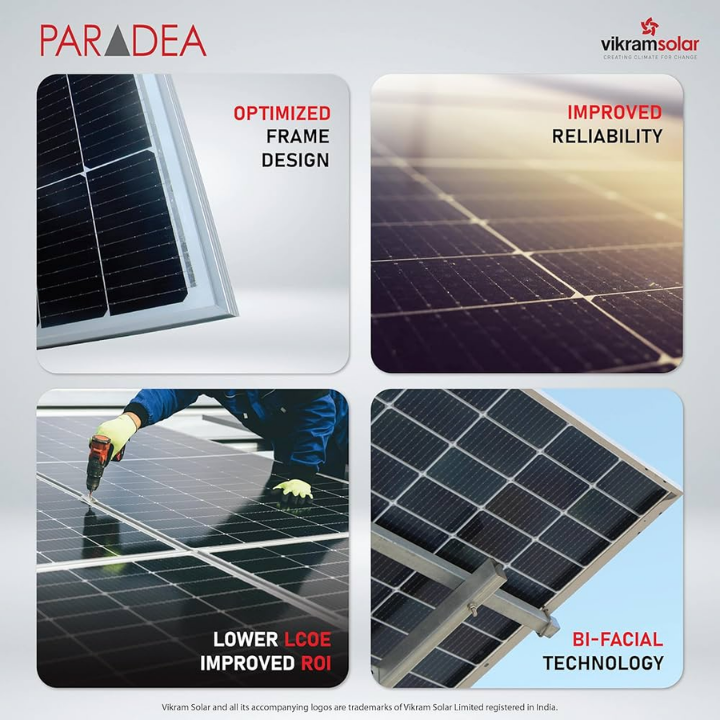
The Vikram Solar Paradea Series utilizes glass-glass bifacial construction combined with Multi-Busbar (MBB) half-cut cells. Engineered to withstand high wind loads (up to 2400 Pa) and heavy snow/static loads (5400 Pa), this series is built for harsh environmental conditions.
- Peak Efficiency: 21.73%
- Temperature Coefficient (Pmax): -0.34% °C
- Cell Architecture: 144 half-cut M10 monocrystalline cells with split junction box design.
- Warranty: 12-year product warranty and 30-year linear performance warranty.
- “Is It Worth It?” Score: 8.7 / 10
Micro-Crack Protection: The split junction box architecture reduces internal operating temperatures and localized thermal stress, significantly minimizing the risk of hot-spot formation.
Comparative Summary: Workhorse Modules (4 to 7)
| Feature / Specification | Goldi HELOC Plus | Tata Power Solar DCR | Waaree Arka TOPCon | Vikram Solar Paradea |
|---|---|---|---|---|
| Cell Tech | N-Type TOPCon | Mono PERC / TOPCon | N-Type TOPCon | Bifacial Mono PERC |
| Max Efficiency | 22.0% | 21.8% | 21.7% | 21.73% |
| Temp. Coefficient | -0.30% °C | -0.35% °C | -0.32% °C | -0.34% °C |
| Primary Suitability | High-heat commercial roofs | Subsidy residential setups | High-density C&I arrays | Harsh weather / windy site |
Selecting among these mid-tier workhorse modules depends heavily on your regulatory goals. If you are pursuing government central financial assistance, DCR-certified panels like Tata Power’s lineup are mandatory.
For commercial and industrial facilities where maximum ROI per square meter is prioritized without subsidy constraints, non-DCR TOPCon modules from Goldi or Waaree offer superior power density and lower levelized energy costs.
High-Value Rooftop & Emerging Modules (Ranked 8 to 10)
For urban residences, commercial establishments, and institutions with limited surface area, selecting modules with high wattage density is critical to maximizing total installed capacity. Mounting high-efficiency solar panels on roof spaces with physical constraints requires modules that extract maximum power per square meter while maintaining structural durability and reliable low-light performance.
8. Loom Solar Shark 550W Series (Mono PERC / TOPCon)
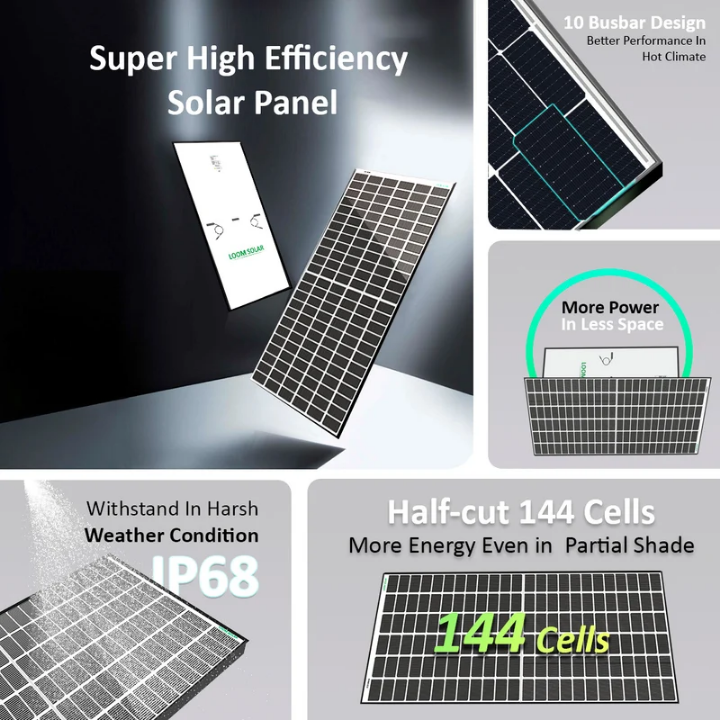
Loom Solar has carved out a distinct niche in the Indian rooftop segment by focusing on high-wattage, space-saving module designs. The Loom Solar Shark 550W Series utilizes half-cut mono PERC and TOPCon cell architecture with multi-busbar technology to deliver high power output, making it popular for urban residential retrofits.
- Peak Efficiency: 21.5%
- Temperature Coefficient (Pmax): -0.35% °C
- Cell Architecture: 144 half-cut cells with 9BB/12BB multi-busbar technology.
- Warranty: 10-year product warranty and 25-year linear performance warranty (0.55% annual degradation).
- “Is It Worth It?” Score: 8.5 / 10
Space-Saving Efficiency: By deploying 550W+ high-capacity modules, homeowners require fewer physical panels to achieve their desired system capacity, significantly reducing mounting structure costs and roof space consumption.
9. Premier Energies Dual Glass Series (Bifacial)
Premier Energies, operating state-of-the-art manufacturing facilities in Telangana, produces the Dual Glass Bifacial Series. Built with frameless or heavy-duty anodized aluminum framed glass-glass encapsulation, these modules provide complete insulation against moisture ingress, ammonia corrosion, and PID degradation.
- Peak Efficiency: 21.4%
- Temperature Coefficient (Pmax): -0.35% °C
- Cell Architecture: P-Type / TOPCon half-cut bifacial cells with dual tempered glass.
- Warranty: 12-year product warranty and 30-year linear performance warranty.
- “Is It Worth It?” Score: 8.4 / 10
Durable Dual-Glass Shielding: The dual-glass structure enhances fire safety ratings and mechanical rigidity, protecting internal solar cells against micro-fractures caused by severe wind vibrations or hail storms.
10. RenewSys DESERV Series (Mono PERC / TOPCon)
As an integrated manufacturer of solar PV modules, EVA encapsulants, and backsheets, RenewSys offers complete quality control across the production chain. The RenewSys DESERV Series delivers dependable, cost-effective performance engineered specifically for Indian environmental conditions.
- Peak Efficiency: 21.2%
- Temperature Coefficient (Pmax): -0.36% °C
- Cell Architecture: 144 half-cut monocrystalline / TOPCon cells.
- Warranty: 10 to 12-year product warranty and 25-year linear performance warranty.
- “Is It Worth It?” Score: 8.2 / 10
In-House Material Synergy: As RenewSys manufactures its own encapsulants and backsheets, the DESERV series exhibits exceptional resistance to backsheet delamination and yellowing over extended outdoor exposure.
Comparative Summary: High-Value & Emerging Modules (8 to 10)
| Feature / Metric | Loom Solar Shark | Premier Energies Dual Glass | RenewSys DESERV |
|---|---|---|---|
| Cell Architecture | Mono PERC / TOPCon Half-Cut | P-Type / TOPCon Bifacial | Mono PERC / TOPCon |
| Max Efficiency | 21.5% | 21.4% | 21.2% |
| Temp. Coefficient | -0.35% °C | -0.35% °C | -0.36% °C |
| Linear Warranty | 25 Years (≥ 84.8%) | 30 Years (≥ 85.0%) | 25 Years (≥ 84.8%) |
| Primary Value Asset | High wattage per panel | Dual-glass structural rigidity | Complete in-house material control |
Completing our top-10 rankings highlights how diverse the Indian module market has become. Whether prioritizing the ultra-high heat tolerance of global HJT panels (Ranks 1–2), the subsidy eligibility of domestic DCR workhorses (Ranks 4–7), or the compact footprint of high-wattage residential modules (Ranks 8–10), aligning panel selection with your specific rooftop conditions is key to securing a 25-year clean energy asset.
Engineering & Structural Installation Considerations
Selecting top-rated PV modules is only the first phase of building a high-yielding solar power plant. Executing a professional solar panel installation requires careful attention to tilt orientation, wind load engineering, and electrical string sizing to ensure safe and efficient operation for over 25 years.
Critical Engineering Factors for Rooftop Solar Array Deployment
To achieve optimal performance and structural safety, installation teams must address several core technical variables before mounting panels to the roof structure:
- Optimal Tilt Angle & Orientation: In India, fixed rooftop solar arrays should face true south to capture maximum daily solar irradiance. The tilt angle should match the site’s geographical latitude (typically between 15° and 25° across Indian cities) to balance summer and winter energy yields.
- Structural Load & Wind Engineering: High-efficiency modules add a dead load of approximately 15 to 20 kg/m² to roof trusses or RCC slabs. Structural mounting structures must be engineered using elevated aluminum or hot-dip galvanized iron (HDGI) rails capable of withstanding wind speeds up to 150 to 180 km/h.
- Inverter Voltage & String Sizing Matching: The total open-circuit voltage (Voc) of panels connected in series must never exceed the maximum DC input voltage of the on-grid or hybrid string inverter, even during cold winter mornings when panel voltage naturally spikes.
- Balance of System (BOS) & Protection Gear: Reliable generation relies on high-grade electrical components, including copper-core UV-resistant DC cables, IP65-rated array junction boxes (AJB), Type II surge protection devices (SPD), and dedicated chemical earthing pits for lightning shielding.
Key Installation Steps & Quality Assurance Checklist
| Installation Stage | Primary Technical Objective | Quality Assurance Standard |
|---|---|---|
| Site & Roof Assessment | Verify structural load-bearing capacity and shadow-free area | 3D shading analysis using simulation software |
| Mechanical Mounting | Secure HDGI/aluminum rafter structures without puncturing roof waterproofing | Anchored chemical grouting or non-penetrating RCC ballast blocks |
| DC/AC Electrical Wiring | Route high-voltage DC cabling safely from roof to inverter | UV-protected conduits with crimped MC4 connectors |
| Grid Interconnection | Connect AC output to distribution board via bi-directional net meter | CEIG inspection and DISCOM anti-islanding verification |
Addressing these engineering considerations ensures that high-grade PV modules perform at peak conversion efficiency without suffering from premature mechanical fatigue, water ingress, or electrical fault trips over their operational lifetime.
Why Source Your Solar Panels Through Sun-AP Ecopower?
Choosing a top-ranked solar module is only half the equation; sourcing your hardware through an authorized distribution partner ensures valid factory warranties, authentic procurement, and frictionless utility approvals. Headquartered in Bengaluru, Sun-AP Ecopower stands as one of India’s premier authorized distributors of clean energy technology, bridging global Tier-1 manufacturers with EPC contractors, commercial developers, and solar installers across the country.
The Sun-AP Ecopower Distribution Advantage
- Authorized Tier-1 Brand Portfolio: Direct distribution partnerships with global and domestic leaders including REC Singapore, Panasonic, Adani Solar, Goldi Solar, and Livguard modules.
- 100% Factory-Backed Warranty Assurance: Guaranteed original manufacturer serial numbers, eliminating grey-market risks and protecting your 25 to 30-year linear power warranty coverage.
- Complete ALMM & DCR Compliance Support: Full documentation support for Approved List of Models and Manufacturers (ALMM) and Domestic Content Requirement (DCR) modules required for PM Surya Ghar subsidy claims.
- One-Stop Balance of System (BoS) Integration: Complete project kits combining top-tier solar modules with grid-tied/hybrid inverters (Enphase, FIMER, Deye), bi-directional net meters, and mounting hardware.
- Concessional GST & Nationwide Logistics: Fully compliant GST invoicing (5% concessional rate for solar power generating systems) with Input Tax Credit (ITC) benefits and reliable freight dispatch across India.
Procurement & Warranty Security: Sourcing modules outside authorized distribution channels can lead to rejected warranty claims, missing flash-test reports, and net-metering disqualifications. Sun-AP Ecopower guarantees direct factory dispatch with complete regulatory traceability.
Working directly with an authorized supplier ensures that your 25-year solar investment remains fully protected by official manufacturer guarantees from day one.
Conclusion
Selecting from the top solar panels in India comes down to balancing high efficiency, heat tolerance, warranty longevity, and budget constraints. Whether you prioritize the unmatched thermal performance of global HJT modules, the subsidy eligibility of domestic DCR workhorses, or the space-saving density of high-wattage residential panels, investing in Tier-1 hardware is the key to maximizing your lifetime kilowatt-hour yield.
By pairing high-efficiency modules with certified inverter technology and professional installation standards, you turn your rooftop into a dependable, high-yielding clean energy asset for decades to come.
Ready to Source Tier-1 Solar Panels for Your Project?
Consult with the technical sales team at Sun-AP Ecopower to secure competitive B2B quotes, technical datasheets, and ALMM compliance documentation for your next installation.
B2B Procurement & Quotes: Email marketing@sunapecopower.com or call +91 88844 90100 for bulk pricing and project consultation.
Corporate Office: Sun-AP Ecopower Private Limited, 393, 2nd Cross, Dollars Colony, JP Nagar 4th Phase, Bengaluru, Karnataka 560078.