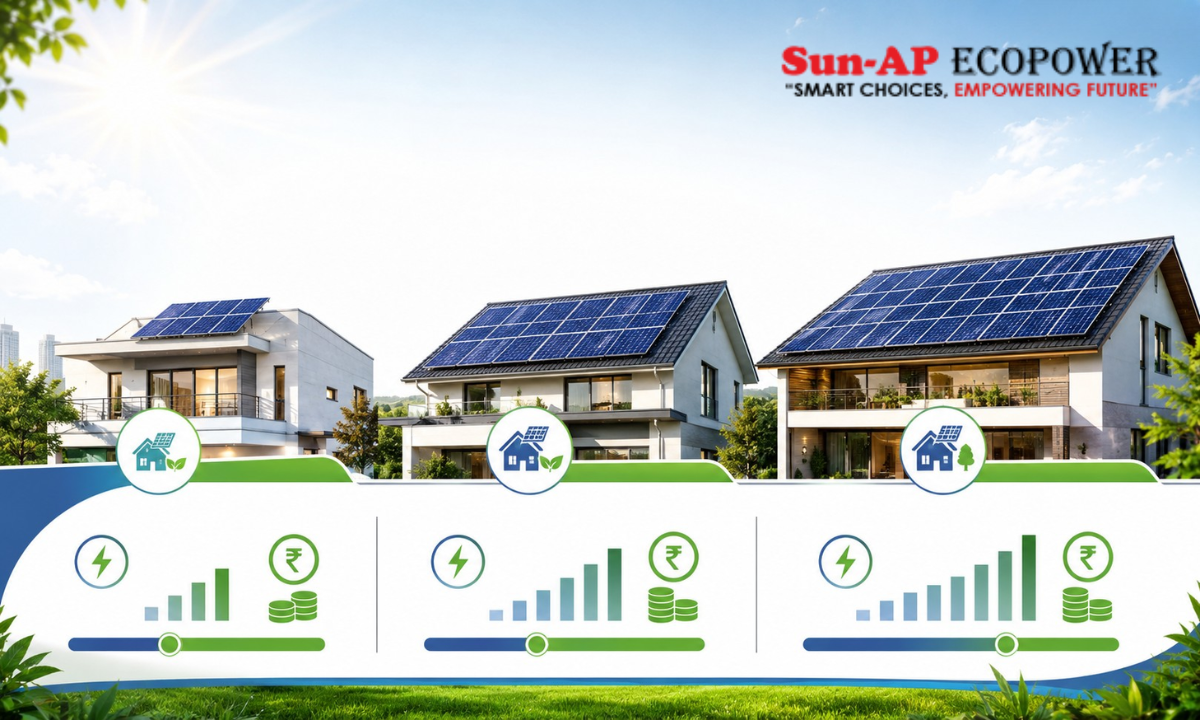
The adoption of renewable power infrastructure requires precise capacity scaling and component selection to ensure long-term grid resilience and an optimal levelized cost of energy (LCOE). When evaluating 3kW vs 5kW vs 10kW On-Grid Solar Systems, the primary diagnostic objective is to align generation capacity with the specific consumption load profile of the facility.
The operational efficacy of these systems is critically dependent on the On-grid solar inverter, which acts as the central processing mechanism regulating DC-to-AC conversion, grid synchronization, and thermal stability.
Systemic failure in solar architecture is rarely an issue of the photovoltaic principle; it is almost exclusively a symptom of compromised hardware procurement.
Substandard inverters and degraded panels introduce severe operational vulnerabilities.
Sun-AP Ecopower operates as the critical supply chain aggregator, providing EPCs, integrators, and facility owners with Tier-1, validated hardware. By distributing globally certified components such as Panasonic modules, REC panels, and Enphase microinverters, we ensure the structural integrity, regulatory compliance, and 25-year operational lifecycle of the deployed architecture.
Generation & Load Capacity Analysis
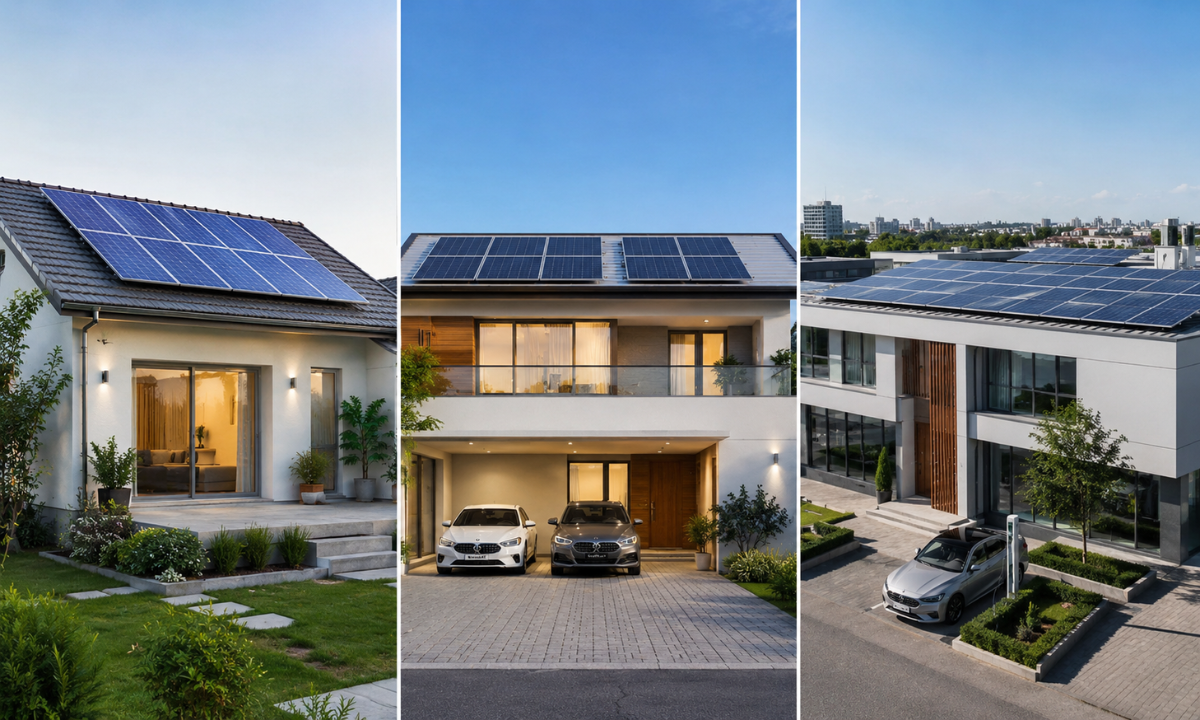
Precise system sizing is required to prevent both capital over-expenditure and chronic generation deficits. In a standard Indian climatic profile, a systematically optimized Tier-1 setup yields an average of 4 units (kWh) per kW of installed capacity daily.
However, sustaining these exact metrics over a quarter-century requires Tier-1 photovoltaic modules with documented, minimal degradation rates.
1. The 3.0 kW Architecture (Baseline Residential):
Generates approximately 360 to 450 units monthly. This configuration is diagnostically suited for a standard 2-3 BHK property operating baseline electrical loads without heavy, sustained HVAC (air conditioning) usage.
It represents the maximum threshold for optimal central government subsidy capture under the current 2026 protocols.
2. The 5.0 kW Architecture (High-Load Residential):
Generates approximately 600 to 750 units monthly.
Frequently categorized as the best solar system for home deployment in modern urban environments, this capacity effectively accommodates the concurrent operation of multiple high-draw appliances and split-system air conditioners without triggering grid dependency.
3. The 10.0 kW Architecture (Premium Residential & Light Commercial):
Generates approximately 1,200 to 1,500 units monthly.
This high-yield infrastructure is mandated for large-scale villas or facilities integrating Electric Vehicle (EV) charging stations, requiring high-throughput generation and sophisticated load management capabilities.
The empirical differentiator in consistently hitting these generation metrics is hardware provenance. Utilizing unverified or grey-market modules guarantees accelerated degradation and thermal inefficiency.
Procuring authentic, ALMM-listed Tier-1 panels through an authorized master distributor like Sun-AP Ecopower ensures absolute compliance with pre-installation generation forecasts and validates all subsequent warranty claims.
Capital Expenditure, Subsidy Mechanics & ROI (2026)
Adopting solar infrastructure is not merely an environmental decision; it is a rigorous financial engineering exercise. The objective is to achieve a minimized Levelized Cost of Energy (LCOE) while aggressively accelerating the payback period. In India, the financial architecture of residential solar is heavily dictated by the PM Surya Ghar Muft Bijli Yojana 2026.
Understanding the precise mechanics of this central subsidy is critical, as it is non-linear and strictly capped.
The 2026 Subsidy Architecture
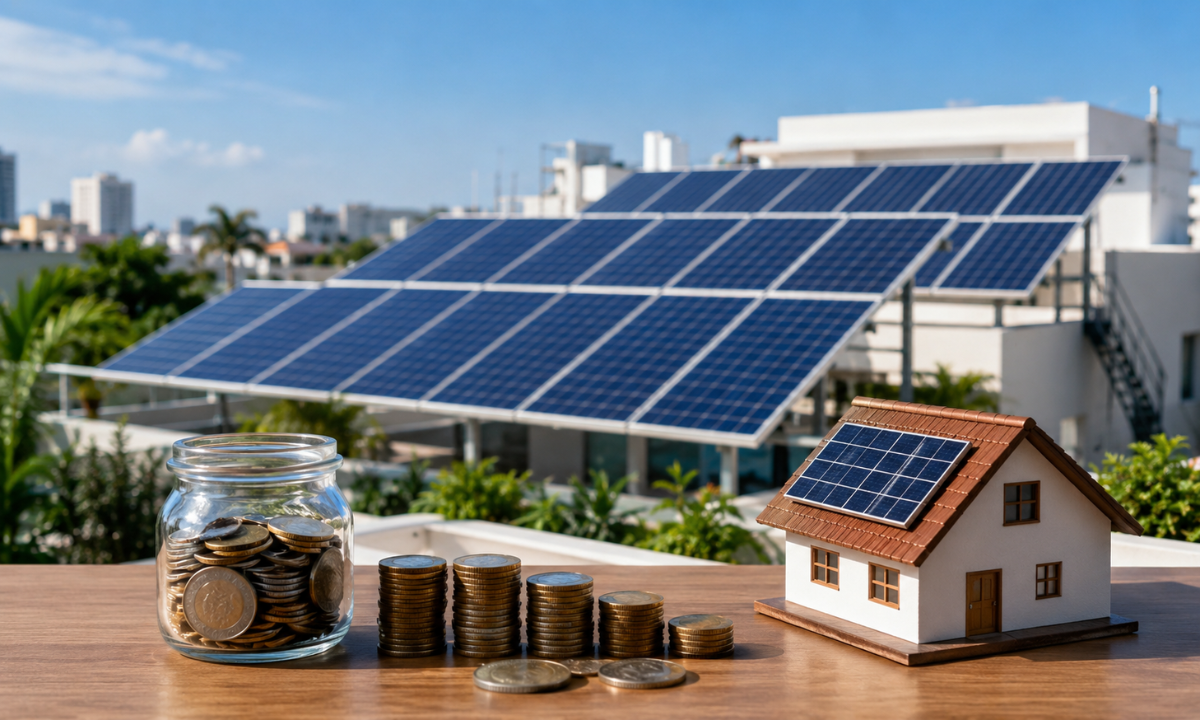
The central financial assistance (CFA) is disbursed directly to the consumer’s bank account (DBT) post-commissioning, provided the installation utilizes domestically manufactured, ALMM-approved panels installed by an empanelled vendor.
- For a 3kW on-grid solar system: This capacity hits the absolute subsidy sweet spot. The government mandates ₹30,000 for the first kW, ₹30,000 for the second kW, and ₹18,000 for the third kW. Total Subsidy: ₹78,000.
- For a 5kW on-grid solar system: The subsidy structure is firmly capped at 3kW. Therefore, a 5kW system receives the same maximum CFA. Total Subsidy: ₹78,000.
- For a 10kW on-grid solar system: Similarly, despite the massive generation output required for EV charging or high HVAC loads, the central incentive remains locked at the ceiling. Total Subsidy: ₹78,000.
The Danger of Fast Payback Illusions

When conducting a solar panel system comparison, facility owners are frequently tempted by aggressively low quotes from unverified local contractors promising a payback period of under two years. This is a severe financial trap.
Cheap, grey-market hardware guarantees chronic downtime. If a substandard inverter burns out in year four or if non-ALMM panels degrade by 30% in year five, your calculated ROI collapses entirely. The replacement costs will instantly wipe out any initial capital saved during procurement. Furthermore, utilizing non-ALMM components immediately invalidates your eligibility for the PM Surya Ghar subsidy.
True financial engineering relies on guaranteed 25-year performance. By procuring authentic Tier-1 hardware through Sun-AP Ecopower, investors ensure that their calculated 4-to-5-year payback period remains mathematically bulletproof, shielded by enforceable, globally backed warranties.
Why the Balance of System (BoS) Dictates Grid Stability
In photovoltaic engineering, the solar modules only perform the primary extraction. The true operational intelligence of the system resides in the Balance of System (BoS), most critically, the On-grid solar inverter. If the panels serve as the metabolic tissue of the architecture, the inverter acts as the central nervous system.
The inverter is responsible for converting fluctuating direct current (DC) into phase-synchronized alternating current (AC). It actively governs Maximum Power Point Tracking (MPPT) to maximize yield, enforces critical anti-islanding protection during local grid outages, and maintains thermal stability under heavy domestic or commercial loads.
Procuring a generic, unbranded inverter creates an immediate, systemic point of failure that jeopardizes the entire 25-year infrastructural investment.
Selecting the Right Inverter Core
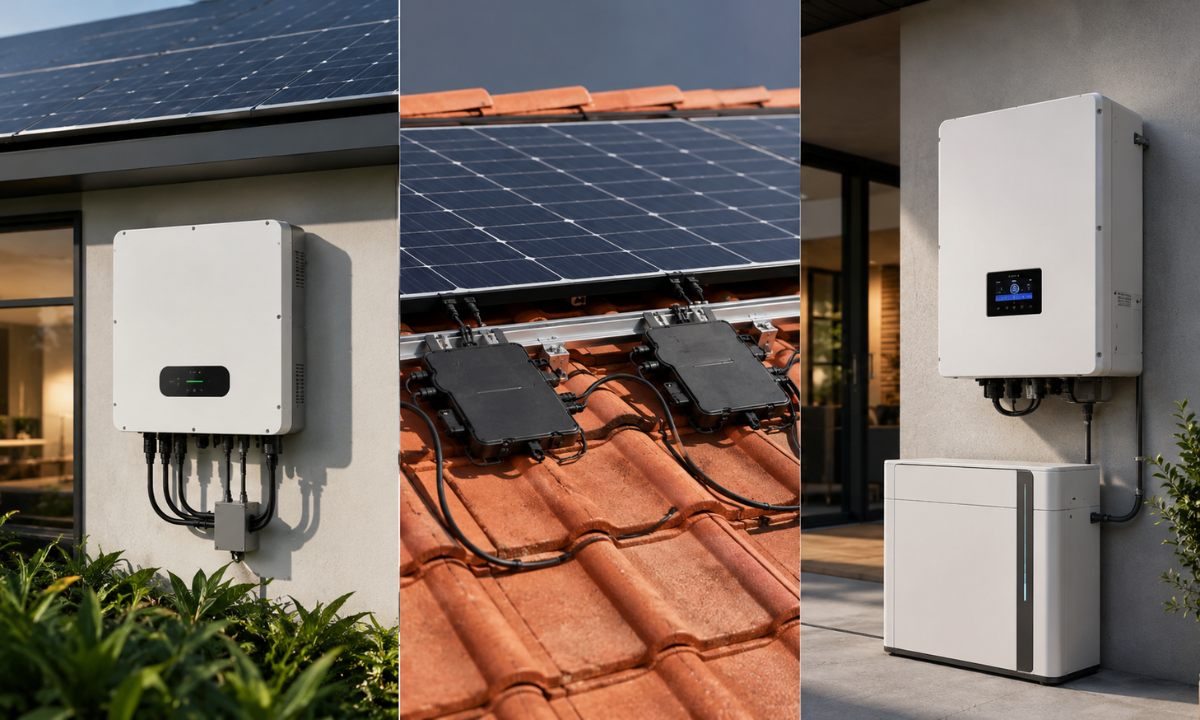
To ensure absolute grid resilience, Sun-AP Ecopower strictly supplies Tier-1 inverter technology tailored to specific structural layouts and electrical load profiles.
| Inverter Architecture | Mechanism of Action | Optimal Deployment Scenario | Sun-AP Tier-1 Partners |
|---|---|---|---|
| Microinverters | Attached directly to each panel, independently converting DC to AC directly at the source. | Complex residential roofs prone to multi-directional shading or partial structural obstructions. | Enphase Energy |
| Hybrid Inverters | Synchronizes grid-tied solar generation with an integrated lithium-ion battery energy storage system (BESS). | Facilities requiring critical power backup during grid outages without sacrificing net-metering benefits. | DEYE, FIMER ABB, Feston |
The Microinverter Efficacy
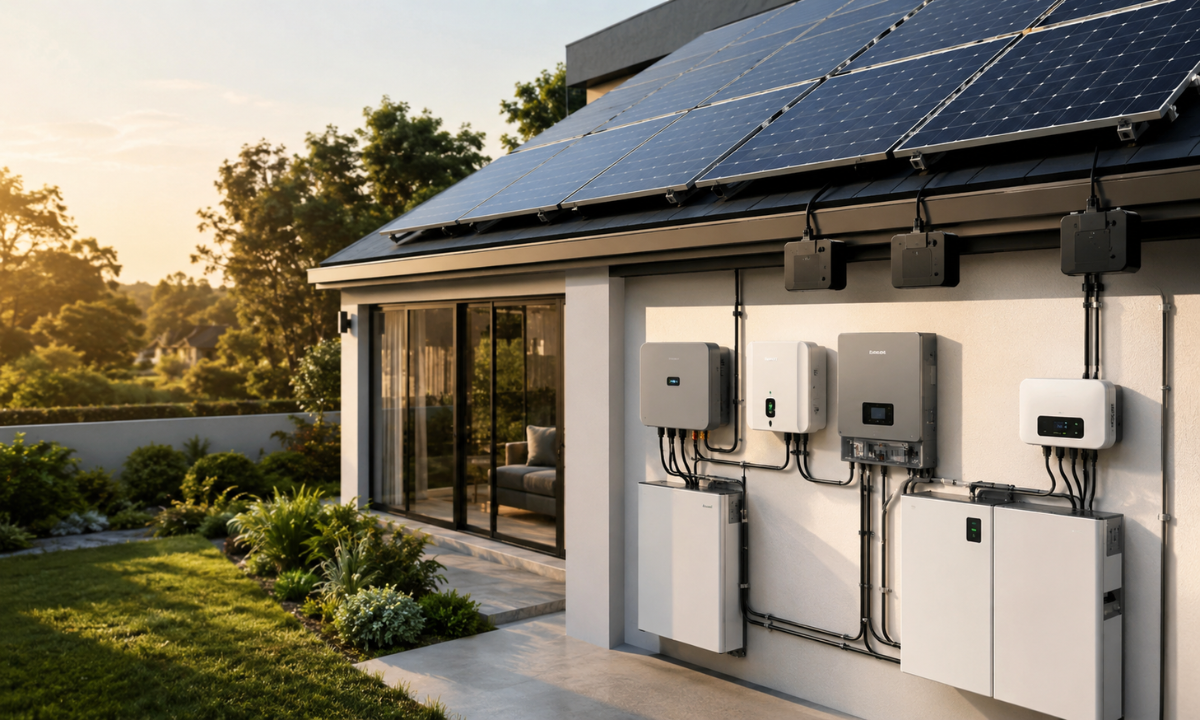
For highly optimized residential setups, procuring Enphase microinverters through an authorized distributor eliminates the systemic bottleneck where shading on a single panel degrades the output of the entire string.
Optimizing conversion at the individual module level, overall system yield is demonstrably increased, while providing forensic, real-time monitoring of each panel’s health.
Whether deploying a highly efficient string inverter for a 5kW urban setup or a robust hybrid architecture for a 10kW EV-equipped villa, prioritizing recognized Tier-1 brands ensures the system is not only generating power but intelligently managing it to maximize the long-term on-grid solar system benefits.
Why Partner with Sun-AP Ecopower?
The solar market in India is heavily flooded with fragmented supply chains, unauthorized third-party resellers, and gray-market components lacking genuine manufacturer warranties.
For Engineering, Procurement, and Construction (EPC) companies, local system integrators, and institutional investors, a single hardware failure can lead to severe litigation, lost generation revenue, and ruined corporate reputations.
Sun-AP Ecopower eliminates this supply chain volatility. As one of the premier Solar Product dealers in India, we operate as a highly disciplined, authorised master distributor and technology aggregator for the world’s leading clean energy brands.
Our operational infrastructure is built to support yours:
- Authorized Tier-1 Access Only: We strictly distribute authentic, factory-warrantied components from globally recognized leaders, including Enphase Energy (USA), REC Solar (Singapore), Panasonic, DEYE, Sungrow, FIMER/ABB, Adani, and Secure. Every item passing through our logistics network carries an enforceable, multi-decade original manufacturer warranty.
- Deep Engineering and Design Enablement: We do not simply move boxes. Our specialized engineering teams provide comprehensive technical support, single-line diagrams (SLDs), optimal component matching, and system architecture validation to ensure your project installers achieve maximum yield with zero onsite compatibility bottlenecks.
- Complete Balance of System (BoS) Under One Roof: From premium monocrystalline PERC and N-type panels to advanced string, micro, and hybrid inverters, customized mounting structures, ACDB/DCDB boxes, and smart net-metering arrays, we provide a unified procurement experience that drastically reduces logistics friction and overhead costs.
Every component in our catalog is fully compliant with the latest government protocols, including the Approved List of Models and Manufacturers (ALMM), ensuring your residential installations seamlessly clear technical audits for rapid PM Surya Ghar DBT subsidy disbursement.
Conclusion
Scaling an on-grid clean energy asset, whether it is a baseline 3kW residential setup, a high-performing 5kW urban residential platform, or a heavy-duty 10kW commercial infrastructure, is a 25-year structural commitment. Cutting corners during the procurement phase by opting for unverified, low-cost alternatives is a high-risk gamble that inevitably results in accelerated degradation, component failure, and collapsed financial projections.
True energy independence relies on the structural integrity of your hardware. By prioritizing verified technology and partnering with an established, authorized master distributor, you protect your capital investment, maximize your generation yield, and ensure absolute grid resilience.
Connect with Sun-AP Ecopower Today to access our tier-1 inventory, request commercial project quotes, or consult with our engineering desk to procure the definitive, failure-proof hardware your clean energy assets require.