A common and costly misconception among property owners today is assuming that an LCD screen automatically signifies modern technology. If you look at your facility’s utility box and see a digital number instead of an old spinning disc, you might believe your electrical infrastructure is fully updated.
This is a critical error in judgment. As a leading technical authority and one of the premier Solar Product Distributors in India, Sun AP Ecopower frequently encounters facilities relying on outdated electronic hardware disguised as modern tech. We strictly advise our clients that a digital display does not equal digital communication.
To completely optimize your power consumption and safeguard your solar investments, you must deploy hardware that actively reports data, not just hardware that passively records it.
This is why we operate as certified Secure Meter Dealers in India, providing the enterprise-grade Secure Meters necessary to bridge the gap between simple calculation and true energy intelligence.
In this strict technical breakdown, we will dissect the exact differences between a standard electronic display and a fully functional communication node.
- The Hardware Reality Check: We will explain why your current digital meter is essentially a disconnected calculator.
- The Communication Upgrade: We will define the two-way data telemetry that officially classifies Secure Energy Meters as “smart.”
- The Financial Imperative: We will map out exactly why relying on passive hardware limits your ability to reduce monthly utility costs and track your solar ROI.
Let us dismantle the illusion of the digital display and upgrade your understanding of modern grid architecture.
Understanding the Digital Meter for Home
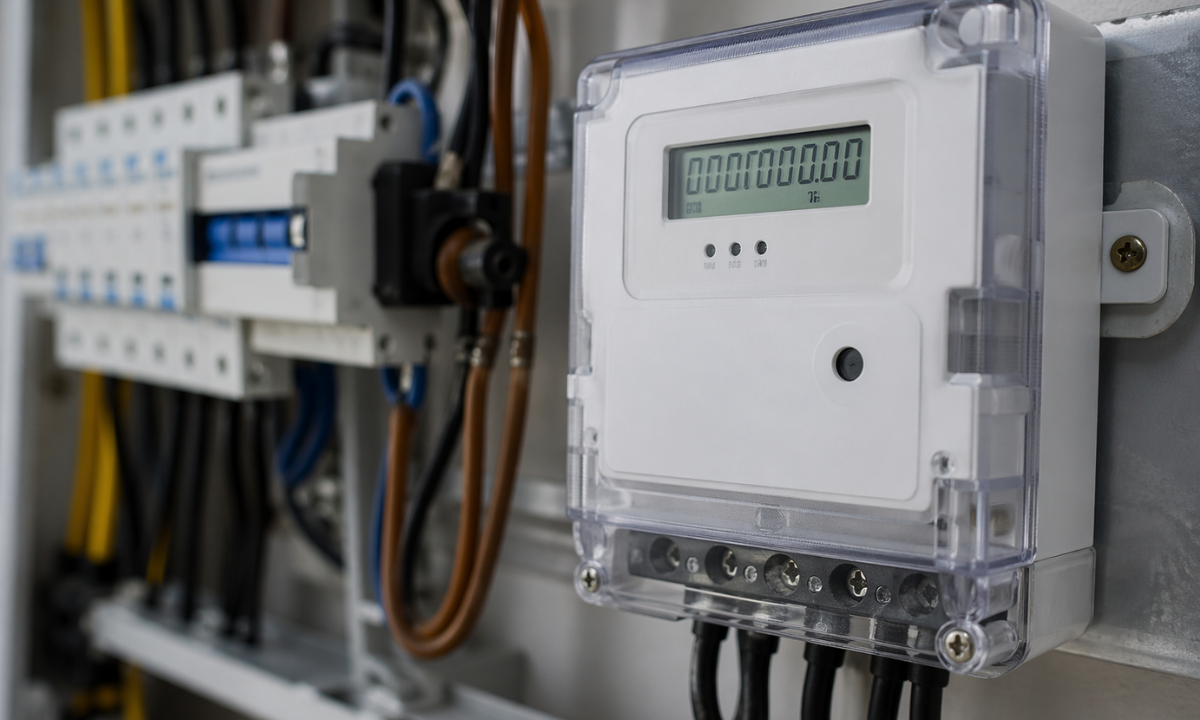
To understand exactly what you are currently operating, we must strip away the modern aesthetic of the LCD screen. Think of a standard digital meter as a highly accurate, heavy-duty calculator. It is mathematically brilliant at counting the electrons flowing into your property, but it is completely isolated from the outside world.
Historically, this hardware was a massive upgrade. It replaced the old, electromechanical “spinning disc” meters, which were prone to friction, physical wear, and mechanical failure over time. A standard digital meter for home or industrial use utilizes solid-state microprocessors to measure voltage and current with zero moving parts.
However, its fatal flaw is that it is entirely deaf and mute. It possesses no modem, no antenna, and absolutely no way to transmit the data it is collecting. It simply stores the number on a screen and waits for a human being to physically look at it.
To understand why this is an operational liability, look at the physical reality of how to check digital meter reading on a standard unit:
- The Physical Deployment: A facility manager or a utility worker must physically walk to the utility box, which is often located in a basement or perimeter wall.
- The Manual Cycle: Because the screen is small, you cannot see all your data at once. You must manually press a physical push-button to cycle through a confusing sequence of parameters: first the date, then the time, then the maximum demand (MD), and eventually, the cumulative Kilowatt-hour (kWh) reading.
- The Data Transfer: That number must then be written down on a clipboard, typed into a separate system, and sent to the billing department.
If that manual reader writes down a ‘7’ instead of a ‘1’, your entire financial invoice for the month is compromised.
A digital meter is an island. If your power fails in the middle of the night, the meter cannot notify the grid. It simply powers down in silence. While it is accurate at counting, it is completely useless for active energy management.
What Makes a Meter “Smart”?
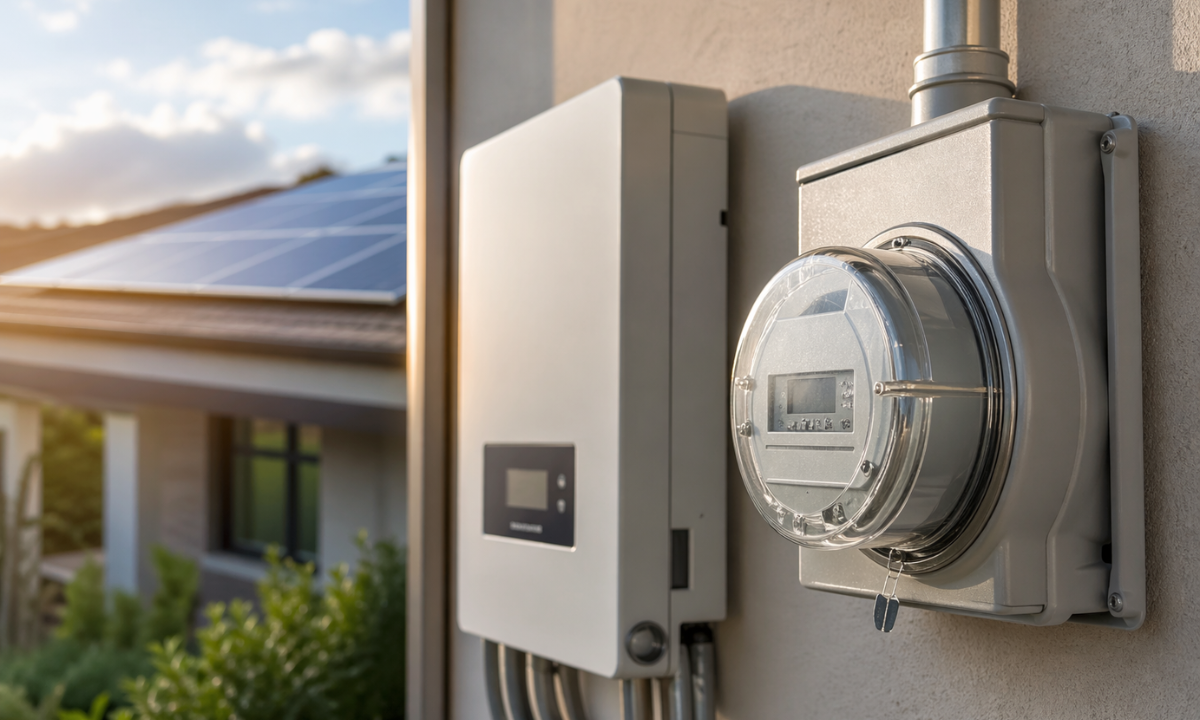
To pinpoint exactly what makes a meter “smart,” we must look past the digital screen and examine the motherboard. What separates an isolated calculator from an intelligent energy node? The answer is telemetry.
The evolution from digital to “smart” occurs the exact moment a dedicated, industrial-grade cellular modem is integrated into the hardware. When you install a modern smart meter, you are essentially deploying a highly specialized IoT (Internet of Things) device on your property.
To understand this leap in technology, look at the “Anatomy of the Awakening”, the three critical components that bring a meter to life:
- The Brain (High-Speed Microprocessor): While standard digital meters calculate power in slow, aggregated blocks, a smart microprocessor calculates active power, reactive power, and voltage fluctuations in highly accurate 15-minute (or even sub-minute) intervals.
- The Voice (Cellular Transmission): Instead of waiting for a human reader, the meter utilizes advanced cellular networks like NB-IoT (Narrowband IoT) or GPRS. It establishes an invisible, encrypted bridge to the utility’s central servers, pushing flawless billing data into the cloud automatically.
- The Ears (Two-Way Telemetry): This is the ultimate differentiator. A standard digital meter can only output data; a smart meter can receive data. It listens for remote firmware upgrades, time-of-day pricing adjustments, and remote connect/disconnect commands from the utility provider.
This two-way communication is the foundational requirement for any advanced Smart meter application.
Whether the objective is balancing the electrical load of an industrial park during peak hours or accurately routing solar energy back into the city’s power lines, the smart meter is constantly negotiating with the grid in real-time. It does not just record history; it dictates the flow of power.
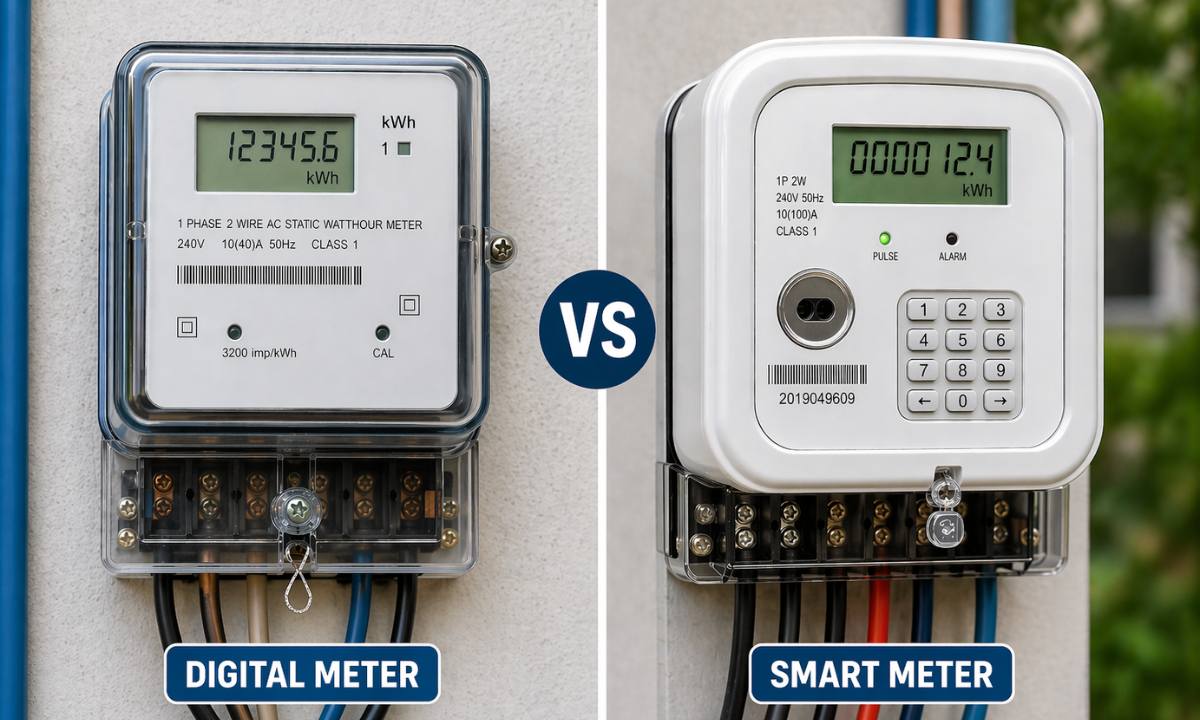
Digital Meter Vs Smart Meter
To eliminate the confusion between these two hardware generations, we must place them in a direct, operational comparison. In the enterprise and residential sectors, purchasing decisions should be based strictly on data capability, not visual aesthetics.
Here is the comprehensive, scannable matrix defining the exact operational divide between a standard digital meter and a Secure Smart Meter:
| Operational Metric | The Standard Digital Meter (Passive) | The Secure Smart Meter (Active) |
|---|---|---|
| Data Transmission | Requires a utility worker to physically visit the site, manually scroll through the display, and write down the numbers. | Utilizes an integrated cellular modem to automatically transmit encrypted billing data directly to the utility’s cloud server. |
| Data Granularity | Only tracks the cumulative power usage for the entire month. You cannot see your daily or hourly consumption. | Records and transmits data in precise 15-minute or 30-minute intervals, providing a high-resolution map of your exact consumption habits. |
| Communication Flow | Strictly One-Way. It only records what you use. It cannot receive signals from the grid. | Strictly Two-Way (Bidirectional). It sends consumption data and receives remote firmware updates, tariff changes, and connect/disconnect commands. |
| Outage & Tamper Alerts | If the power fails or the meter seal is broken, the device simply turns off. The utility company remains completely unaware. | The meter instantly fires a “Last Gasp” alert to the grid during an outage and triggers an immediate digital alarm if physical tampering is detected. |
| Tariff Flexibility | Incapable of supporting complex Time-of-Day (ToD) pricing because it cannot verify exactly when the power was used. | Perfectly aligned with ToD pricing. It allows you to shift heavy industrial or residential loads to cheaper, off-peak hours, mathematically lowering your bill. |
The data is undeniable. A digital meter is merely a digital notepad. A smart meter is a vigilant, automated financial auditor.
Why Smart Meters Win
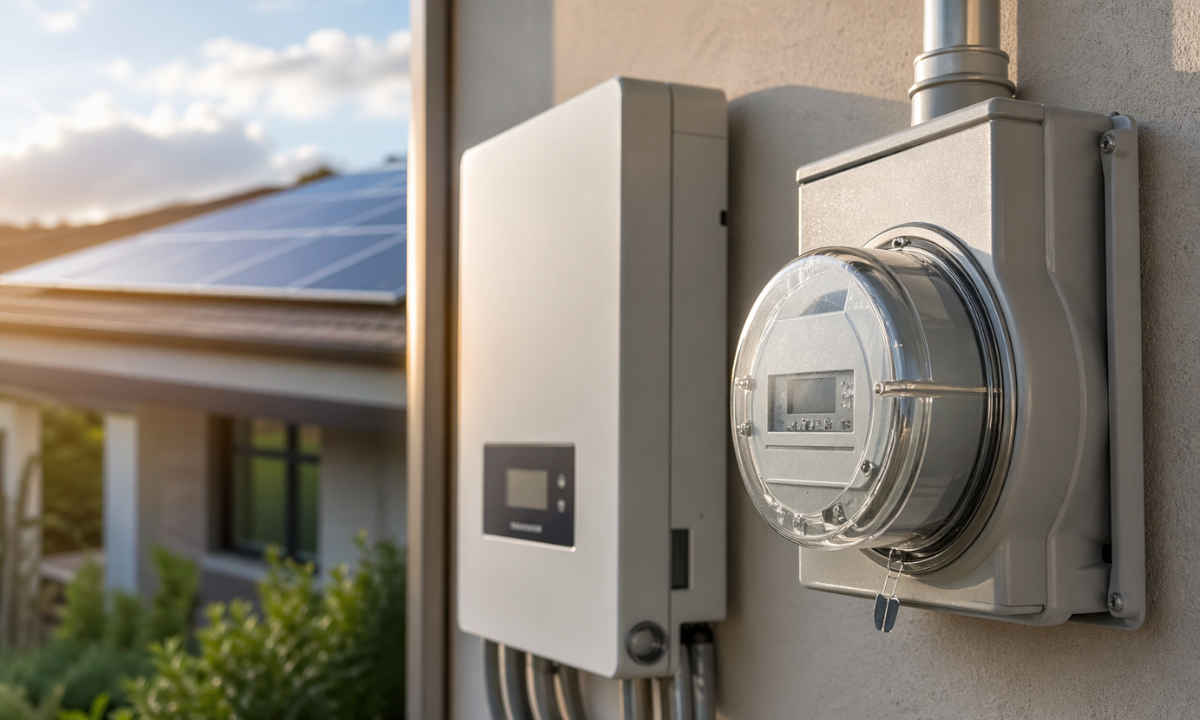
When you install a commercial rooftop array or a residential solar ecosystem, you fundamentally change your relationship with the utility provider. You are no longer just a passive consumer; you become a localized power generator. This operational shift requires a massive upgrade in how your energy is measured.
If you connect a high-performance solar inverter to a standard digital meter, you are actively financially crippling your system. A critical Smart meter application is its ability to manage the complex mathematics of renewable energy seamlessly.
Here is the “Financial Leakage Analysis” explaining exactly why standard digital meters fail in a solar ecosystem and why smart meters are mandatory for protecting your return on investment:
1. The One-Way Traffic Failure
A standard digital meter is historically programmed to assume all power flowing through it belongs to the utility company. If your solar panels generate excess electricity and push it back into the grid, a basic digital meter might actually register that exported power as consumed power. You could end up being billed for the very electricity you produced.
2. The Bi-Directional Ledger System
A smart meter is natively bi-directional. It contains two separate, highly accurate digital ledgers. One ledger tracks the exact amount of power you import from the grid during the night. The second ledger tracks every single unit of excess solar energy you export to the grid during peak daylight hours.
3. The End of Manual Net Metering Errors
Even if you possess a basic bidirectional digital meter, a utility worker still has to physically arrive, read both the import and export screens manually, and calculate the difference. This introduces a massive margin for human error, which directly threatens your solar credits. A smart meter mathematically calculates your exact net usage and transmits the final, verified data directly to the billing server. Your solar credits are calculated with zero human intervention.
5. Real-Time Solar Auditing
As smart meters transmit data in 15-minute intervals, facility managers can cross-reference the energy production data from their solar app directly against the grid’s consumption data. This creates a closed loop of verified intelligence. If your solar panels underperform on a Tuesday afternoon, your smart meter data will immediately reflect the increased grid draw, allowing you to diagnose the hardware issue instantly.
At Sun AP Ecopower, we view the solar panel, the inverter, and the smart meter as a single, unified ecosystem. Relying on disconnected digital meters to track your solar yield is an unacceptable financial risk.
Why Choose Sun AP Ecopower? Your Smart Grid Architect
When upgrading from a passive digital screen to an active smart grid node, the vendor you select is just as critical as the hardware itself.
Purchasing enterprise communication hardware from generalist suppliers often results in poor installation, incorrect tariff programming, and a complete failure to activate the two-way telemetry.
At Sun AP Ecopower, we operate specifically to eliminate these technical risks. As authorized Secure Meter Dealers in India, we do not just supply hardware; we engineer active energy ecosystems.
Partnering with us guarantees three distinct operational advantages:
- Direct Enterprise Access: We deploy the exact, high-tier Secure Meters mandated by national utilities for industrial, commercial, and complex residential deployment.
- Solar Architecture Expertise: As leading Solar Product Distributors in India, we ensure your new smart meter is perfectly calibrated for bi-directional net metering. We protect your renewable energy credits by eliminating setup errors.
We manage the complete technical installation. From the physical hardware mounting to establishing the encrypted cellular connection with the utility grid, we ensure your facility experiences zero unnecessary downtime.
Conclusion
The era of the disconnected digital meter is permanently over. A digital screen might look modern, but without an integrated cellular modem and two-way communication, it remains a passive calculator. To truly optimize your facility’s power consumption, leverage Time-of-Day pricing, and protect your solar investments, you must deploy active, intelligent hardware. Do not settle for the illusion of technology. Partner with Sun AP Ecopower today, upgrade to a true smart meter ecosystem, and take absolute mathematical control over your energy grid.