Have you ever wondered why your solar panels cannot directly power your home appliances? The answer lies in understanding the types of inverters that convert solar energy into usable electricity for your daily needs.
When we install a solar system at home, the panels generate DC (Direct Current) electricity, but our homes run on AC (Alternating Current). That’s where inverters step in as the heart of the system.
If you are planning to explore solar products online, knowing which inverter suits your needs can save you money, improve efficiency, and future-proof your investment.
In this blog, we will break down everything in simple terms so you can confidently choose the right inverter for your home.
Key Points at a Glance
- Inverters convert DC electricity from solar panels into AC electricity for home use.
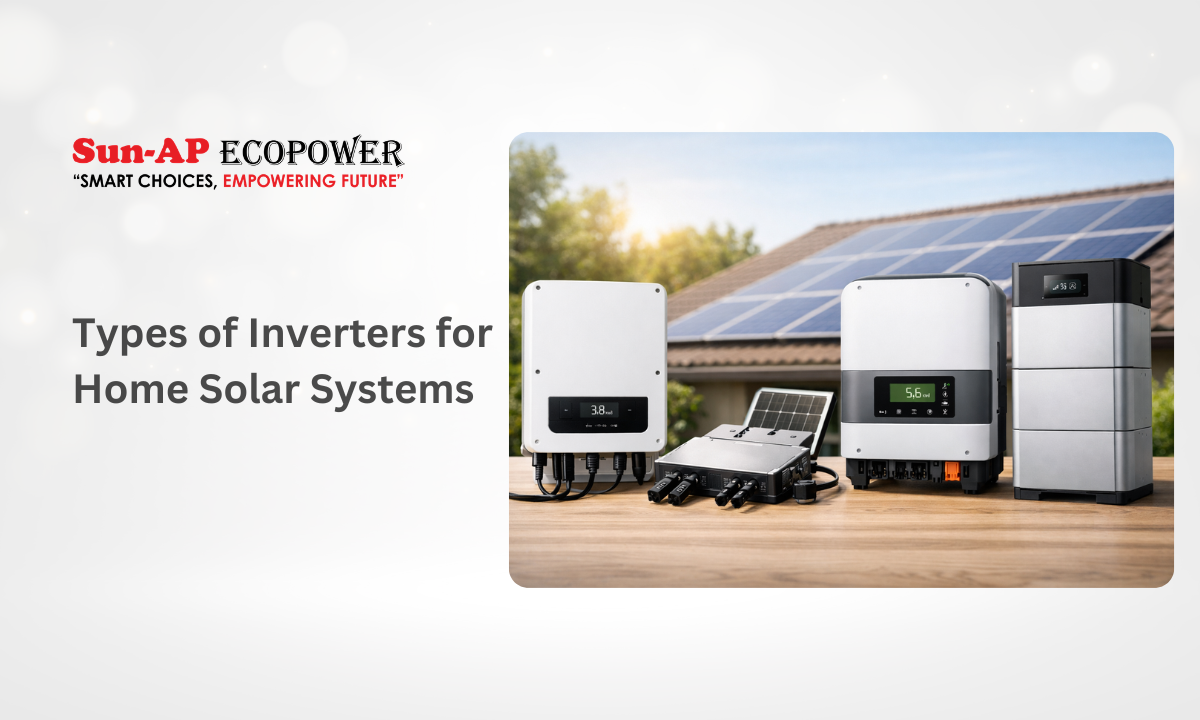
- The main categories include string inverters, microinverters, and hybrid inverters.
- Power optimizers improve performance without replacing traditional inverters.
- Functional classifications include On grid inverters and Off grid inverters.
- Your roof type, shading, and energy goals decide the best inverter.
- Budget and future battery plans play a major role in selection.
What is a Solar Inverter, and Why Do We Need It?
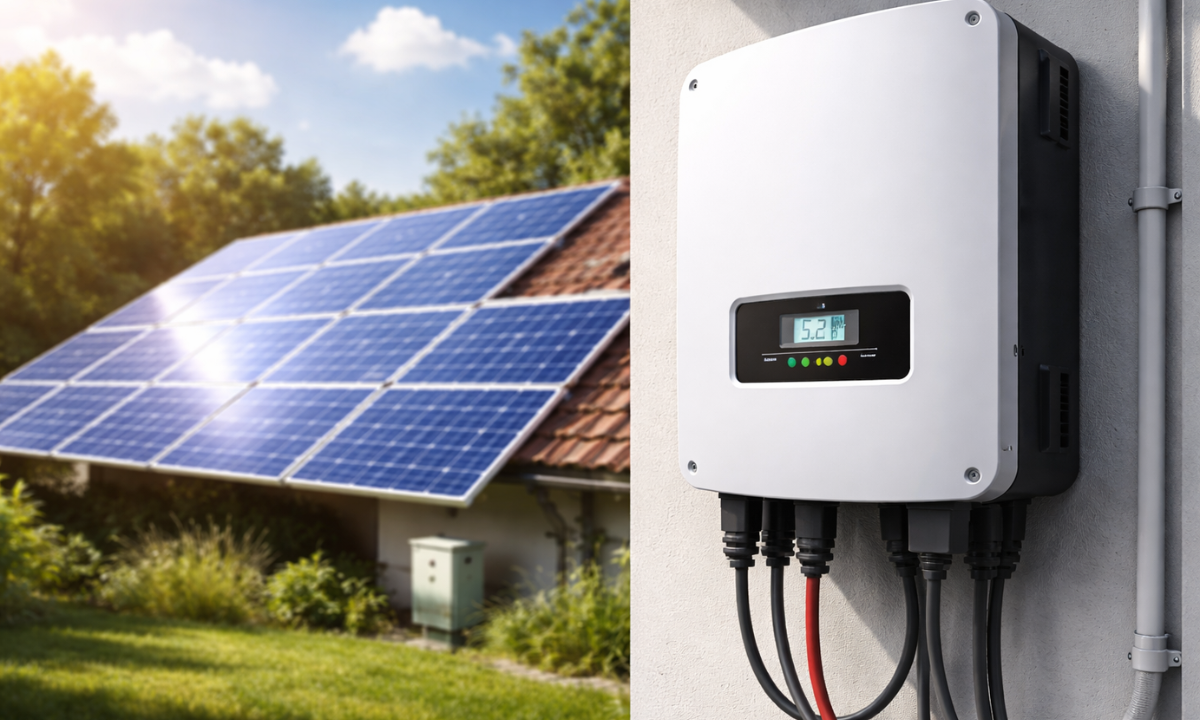
Solar panels absorb sunlight and generate DC power. But most household appliances, like fans, refrigerators, and TVs, operate on AC power.
This means we need a home solar power inverter to bridge the gap between energy generation and energy usage. Without an inverter, the electricity produced by panels cannot be used inside your home.
We can think of the inverter as the brain of the solar system. It manages electricity flow, ensures safety, and improves overall system efficiency.
Main Types of Inverters Used in Home Solar Systems
There are three primary inverter technologies commonly used in residential solar setups. Let’s understand each one clearly.
1. String Inverters
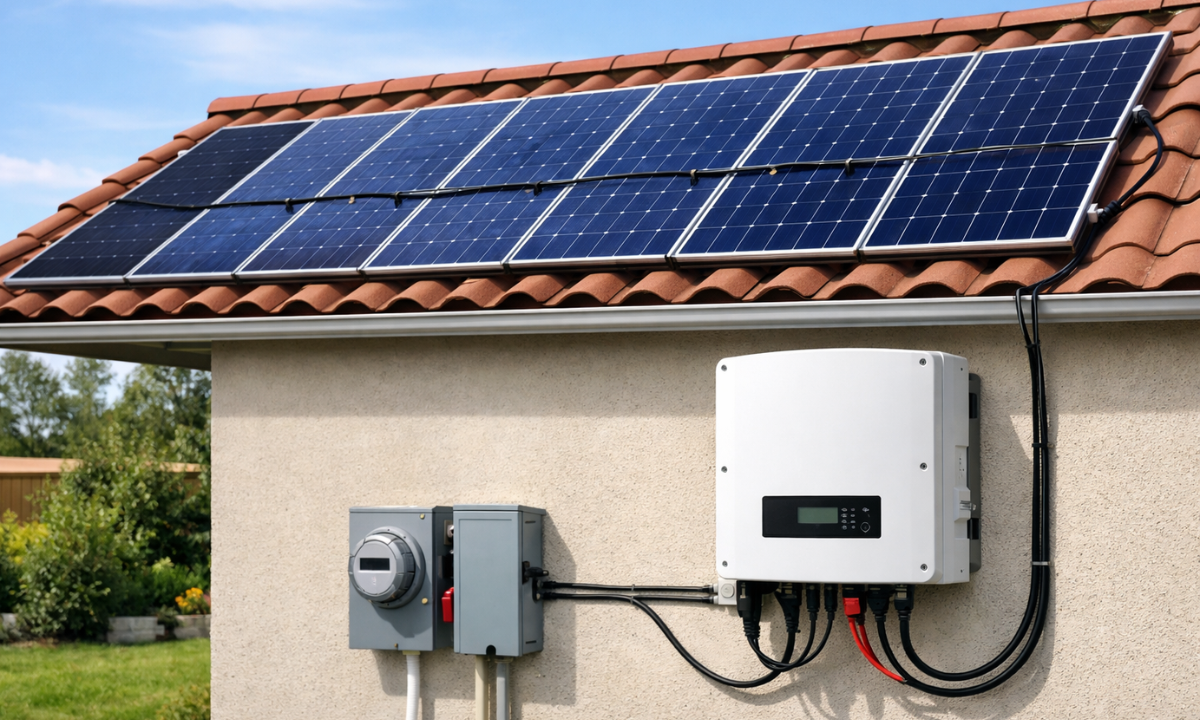
String inverters are the most traditional and widely used option. In this system, multiple solar panels are connected in a “string”, and all the panels feed power into one central inverter.
They are cost-effective and easy to install, which makes them popular among homeowners. However, if one panel in the string is shaded or underperforming, the entire string’s performance can drop.
Best For
- Homes with simple roof layouts
- Roofs with minimal shading
- Budget-conscious installations
Pros and Cons
| Feature | Details |
|---|---|
| Cost | Low |
| Installation | Simple |
| Efficiency in Shade | Low |
| Lifespan | 10–15 years |
| Maintenance | Easy |
We usually recommend this option when the roof faces one direction and gets consistent sunlight.
2. Microinverters
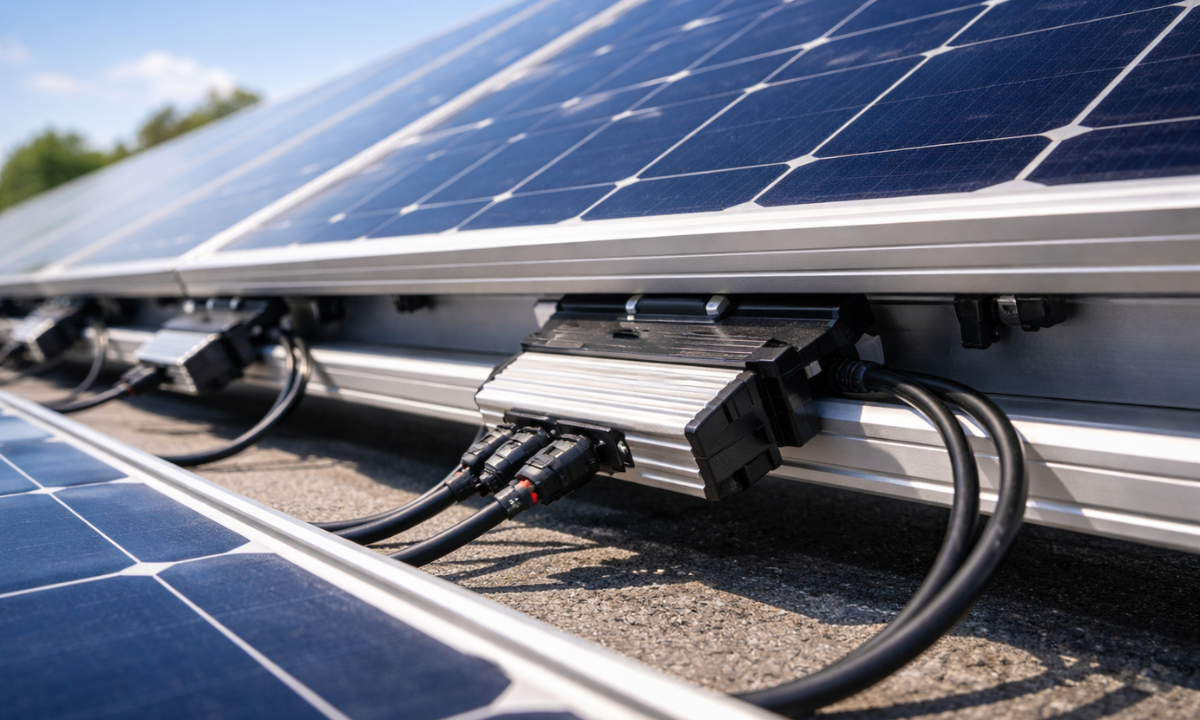
Microinverters are small devices installed under each individual solar panel. Instead of converting electricity centrally, each panel converts DC to AC on its own.
This means shading or malfunction in one panel does not affect the others. The system performs at maximum efficiency.
Best For
- Complex roof designs
- Partial shading
- Homes with multiple roof angles
Pros and Cons
| Feature | Details |
|---|---|
| Cost | High |
| Installation | Moderate |
| Efficiency in Shade | Excellent |
| Lifespan | 20–25 years |
| Panel Monitoring | Individual tracking |
Although the upfront cost is higher, long-term energy production can be better. We often suggest this for homeowners who want performance optimization.
3. Hybrid Inverters
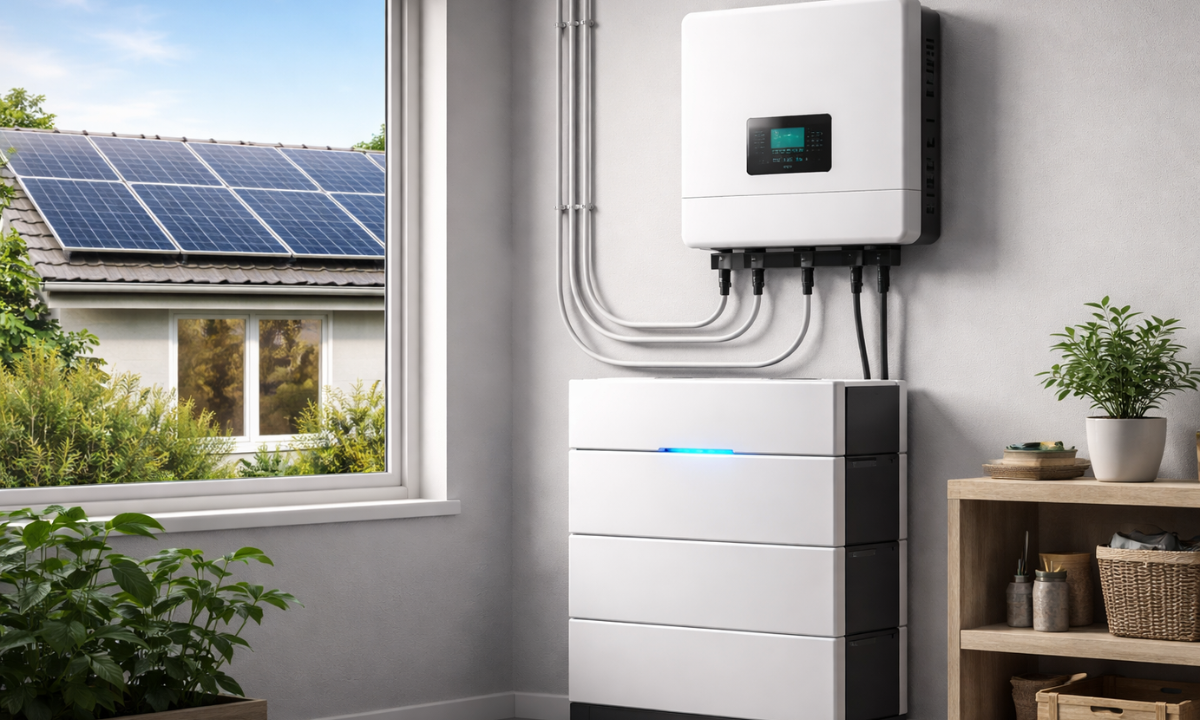
Hybrid inverters combine solar conversion and battery management into one system. They are designed to work with both solar panels and battery storage.
If you plan to add batteries now or in the future, this option gives flexibility. It acts as both a solar inverter and one of the battery inverters in a single unit.
Best For
- Homes planning battery storage
- Areas with frequent power cuts
- Energy independence goals
Pros and Cons
| Feature | Details |
|---|---|
| Cost | High |
| Battery Compatibility | Yes |
| Lifespan | 10–15 years |
| Grid Connectivity | Optional |
This inverter is becoming increasingly popular because it prepares homes for future energy needs.
4. Power Optimizers
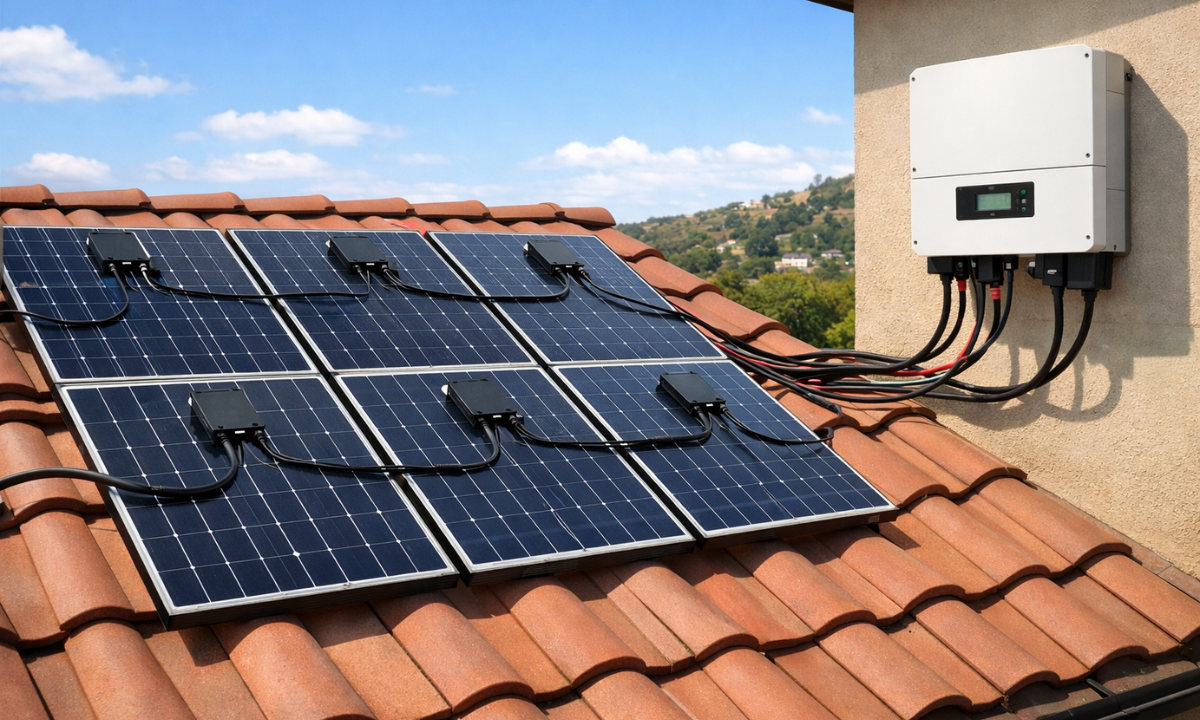
Power optimizers are not standalone inverters. They work with string inverters to improve performance.
Each panel has an optimizer attached, allowing better energy harvesting even when partially shaded. However, the DC to AC conversion still happens centrally.
Best For
- Medium budget
- Partial shading
- Homeowners wanting better performance than string systems
Quick Comparison
| Inverter Type | Cost | Shade Performance | Lifespan | Ideal For |
|---|---|---|---|---|
| String | Low | Poor | 10–15 yrs | Simple roofs |
| Power Optimizer | Medium | Good | 10–15 yrs | Partial shade |
| Microinverter | High | Excellent | 20–25 yrs | Complex roofs |
| Hybrid | High | Good | 10–15 yrs | Battery-ready homes |
Functional Classifications of Inverters
Apart from the technology type, solar inverters are also categorized by how they connect to the power grid.
On-Grid Systems
On grid inverters are connected directly to the utility grid. They supply solar power to your home and export excess electricity to the grid.
These systems include anti-islanding safety features. During a power outage, they automatically shut down to protect technicians working on power lines.
Advantages
- Lower cost
- No battery required
- Net metering benefits
Off-Grid Systems
Off grid inverters operate independently from the utility grid. They are ideal for remote areas where electricity access is limited.
They work closely with battery systems to store solar energy for nighttime use.
Advantages
- Complete energy independence
- Ideal for rural or remote locations
- Backup power availability
How to Choose the Right Inverter for Your Home
Choosing the right inverter depends on multiple factors. Let’s simplify it step by step so we can make a confident and practical decision.
1. Roof Structure
Your roof design plays a major role in inverter selection. If your roof faces one direction and receives uniform sunlight throughout the day, string systems usually perform efficiently and cost less.
However, if your roof has multiple slopes, different orientations, or partial shading from trees or nearby buildings, microinverters or systems with optimizers can help maximize energy production. They allow each panel to work independently, reducing overall energy loss.
Tip: Before selecting an inverter, we should always assess the roof direction (north, south, east, west), tilt angle, and shading pattern during different times of the day.
2. Budget
Budget is often the first consideration, but we should think beyond just upfront cost. Central string systems are generally the most affordable option and work well in ideal conditions.
Advanced systems may have higher initial costs, but they often deliver better long-term returns due to higher efficiency and longer lifespan. When we calculate savings over 20–25 years, the difference in output can justify the investment.
Example: Spending slightly more today on a high-efficiency inverter may generate more electricity daily, leading to faster recovery of installation costs.
3. Future Battery Plans
If you plan to add battery storage in the future, it is wise to choose an inverter that supports it from the beginning. Hybrid-ready systems allow easy integration without major rewiring or replacement.
Upgrading later can increase installation costs and may require replacing the inverter entirely. Planning ahead gives flexibility and protects your investment.
Tip: Even if you are unsure about batteries now, choosing a battery-compatible inverter keeps your options open.
4. Power Backup Needs
If your area experiences frequent power cuts, backup capability becomes essential. Standard grid-connected systems shut down during outages for safety reasons.
In such cases, selecting an inverter that supports battery integration ensures an uninterrupted power supply for essential appliances like lights, fans, and refrigerators. This improves comfort and reliability, especially in regions with unstable grid supply.
Pro Tip: We should clearly define which appliances we want to run during a power cut. This helps in selecting the right inverter capacity and battery size.
5. Other Considerations
Apart from the four major factors, we should also evaluate:
- Warranty period (longer warranties provide peace of mind)
- Monitoring features (mobile app tracking improves system visibility)
- Brand reliability and service support
- System scalability (ability to add more panels later)
By carefully evaluating these points, we can select an inverter that matches our home’s energy needs, budget, and long-term goals.
Example Scenarios
Let’s look at practical situations. These examples help us understand how different needs require different solutions.
| Scenario | Recommended Inverter |
|---|---|
| Small urban home, no shade | String |
| Villa with partial shading | Microinverter |
| Home with frequent power cuts | Hybrid |
| Remote farmhouse | Off-grid |
Cost Comparison Overview
When we compare inverters, it’s important to understand that cost is not just about the purchase price. We should also consider maintenance requirements, lifespan, and long-term energy savings.
An inverter that costs more initially may deliver better performance and higher returns over the years, especially if it increases overall energy production.
| Inverter Type | Approx. Cost Range | Maintenance Level | ROI Potential |
|---|---|---|---|
| String | Lowest | Low | Moderate |
| Microinverter | High | Low | High |
| Hybrid | High | Medium | High |
| Optimizer | Medium | Low | Moderate |
While price is important, long-term efficiency matters more. A slightly higher investment can generate higher savings over 20 years.
Installation Tips
Proper installation ensures your inverter performs efficiently and safely. Even the best system can underperform if not installed correctly.
- Check warranty duration: A longer warranty offers better protection and reduces future repair costs.
- Choose professional installation: Certified installers ensure correct wiring, safety compliance, and optimal performance.
- Confirm panel compatibility: Make sure the inverter matches your panel voltage and capacity to avoid efficiency loss.
- Verify monitoring features: App-based monitoring helps track energy production and detect issues early.
- Plan for future expansion: Select an inverter that allows adding more panels or batteries later.
We always suggest thinking long-term instead of focusing only on upfront costs.
Why the Right Inverter Matters
An inverter affects efficiency, safety, and overall savings. Choosing incorrectly can reduce energy output, increase maintenance issues, and delay your return on investment.
The inverter controls how effectively solar power is converted and distributed throughout your home. A high-quality system ensures stable voltage, protects appliances, and maximizes daily energy generation.
It also plays a key role in safety features such as automatic shutdown during faults or grid failures. This protects both your home and the utility workers.
We should see it not just as a device, but as the control centre of the entire solar setup. Making the right choice ensures better performance, long-term reliability, and greater financial benefits over the life of the system.
Final Thoughts
Understanding the different types of inverters helps us make smarter decisions when installing a solar system. Each option has its strengths, and the right choice depends on your roof, budget, and long-term energy goals.
If you are planning to explore solar products online, make sure you evaluate inverter compatibility carefully before purchasing. At Sun AP Ecopower, we believe in guiding homeowners toward efficient, future-ready solutions that maximzse savings and sustainability.
The right inverter today can power your home efficiently for decades to come.
Frequently Asked Questions
1. Which inverter lasts the longest?
Microinverters generally have the longest lifespan, typically lasting between 20 and 25 years. Since they are installed under each panel and operate independently, they experience less overall strain compared to central systems.
Their durability often matches the lifespan of solar panels, making them a reliable long-term investment for homeowners.
2. Can I upgrade my inverter later?
Yes, you can upgrade your inverter later if your energy needs change. However, upgrades may require rewiring, system adjustments, and additional installation costs. In some cases, panel compatibility must also be checked.
Planning for future expansion during the initial installation is usually more cost-effective and convenient.
3. Do I need batteries with every inverter?
No, batteries are not mandatory for every solar system. Grid-connected systems can function efficiently without battery storage because they draw power from the utility grid when needed.
Batteries become useful if you want backup power during outages or aim for greater energy independence and self-consumption.
4. What happens during a power cut?
In grid-connected systems, the inverter automatically shuts down during a power cut to ensure safety and prevent electricity from flowing back into the grid.
However, off-grid or hybrid systems with battery storage can continue supplying electricity to essential appliances during outages, providing uninterrupted power.
5. Is maintenance difficult?
Most inverters require very little maintenance. Regular inspections to check wiring, ventilation, and performance indicators are usually sufficient. Keeping the unit clean and ensuring it operates in a well-ventilated space helps maintain efficiency.
Professional servicing may be needed occasionally to ensure long-term reliability and optimal performance.
Reference:
1. From Google
2. https://www.solarsquare.in/blog/types-of-solar-inverters/