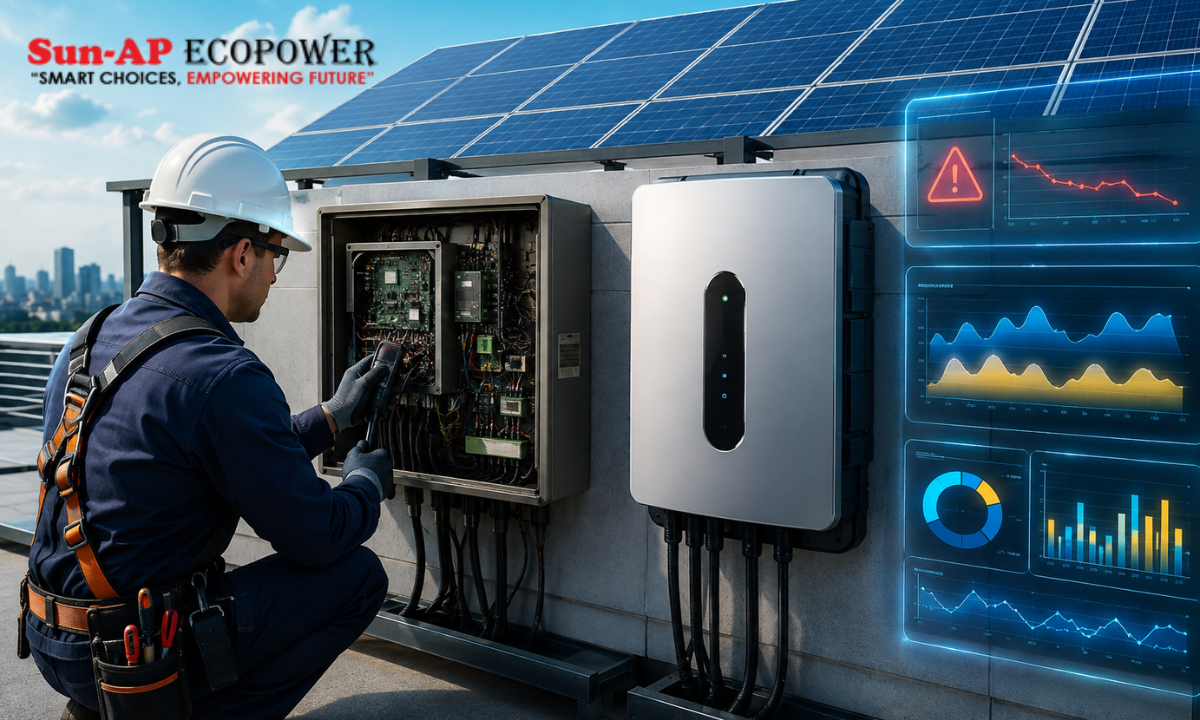
While photovoltaic modules are built to withstand 25 to 30 years of harsh outdoor exposure, the heart of your generation system, the solar power inverter, operates under intense thermal and electrical stress every single day.
Converting high-voltage direct current (DC) into grid-compliant alternating current (AC) takes a heavy toll on internal power electronics, making the inverter the most common component to require replacement during a plant’s operational lifespan. When daily yields decline, or recurring error codes halt power conversion, browsing for a replacement Solar inverter online or consulting trusted Solar inverter dealers in India becomes an urgent operational priority rather than a routine maintenance thought.
Inverter failure is rarely an instantaneous event; it is usually a gradual breakdown of sensitive power conversion stages, cooling mechanisms, and maximum power point tracking (MPPT) circuits. Operating a compromised or degraded inverter drastically reduces total system yield, turns high-efficiency solar panels into idle rooftop assets, and compromises safety through electrical thermal risks.
The Power Electronics Disconnect: Solar panels carry 25 to 30 year linear performance warranties because they contain no moving parts. In contrast, string inverters house high-frequency Insulated Gate Bipolar Transistors (IGBTs), electrolytic capacitors, and forced-air cooling fans subjected to daily temperature swings exceeding 40°C. Consequently, most central and string inverters reach their natural end-of-life between years 8 and 12.
Sourcing a modern replacement requires careful technical evaluation. Upgrading to next-generation power conversion hardware restores lost electricity production, enables seamless integration with modern high-current TOPCon modules, and unlocks smart grid compliance required by local distribution utilities (DISCOMs).
The following guide breaks down the financial decision matrix between repairing versus replacing an aging unit, followed by the ten definitive diagnostic indicators that signal it is time to upgrade your solar power inverter.
The “Repair vs. Replace” Decision Matrix & Efficiency Impact
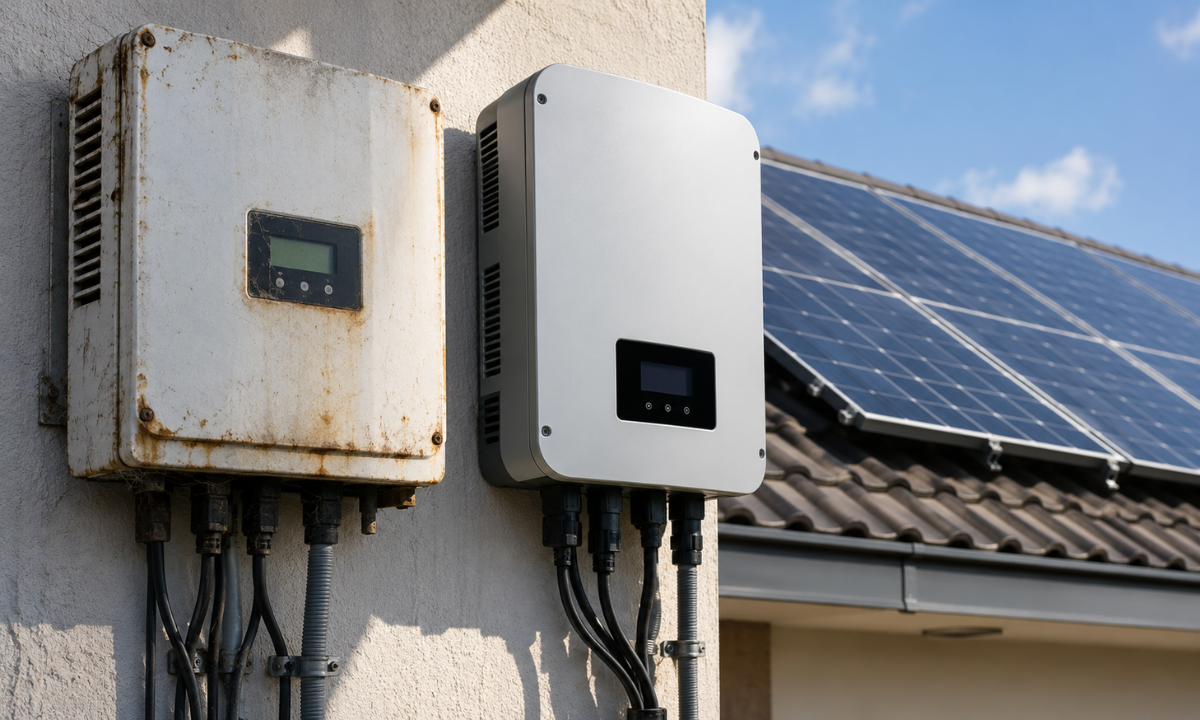
When a solar power system underperforms, system owners often assume the photovoltaic modules themselves are degrading. However, the primary bottleneck in energy output is frequently the conversion stage.
An aging or malfunctioning string inverter can easily suffer a 5% to 25% drop in conversion efficiency, causing significant financial leakage even when your rooftop array operates at peak DC generation capacity.
Conversion Efficiency vs. Solar Panel Efficiency
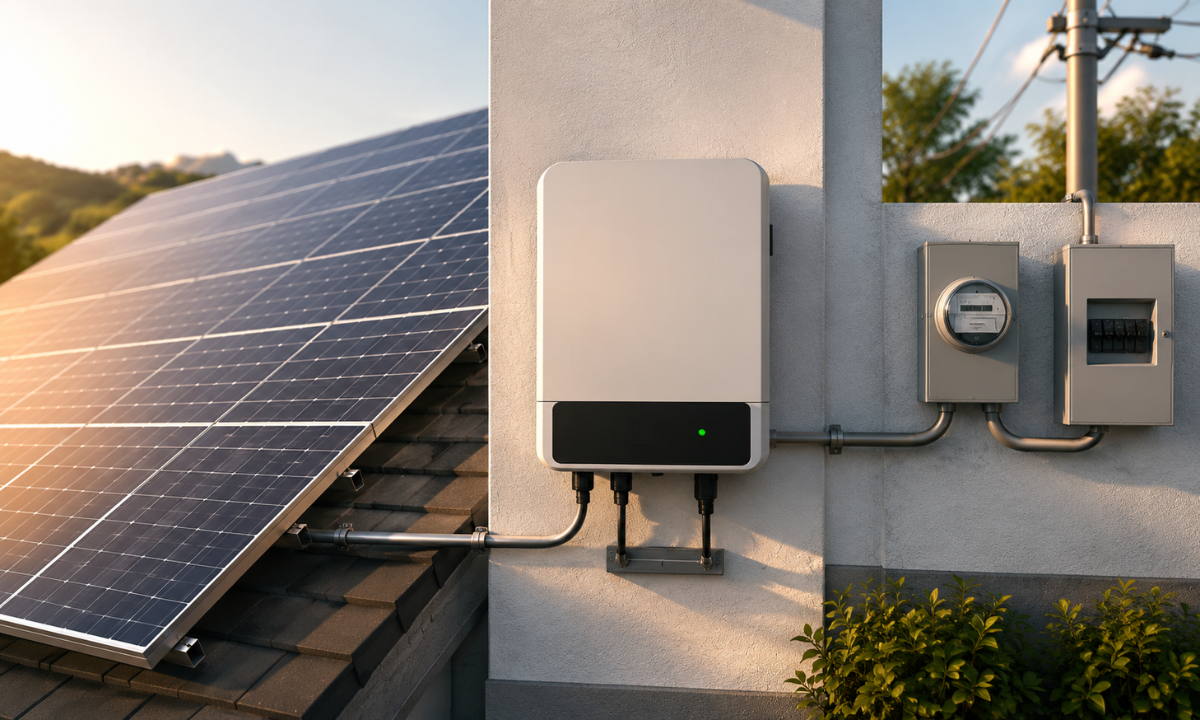
It is vital to distinguish between array generation and inverter conversion. Solar panel efficiency measures the percentage of sunlight hitting the PV cells that gets converted into Direct Current (DC) electricity. The inverter is then tasked with transforming that DC power into grid-synchronous Alternating Current (AC) power.
Modern Tier-1 inverters operate at peak conversion efficiencies between 97.5% and 99%. However, as internal components like electrolytic capacitors, transformers, and power transistors degrade due to constant thermal cycling, internal resistance spikes.
This thermal degradation forces the inverter to dissipate excess power as waste heat, directly compromising the total kilowatt-hour yield delivered to your building or the local grid.
The Inverter Replacement Viability Ratio (RVR)
Deciding whether to pay for an out-of-warranty repair or invest in a full unit replacement should be an objective financial calculation rather than guesswork. At Sun-AP Ecopower, we recommend evaluating failing units using the Inverter Replacement Viability Ratio (RVR):
RVR = ((Crepair + Ldowntime) / Cnew) × 100%
Where:
- Crepair: Total estimated expense for out-of-warranty component replacement, specialist labor, and logistics.
- Ldowntime: The cumulative financial loss of ungenerated electricity (and potential utility penalties) during diagnostic and repair delays.
- Cnew: The net procurement and installation cost of a modern, higher-efficiency replacement inverter.
Evaluating Your Score: Decision Guidelines
RVR Score Breakdown:
- RVR ≥ 50% (or Inverter Age ≥ 10 Years) ➔ REPLACE IMMEDIATELY: Sunk repair costs are unrecoverable; new units offer higher yields & full warranty.
- RVR < 30% (and Inverter Age < 5 Years) ➔ REPAIR UNDER WARRANTY: Issue is likely localized (e.g., firmware bug, blown fuse, minor wiring fault).
- When RVR ≥ 50% or System Age ≥ 10 Years (Replace Immediately): Paying 50% or more of the price of a new inverter to patch an old, out-of-warranty unit is economically inefficient. Modern replacement inverters provide 2% to 5% higher base conversion efficiency, advanced cloud monitoring, and a brand-new 10-to-25-year manufacturer warranty.
- When RVR < 30% and System Age < 5 Years (Proceed with Repair): If the unit is relatively young and under manufacturer coverage, repairing minor issues such as replacing a cooling fan, updating firmware, or clearing external wiring faults is the faster, cost-effective route.
Calculating your RVR prevents “sunk cost fallacy” traps where repeated minor repair bills quickly outpace the cost of buying a reliable, brand-new replacement unit with a fresh factory warranty.
Performance & Communication Failure Symptoms (Signs 1 to 4)
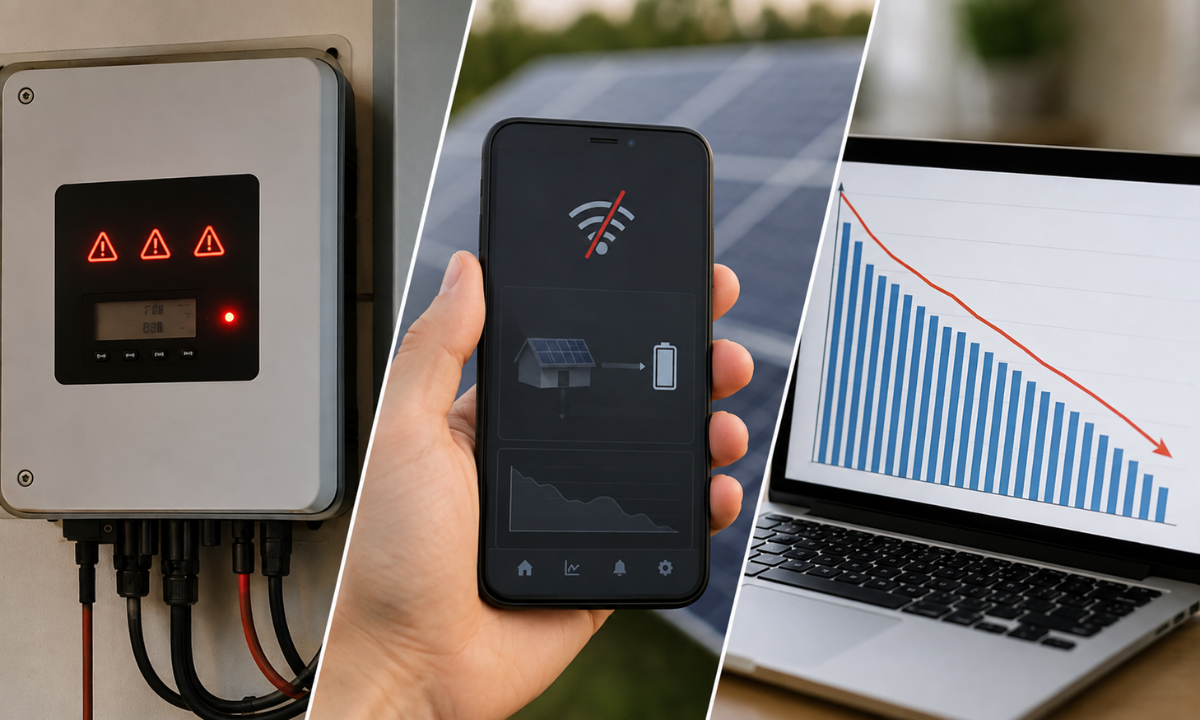
Inverter degradation rarely happens overnight. Long before a complete electrical failure shuts down your system, an aging solar power inverter leaves distinct operational warnings. Recognizing these early performance and communication red flags allows system owners to plan for a replacement before lost energy production damages system ROI.
Sign 1: Unexplained Yield Drops (>15% Output Loss)
If your solar panels are clean, free of new shading, and receiving clear sunlight, but your daily energy generation has dropped by 15% or more compared to historical baseline data, your inverter is likely experiencing internal degradation.
- Failing MPPT Tracker: The Maximum Power Point Tracking (MPPT) circuit continuously sweeps voltage and current curves to harvest maximum power from the array. When MPPT logic or sensing circuits degrade, the inverter operates far off its optimal power curve.
- Degraded Power Semiconductors: Worn Insulated Gate Bipolar Transistors (IGBTs) lose their ability to switch efficiently at high frequencies, turning generated DC energy into unwanted internal heat rather than usable AC electricity.
Diagnostic Tip: Compare generation data across similar weather conditions year-over-year. A gradual 0.5% annual loss is normal panel degradation; a sudden or steady 10-20% drop in generation points directly to inverter conversion bottlenecks.
Sign 2: Persistent Isolation Errors & Ground Fault Warnings
Error messages such as “PV Isolation Low,” “Isolation Fault,” or “Ground Fault” indicate that the inverter’s safety systems have detected current leakage between the DC circuit and ground.
- Internal Insulation Breakdown: While external DC cable damage or water ingress into array junction boxes can trigger this error, aging inverters frequently suffer internal insulation degradation within their input transformers or DC filtering stages.
- Repeated System Shutdowns: Modern inverters automatically disconnect from the grid when an isolation fault is detected to prevent electrocution or electrical fires. If clearing the array wiring yields no external faults, but the error persists, the internal isolation monitoring circuit or power stage is failing.
Sign 3: Blank LCD Display & Telemetry Disconnections
A healthy inverter provides real-time visibility into generation metrics, string voltages, and grid parameters. When display screens or communication modules begin failing, deeper system logic issues are usually present.
- Control Board Failure: A dead screen, frozen interface, or unresponsive control buttons signal that the internal auxiliary power supply board or microprocessor is failing.
- Telemetry Loss: If your online monitoring dashboard continuously shows the inverter as “Offline” despite active sunlight and local Wi-Fi/RS485 networks are functioning normally, the inverter’s internal communication card is breaking down under thermal stress.
Sign 4: Unexplained Spikes in Grid Electricity Bills
One of the most expensive signs of inverter failure is a sudden, unexpected increase in your monthly utility bill even when your daily routine hasn’t changed.
- Nuisance Tripping During Peak Hours: As internal components age, inverters become overly sensitive to minor grid voltage variations or internal heat spikes. The unit may trip offline during peak afternoon hours, precisely when solar generation should be offsetting your highest energy loads.
- Silent Power Draw: When an inverter frequently trips or stays in “Fault” mode, your facility automatically draws 100% of its power from the utility grid, defeating the purpose of your rooftop solar investment.
Identifying any of these four performance indicators means your inverter is actively leaking financial value. Addressing these symptoms early prevents prolonged system downtime and unexpected energy bills.
Thermal & Mechanical Breakdown Indicators (Signs 5 to 7)
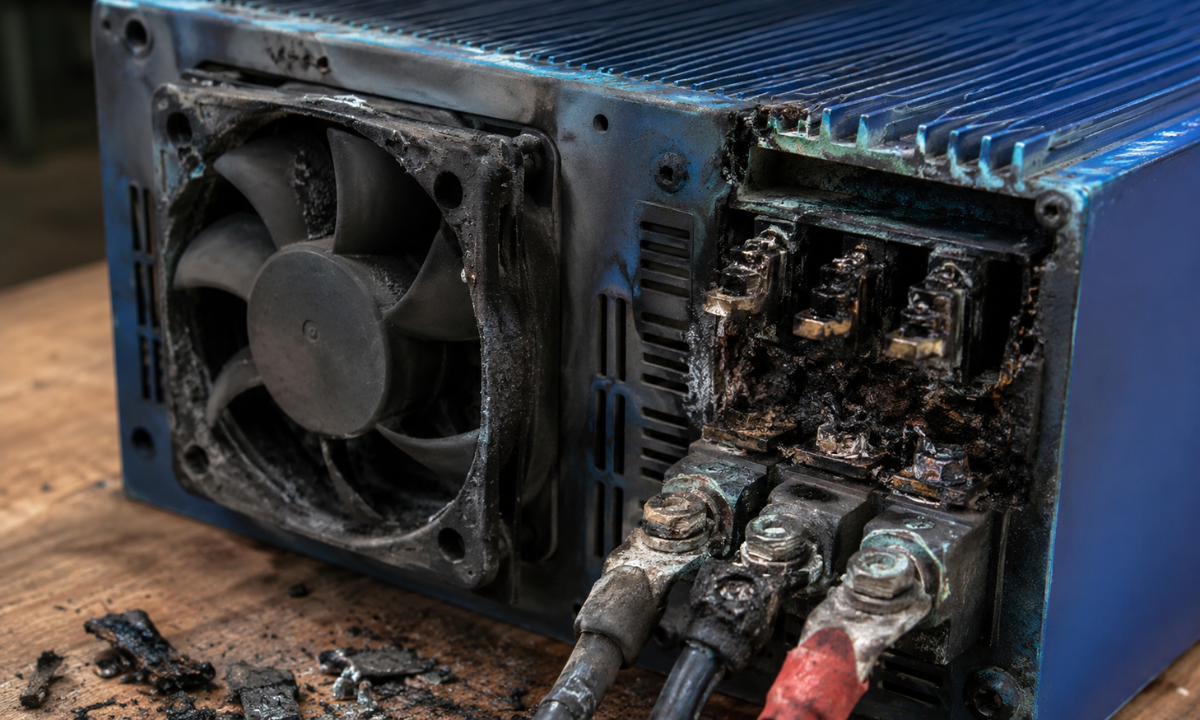
Solar inverters generate substantial internal heat during daily power conversion. Under standard operating conditions, integrated cooling systems dissipate this thermal energy safely.
However, as mechanical fans wear out, thermal interface materials degrade, and electrical connections loosen over time, thermal stress quickly converts from a manageable side effect into a primary cause of total hardware failure.
Sign 5: Recurring Thermal Shutdowns & Severe Inverter Overheating
Inverters are engineered with automated thermal throttling and emergency shutdown protocols to protect sensitive microprocessors when internal temperatures cross critical thresholds (typically around 70°C to 85°C).
- Cooling Fan Failure: Forced-air cooling fans contain mechanical bearings that dry out or lock up after years of continuous operation in dusty rooftop environments.
- Degraded Thermal Paste: The thermal interface material (TIM) bridging high-power transistors to the aluminum heatsink dries out and cracks over time, preventing efficient heat transfer away from core electronics.
- Blocked Heat Exchangers: Accumulated dust, debris, or insect nesting inside external cooling fins chokes airflow, creating localized heat traps.
Chronic Inverter overheating forces the system to repeatedly drop its power output during peak sunlight hours to cool down. When an inverter constantly throttles generation or shuts down completely during bright mid-day periods, internal thermal stress has crossed safe operating limits, making a full unit replacement necessary.
Sign 6: Internal Buzzing, High-Pitch Whine, or Capacitor Hum
While a subtle, low hum is normal for high-power electrical transformers, sharp changes in acoustic output indicate mechanical or electrical component degradation inside the casing.
- Failing Electrolytic Capacitors: As the liquid electrolyte inside filtering capacitors boils away or dries out due to thermal aging, the capacitors vibrate severely under load, producing a distinct high-pitched “whine.”
- Loosened Inductor Coils: High-frequency magnetic switching stresses the copper windings in output chokes and inductors. Over time, the protective varnish degrades, causing the coils to vibrate noisily against their ferrite cores.
- Transformer Core Delamination: Thermal expansion and contraction cycles can loosen internal transformer laminations, causing audible buzzing during high-current conversion phases.
These acoustic warning signs signal that internal energy-storage components are operating near their point of physical rupture. Ignoring capacitor whine or loud inductor hum often leads to sudden capacitor venting, which sprays conductive residue across internal circuit boards and destroys the inverter beyond repair.
Sign 7: Scorched Terminals, Melting Enclosures, or Severe Corrosion
Visual inspection of an inverter’s external casing, cable entry ports, and terminal blocks provides immediate evidence of dangerous electrical stress or environmental degradation.
- Thermal Arcing at DC/AC Terminals: Loose screw terminals or degraded cable crimps create high-resistance connections. Under heavy current loads, these loose connection points generate extreme localized heat, melting terminal blocks and scorching internal wiring.
- Moisture Ingress & Board Corrosion: Degraded rubber gaskets, cracked cable glands, or compromised IP65 weather seals allow ambient humidity and rainwater to enter the enclosure, creating conductive corrosion trails across internal circuit traces.
- Casing Distortion & Discoloration: Yellowing plastic faces, warped metal housing panels, or burnt plastic odors around the unit point directly to internal electrical fires or severe heat damage.
Critical Safety Risk: A scorched or melting terminal block is an immediate fire hazard that demands prompt isolation. Turning off the DC isolators and replacing the compromised inverter immediately prevents catastrophic electrical fires and protects your property’s main distribution panel.
Technological Obsolescence & Financial Red Flags (Signs 8 to 10)
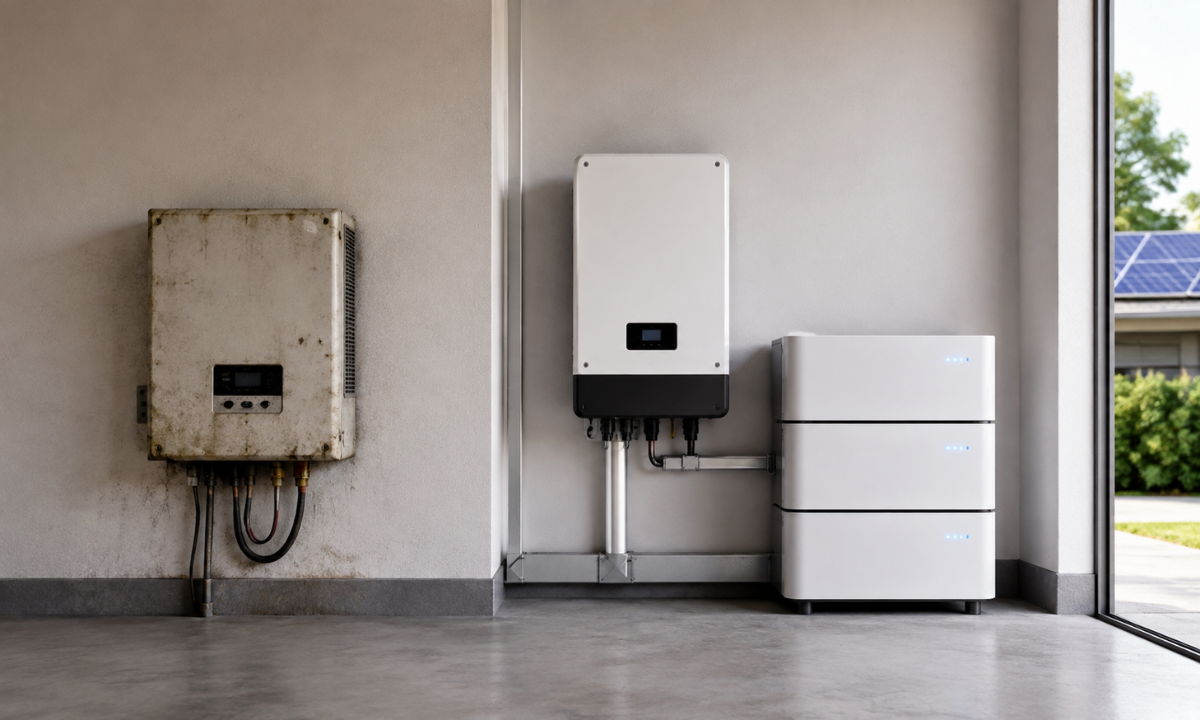
Even if an older inverter appears to be functioning without immediate error codes, hidden technological and financial bottlenecks can silently drain your solar system’s profitability.
As photovoltaic technology rapidly evolves, power conversion electronics that were installed a decade ago often become operational liabilities due to component degradation, lack of spare parts, and physical incompatibility with modern clean energy hardware.
Sign 8: Inverter Age Crossing the 10-to-12-Year Threshold
Power electronics follow a classic reliability “bathtub curve,” where failure rates spike significantly after 8 to 10 years of continuous operation due to cumulative electrical and thermal fatigue.
- Component Age Fatigue: Capacitors, internal relays, and optocouplers have finite operational lifespans. After a decade of daily high-voltage switching and thermal expansion cycles, internal components degrade simultaneously, causing sequential failures across different internal sub-assemblies.
- Loss of Manufacturer Firmware Updates: Legacy inverters eventually reach “End of Life” (EOL) status, meaning manufacturers discontinue firmware updates, security patches, and cloud monitoring application support, leaving your system vulnerable to software glitches and grid synchronization failures.
- Expiration of Primary Warranty Coverage: Operating an inverter beyond its 10-year warranty window exposes system owners to full financial responsibility for repair labor, shipping logistics, and expensive replacement parts.
Replacing an inverter as it approaches its 12th year of operation is a proactive financial strategy that prevents unexpected, weeks-long system outages during peak generation seasons.
Sign 9: Incompatibility with High-Current TOPCon Modules & Hybrid Batteries
The solar industry has shifted rapidly from older P-Type Mono PERC panels to high-efficiency N-Type TOPCon and Heterojunction (HJT) cell architectures built on larger M10 and G12 silicon wafers. Older inverters are frequently incapable of handling the electrical profiles of these modern modules.
- Short-Circuit Current (Isc) Bottlenecks: Legacy string inverters were designed for older panels with maximum power currents (Imp) between 8A and 10A. Modern TOPCon modules generate operating currents exceeding 13A to 18A, causing older inverters to severely clip energy generation or trip on overcurrent protection.
- Lack of Hybrid Storage Capabilities: Older string inverters are strictly grid-tied and cannot interface directly with high-voltage battery energy storage systems (BESS). Upgrading to a modern hybrid inverter allows seamless integration of lithium battery storage for uninterrupted backup power during grid outages.
- Incompatible MPPT Voltage Ranges: Connecting modern, high-wattage panel arrays to older inverters often results in voltage mismatches where the array voltage falls outside the inverter’s optimal MPPT tracking range, causing dramatic efficiency losses.
Upgrading your inverter allows you to repower or expand your rooftop array with high-efficiency TOPCon panels without suffering severe electrical current bottlenecks or losing battery storage upgrade options.
Sign 10: Discontinued Spare Parts & Unjustified Servicing Costs
When an out-of-warranty inverter suffers a major hardware failure, system owners are faced with the reality of sourcing replacement components for obsolete hardware.
- High Cost of Obsolete Components: Finding replacement power boards, control cards, or IGBT modules for discontinued inverters often requires buying refurbished parts at inflated prices, with no guarantee of long-term reliability.
- Prohibitive Out-of-Warranty Labor Fees: Specialized field service technicians charge substantial diagnostic and labor fees to troubleshoot legacy equipment, often requiring multiple site visits that yield no permanent resolution.
- Diminishing Returns on Maintenance: Attempting routine Solar inverter maintenance on an obsolete unit yields diminishing financial returns, as repairing one failed component simply pushes the failure point to the next aging capacitor or relay down the line.
When the cost of diagnostic visits and replacement parts exceeds 40% of the price of a brand-new, high-efficiency inverter backed by a fresh 10-to-25-year factory warranty, immediate replacement is the only sound financial choice.
Upgrade Paths: Selecting the Right Replacement Technology
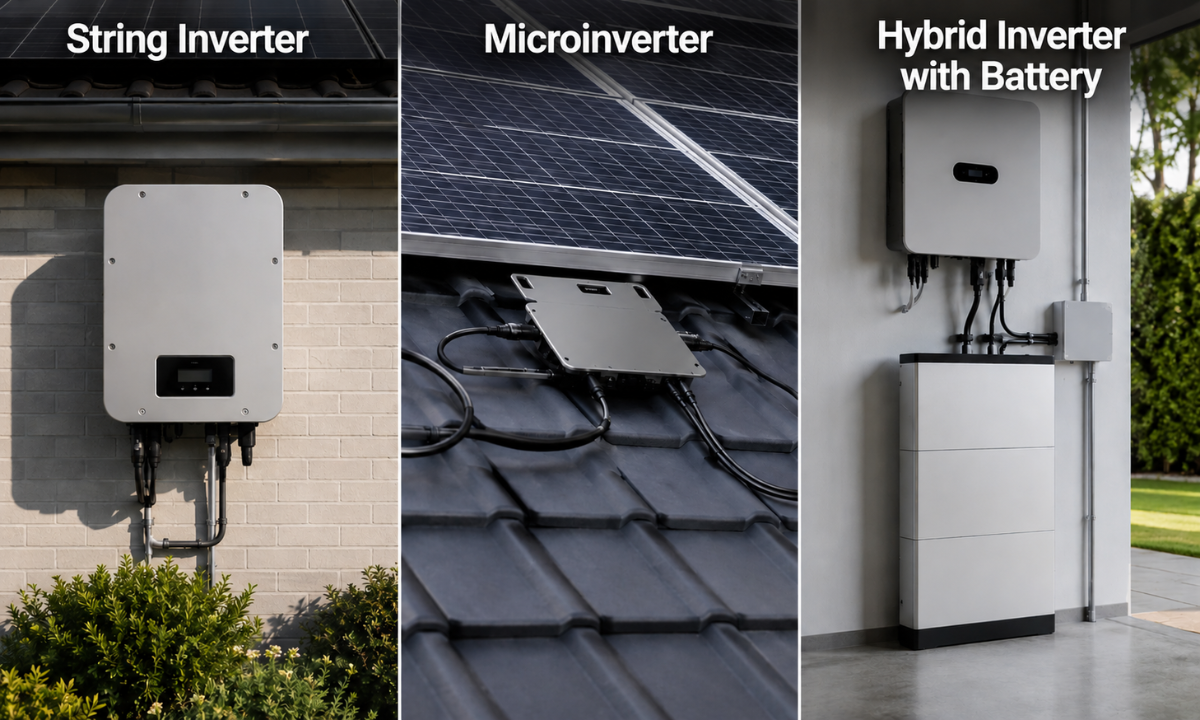
Replacing a failing inverter is not just a matter of swapping out broken hardware; it is an opportunity to modernize your entire solar installation.
Over the past decade, solar inverter technology has advanced dramatically, offering higher conversion efficiency, smarter grid interaction, and advanced safety features. When selecting a replacement inverter, system owners and EPC contractors can choose from three primary upgrade paths based on budget, shading conditions, and future battery storage needs.
Path 1: Upgrading to Next-Generation High-Efficiency String Inverters
If your rooftop array is largely unshaded and has a simple layout, replacing an old string inverter with a modern, high-capacity string inverter (such as those from FIMER or Deye) is the most cost-effective solution.
- Multi-MPPT Optimization: Modern string inverters feature 2 to 4 independent Maximum Power Point Trackers (MPPTs), allowing different solar strings to operate at peak efficiency even if they face different directions or experience minor localized shading.
- High-Current Handling for TOPCon Panels: Next-generation string inverters are engineered to support short-circuit currents (Isc) up to 18A-20A per string, eliminating current clipping when paired with modern high-wattage N-Type TOPCon or bifacial modules.
- Integrated DC Arc Fault Protection (AFCI): Modern units incorporate AI-driven arc-fault circuit interrupters that detect dangerous DC electrical arcs in real time and shut down the system in milliseconds to prevent fire hazards.
This path minimizes initial equipment costs while providing higher baseline generation, advanced cloud monitoring, and reliable performance backed by updated 10-to-12-year factory warranties.
Path 2: Migrating to Microinverter Architecture
For roofs with complex multi-angle geometry, severe tree or chimney shading, or strict fire safety requirements, migrating to a microinverter architecture (such as Enphase IQ Series) offers an unmatched upgrade.
- Module-Level MPPT & Shading Immunity: Microinverters attach directly beneath each individual solar panel on the roof, converting DC to AC power at the module level. If one panel is shaded or soiled, the remaining panels continue to generate at 100% capacity without dragging down the entire string.
- Elimination of High-Voltage DC Hazards: Traditional string systems route high-voltage DC current (up to 1,000V) across your roof and down internal building conduits. Microinverters immediately convert power to safe, standard 230V AC on the roof, significantly reducing fire risk.
- Zero Single Point of Failure: In a string architecture, an inverter failure shuts down the entire solar system. Microinverter systems operate as distributed parallel networks, ensuring that even if one unit experiences a fault, the rest of the array keeps generating power.
While microinverter systems carry a higher upfront hardware cost, their ability to harvest 10% to 25% more energy on shaded roofs paired with 25-year factory warranties makes them a premier long-term investment.
Path 3: Transitioning to Hybrid Inverters for Battery Storage
If your facility experiences frequent utility grid outages or seeks protection against rising peak-hour commercial electricity tariffs, replacing your grid-tied inverter with a multi-mode Hybrid Inverter (such as Deye Hybrid Series) turns your rooftop into a self-sustaining microgrid.
- Simultaneous Grid & Battery Integration: Hybrid inverters feature dedicated ports for both solar PV arrays and high-voltage lithium battery banks (LiFePO4), storing excess afternoon energy for use during evening peak hours or power cuts.
- UPS-Grade Emergency Power Backup: Advanced hybrid inverters feature automatic transfer switches that transition your building from grid power to battery power in less than 10 milliseconds during a blackout, keeping critical loads running without interruption.
- Programmable Zero-Export & Peak Shaving: Integrated smart energy management allows system owners to set strict zero-export limits to satisfy local grid regulations or automatically discharge batteries when grid electricity prices spike.
Transitioning to a hybrid setup future-proofs your energy infrastructure, allowing you to achieve true energy independence without replacing your existing solar panel mounting array.
Crucial Engineering Checks During Inverter Replacement
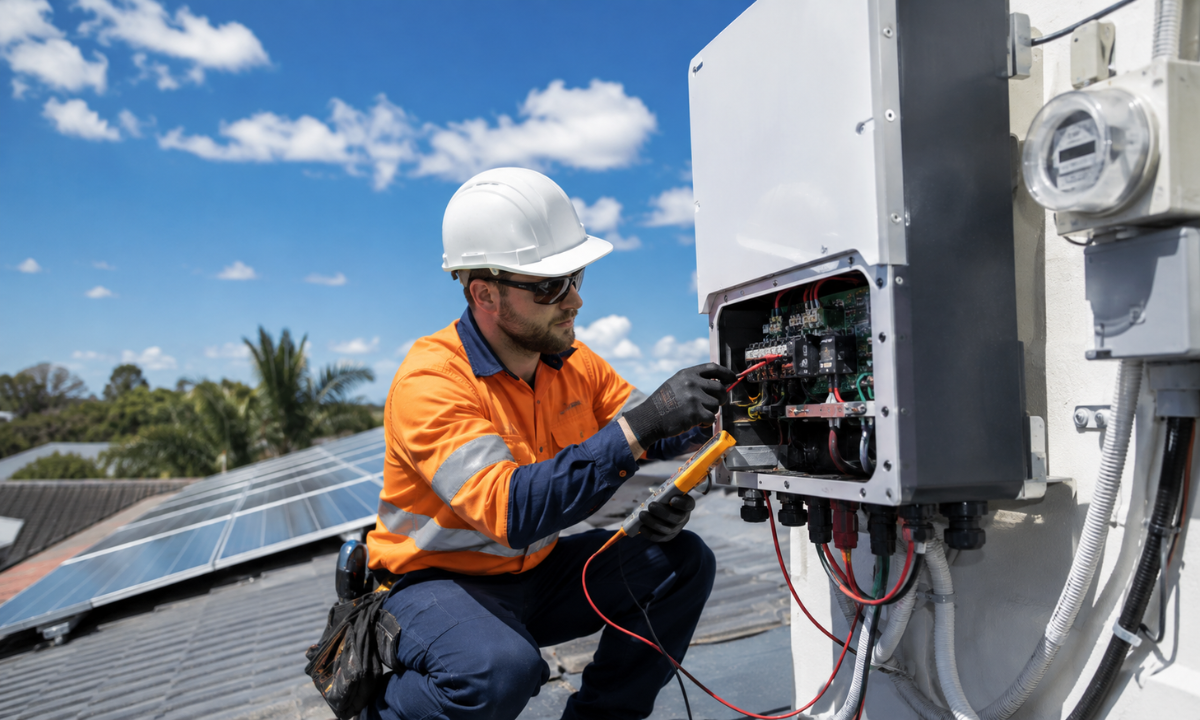
Before finalizing any replacement purchase, installation teams must perform two essential technical verifications to avoid equipment damage or legal non-compliance:
- DC String Voltage & Current Matching: Ensure the total open-circuit voltage (Voc) of your existing solar panel strings falls safely within the replacement inverter’s MPPT operating window, especially during cold winter mornings when panel voltages naturally spike.
- DISCOM Net-Metering & Grid Code Compliance Re-certification: When replacing a grid-tied inverter, notify your local utility distribution company (DISCOM). The replacement unit must comply with state grid codes (CEA guidelines), feature anti-islanding protection, and match the approved net-metering capacity.
Executing these technical checks ensures that your replacement inverter integrates seamlessly with your existing rooftop panels, operates at maximum efficiency, and maintains full compliance with local power distribution regulations.
Sourcing Your Replacement Inverter Through Sun-AP Ecopower
Diagnosing a failing or inefficient solar power inverter is only the first step toward restoring your array’s daily yield. When it comes time to execute an upgrade, sourcing your replacement hardware through an authorized distribution partner ensures that your new power conversion system carries valid factory warranties, authentic serial numbers, and full grid-compliance documentation.
Headquartered in Bengaluru, Sun-AP Ecopower operates as one of India’s premier authorized value-added distributors of clean energy technology, connecting EPC contractors, commercial developers, and solar installers with leading global power electronics manufacturers.
Why Choose Sun AP Ecopower? The Authorized B2B Distribution Advantage
- 100% Genuine Tier-1 Inverter Portfolio: Direct authorized access to leading inverter brands including Enphase Energy (IQ Series microinverters), FIMER / ABB (string & central inverters), Deye (hybrid multi-string units), and DEIF (advanced microgrid power controllers). Procuring through authorized channels guarantees authentic equipment backed by full factory warranties.
- Guaranteed Factory Warranty Protection: Serialized inventory dispatched directly from authorized warehouses eliminates grey-market risks, ensuring your 10-to-25-year manufacturer warranty remains completely valid and enforceable from day one.
- DISCOM & Net-Metering Re-Certification Support: Complete documentation support for local power distribution utilities (such as BESCOM and CESC), providing the necessary technical datasheets and grid-code compliance certificates required during inverter replacement inspections.
- Turnkey Balance of System (BoS) Kits: Integrated supply of replacement inverters alongside matching ACDB/DCDB protection boxes, bi-directional energy meters, UV-resistant DC cabling, and surge protection devices (SPDs) for a seamless installation.
- Concessional GST & Fast Logistics: Fully compliant GST invoicing (5% concessional rate for solar power generating equipment) with Input Tax Credit (ITC) benefits and expedited freight delivery across India.
Working directly with an authorized distributor such as Sun AP Ecopower, one of the trusted Solar panel dealers in India, guarantees that your replacement inverter is perfectly matched to your existing solar array’s voltage profile, protecting your 25-year solar investment against unexpected downtime, performance losses, and warranty rejection.
Procurement & Warranty Risk Warning: Purchasing replacement solar inverters through unauthorized resellers or unverified online platforms often results in voided manufacturer warranties, missing flash-test reports, and net-metering rejection by local DISCOM authorities. Sun-AP Ecopower ensures complete regulatory traceability and direct factory dispatch for every unit.
Conclusion
A solar PV installation is a long-term financial asset, but its total lifetime output depends on the reliability of its power electronics. Recognizing early warning signs such as thermal throttling, persistent isolation faults, or communication dropouts enables system owners to replace compromised inverters before lost electricity generation impacts project ROI.
By upgrading to a modern string inverter, microinverter array, or hybrid storage setup through an authorized supplier, you eliminate conversion bottlenecks, unlock advanced smart-grid monitoring, and safeguard your energy independence for decades to come.
Ready to Upgrade or Replace Your Solar Power Inverter?
Consult with the technical engineering team at Sun-AP Ecopower to secure competitive B2B quotes, string matching guidance, and technical datasheets for your replacement project.
B2B Procurement & Technical Sales: Email marketing@sunapecopower.com or call +91 88844 90100 / +91 88844 66393 for bulk pricing and technical consultations.
Corporate Office: Sun-AP Ecopower Private Limited, #393, 2nd Cross, Dollars Colony, JP Nagar 4th Phase, Bengaluru, Karnataka – 560078.