As a seller at Sun AP Ecopower, I speak daily with homeowners and businesses who want clear, honest answers about how solar really works. One phrase I often hear in the first few minutes of conversation is the efficiency of solar power.
People want to know whether solar panels truly deliver what they promise, and more importantly, whether the investment makes sense in real-world conditions here in India. As one of the trusted Solar product dealers in India, it’s my responsibility to explain this in a simple, transparent, and personal way.
Understanding the Efficiency of Solar Power in Real Life
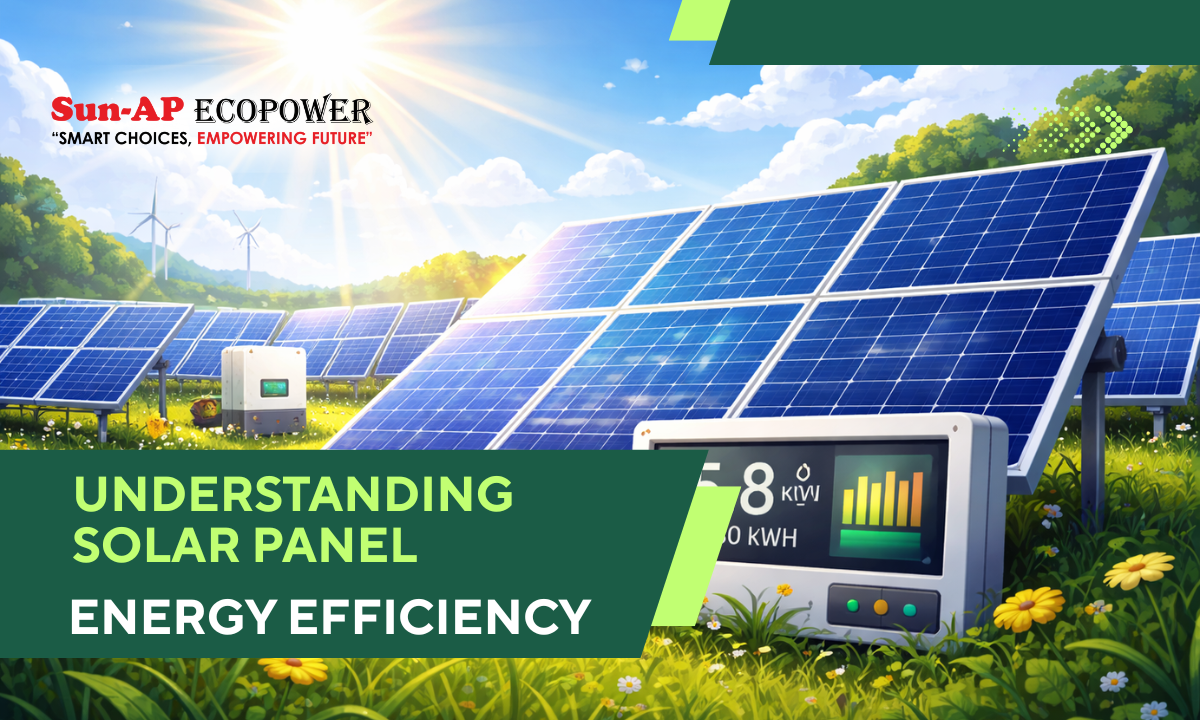
When we talk about efficiency, we’re really talking about how well sunlight is converted into usable electricity. In practical terms, this means how much energy your rooftop system produces throughout the day, not just on paper, but under heat, dust, clouds, and seasonal changes.
From my experience on the ground, efficiency is influenced by panel quality, system design, inverter performance, orientation, and ongoing maintenance. Even small decisions during planning can make a noticeable difference in output over the years.
What Determines How Much Energy Panels Actually Produce?
Many customers assume that panel ratings alone define output. In reality, several interconnected factors decide the final result.
Sunlight Availability and Location
India receives abundant sunlight, but regional climate matters. Coastal humidity, urban pollution, and seasonal monsoons all affect generation. This is why site-specific assessment is critical before any installation of solar panel systems.
Panel Technology and Build Quality
Premium modules are designed to perform better under high temperatures and low-light conditions. In projects where long-term reliability matters, I often recommend Panasonic solar panels because of their stable performance and advanced cell technology.
System Design and Electrical Balance
Efficiency drops when systems are oversized or poorly matched. Correct string sizing, shading analysis, and cable selection help ensure that every unit of sunlight is converted efficiently.
Why Inverters Play a Bigger Role Than Most People Realise
Panels generate direct current, but homes and businesses use alternating current. That conversion step is where performance is either preserved or lost. High-quality solar inverters ensure minimal energy loss while maintaining voltage stability and safety.
In modern systems, inverters also provide monitoring, fault detection, and grid interaction. When customers review their generation data in real time, they finally see how efficiency translates into daily savings.
Installation Quality Can Make or Break Performance
I’ve seen excellent equipment underperform simply because of poor workmanship. The installation of solar panel structures must consider tilt angle, wind load, roof strength, and water drainage.
At Sun AP Ecopower, we treat installation as engineering, not just assembly. Our teams ensure alignment precision, and thermal spacing so panels operate at optimal temperatures, directly improving output consistency.
Beyond Power Generation: The Practical Benefits for Solar Power Users
Efficiency is not just about numbers on a monitoring app it’s about value over time.
Lower Electricity Bills
Higher conversion efficiency means more self-generated power and reduced dependency on utility supply.
Predictable Energy Costs
Once installed, solar shields customers from rising tariffs and grid instability.
Environmental Impact
Efficient systems reduce carbon emissions more effectively over their lifespan, making solar energy a responsible long-term choice.
Grid Interaction and Energy Management
Modern systems are designed to work seamlessly with the grid. Excess energy flows back during the day, while power is drawn when needed at night. This balance ensures a reliable supply without compromising efficiency.
For customers adding storage later, smart system planning ensures smooth integration without redesigning the entire setup.
Why Panel Choice Still Matters in the Long Run
Not all panels age the same way. Degradation rates determine how much power you’ll be producing 10 or 20 years from now. Premium manufacturing standards help maintain higher output over time, preserving efficiency well beyond the payback period.
Final Thoughts
From my daily work at Sun AP Ecopower, I can confidently say that understanding the efficiency of solar power is the key to making a smart, future-proof investment. It’s not about chasing the highest-rated component; it’s about creating a balanced system that performs reliably year after year.
As responsible solar product dealers in India, our role is to guide customers toward solutions that combine technology, engineering, and long-term value, not shortcuts.
FAQs
How does Sun AP Ecopower ensure high system performance?
We focus on proper site assessment, premium components, and precision installation, ensuring each system performs optimally under real conditions.
Is solar a good option for homes with limited roof space?
Yes. With efficient system design and quality components, even smaller rooftops can meet significant energy needs.
How long does it take to see real savings?
Most customers notice reduced bills immediately, with a full return on investment typically within a few years, depending on usage.
Does dust or heat reduce output significantly?
Temporary losses can occur, but regular maintenance and correct panel selection minimise long-term impact.
Can systems be expanded later?
Absolutely. We design installations with future expansion in mind, including storage options.
Why choose Sun AP Ecopower over others?
Because we don’t just sell systems we build relationships based on transparency, performance, and trust.