As energy costs continue to rise and sustainability becomes both an environmental and financial priority, the installation of solar power system solutions has evolved from a luxury to a strategic necessity. At Sun AP Ecopower, we approach every project with precision engineering, regulatory compliance, and long-term performance in mind.
This comprehensive guide explains the full technical procedure, from feasibility analysis to commissioning, along with compliance standards, component integration, safety requirements, and optimization strategies. Whether you are installing solar for a residence, commercial property, or industrial facility, understanding the full process protects your investment and maximizes output.
Understanding How Solar Systems Work
Before diving into the technical procedure, it is important to understand how a solar power system, explained in practical terms, actually functions.
Solar panels capture sunlight and convert it into direct current (DC) electricity using photovoltaic cells. That DC electricity is then converted into usable alternating current (AC) electricity via an inverter. The energy can either be consumed instantly, stored in batteries, or exported to the grid, depending on system design.
Role of Solar Energy and Panels
The efficiency of solar energy and panels depends on:
• Sunlight exposure
• Panel orientation and tilt
• Temperature conditions
• Dust and environmental factors
• Quality of installation
Proper system design ensures maximum generation throughout the year.
Essential Components in a Solar Installation
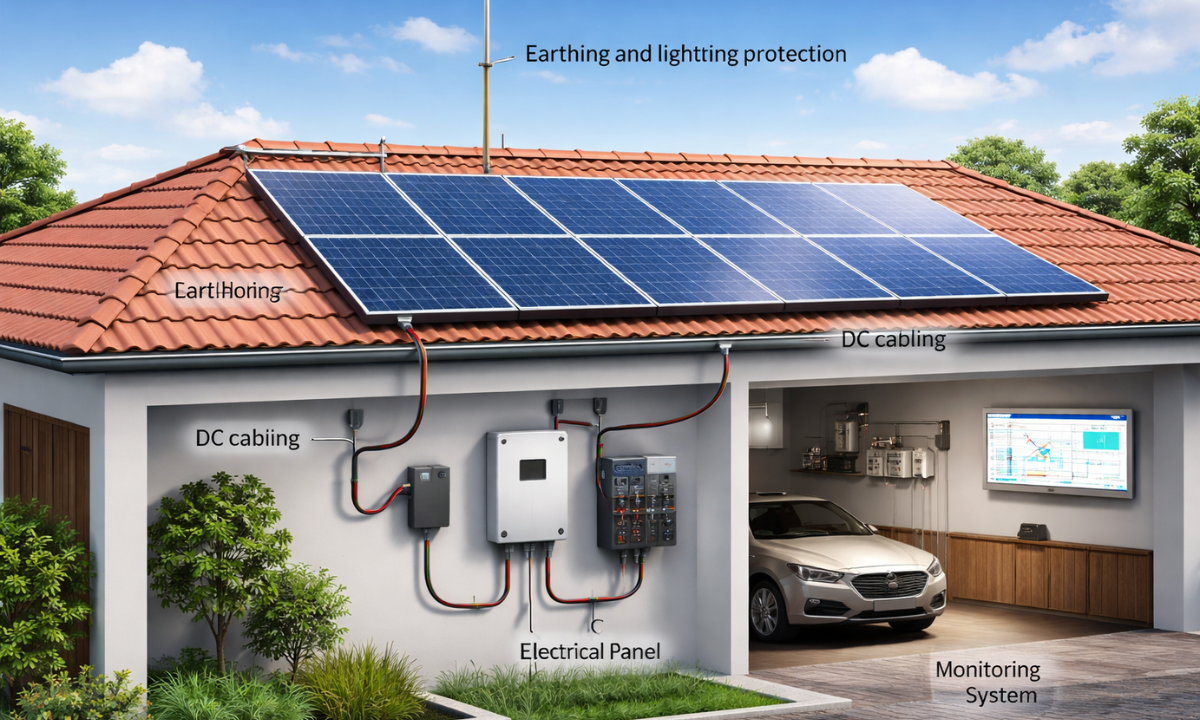
The Essential components required for a properly functioning solar system include:
- Photovoltaic modules – These panels convert sunlight into direct current (DC) electricity using solar cells.
- Mounting structures – These frames securely hold the solar panels in place at the correct angle for maximum sunlight exposure.
- DC and AC cabling – These cables transmit electricity from the panels to the inverter (DC) and from the inverter to the main electrical system (AC).
- Earthing and lightning protection – This system protects the solar installation and building from electrical faults and lightning strikes.
- Inverter system – The inverter converts DC electricity generated by the panels into usable alternating current (AC) power.
- Circuit breakers and surge protection – These safety devices prevent electrical overloads and protect equipment from voltage spikes.
- Monitoring infrastructure – This system tracks solar performance, energy generation, and system health in real time.
Each part must comply with Indian electrical safety standards and MNRE guidelines.
Step-by-Step Procedure
1. Site Assessment and Technical Feasibility

At Sun AP Ecopower, every solar project begins with a thorough site evaluation to ensure maximum efficiency and long-term reliability. This detailed assessment helps us design a technically sound system tailored to the property’s structural and electrical requirements.
Structural Inspection
We carefully assess the physical condition of the installation site to confirm safety and performance optimization. Our inspection includes:
- Roof load-bearing capacity
- Surface type (RCC, metal sheet, tile)
- Tilt angle optimization
- Shading impact using solar mapping tools
Even minor shadow obstruction can reduce generation significantly.
Electrical Load Study
We analyze the property’s energy usage patterns to determine the ideal solar system capacity. This helps avoid under-sizing or over-sizing the installation. Our study includes:
- Monthly and annual consumption
- Peak load requirement
- Appliance distribution
- Backup needs
This ensures accurate system sizing.
2. System Design and Engineering
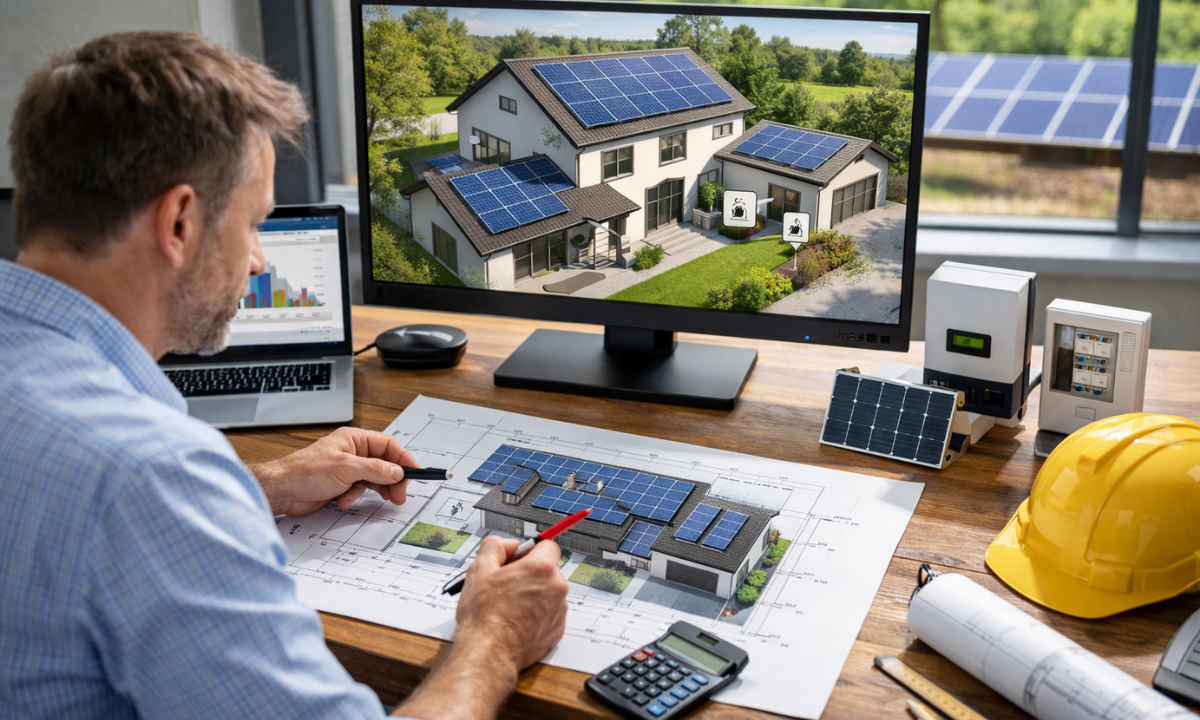
Based on the feasibility study, we prepare a customized solar layout that balances performance, safety, and cost-effectiveness while aligning with the client’s energy goals.
System Configuration Options
Clients may choose between:
- On-grid systems using on-grid inverters – Connected to the utility grid, these systems lower electricity bills and support net metering without batteries.
- Off-grid systems with battery storage – Independent systems that store energy in batteries, ideal for areas with frequent power cuts.
- Hybrid systems using hybrid inverters – Combine grid connectivity with battery backup for greater flexibility and energy security.
Each option differs in cost, backup capability, and ROI.
Inverter Selection
Selecting the right inverter for a solar panel system is essential for efficiency and safety, as it manages power conversion and grid interaction. It must:
- Match panel capacity
- Handle the required voltage range
- Support grid compliance
- Provide safety shutdown features
Proper inverter selection improves system performance and lifespan.
3. Battery Integration (If Required)
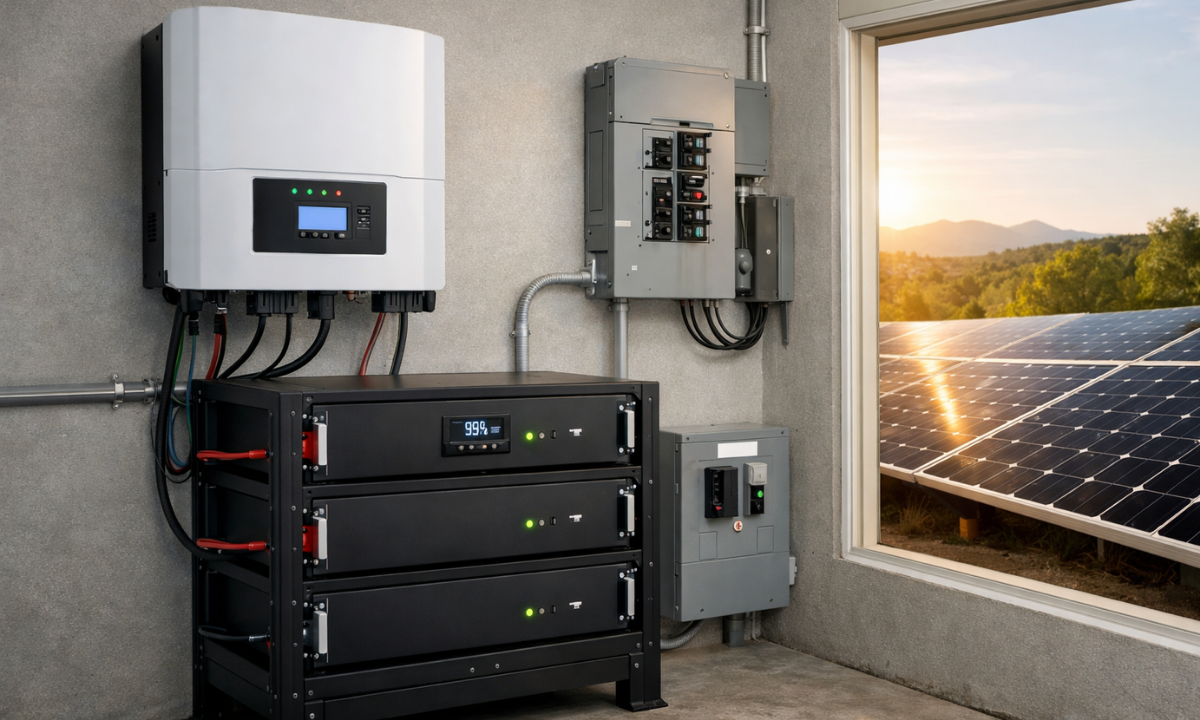
For backup-enabled systems, we incorporate a solar inverter with a battery configuration to ensure an uninterrupted power supply. This setup stores surplus energy and delivers reliable electricity during grid failures or nighttime usage.
Battery systems:
- Store excess daytime energy
- Provide night-time supply
- Support power during outages
Battery chemistry selection (lithium vs lead-acid) affects lifecycle, efficiency, and maintenance requirements.
4. Procurement of Quality Solar Products
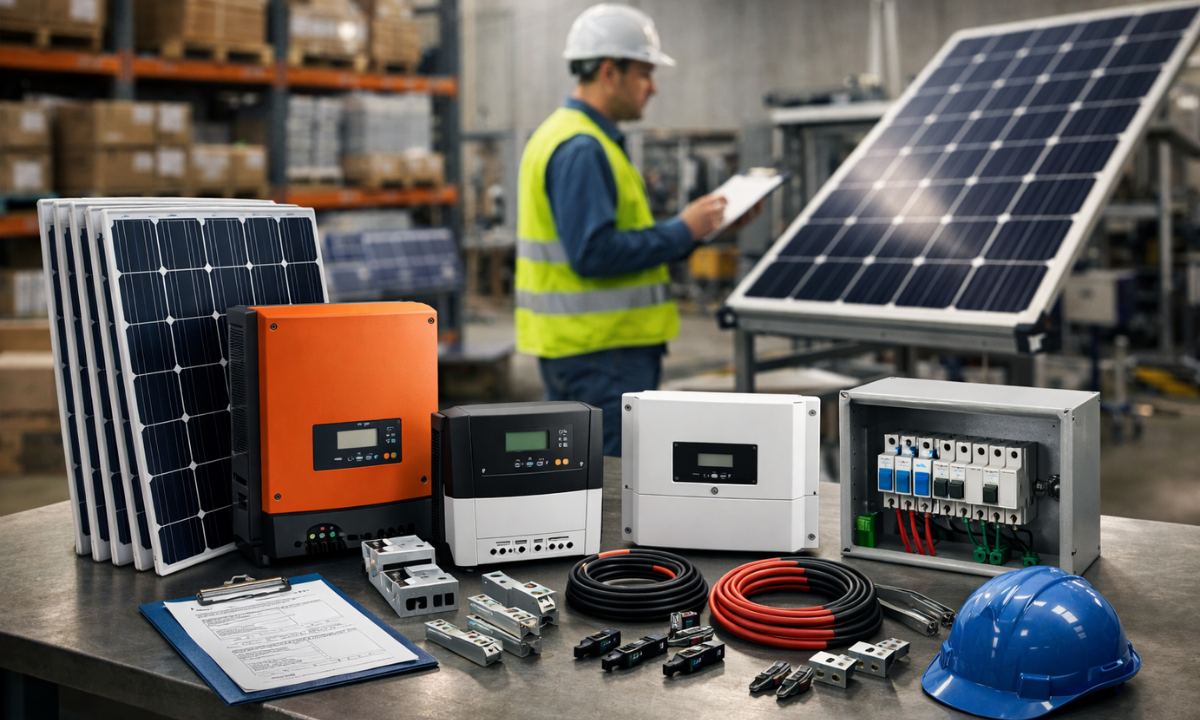
At Sun AP Ecopower, we prioritize sourcing high-quality, certified components to ensure system safety and long-term performance. Our procurement process focuses on reliability, compliance, and durability to protect our clients’ investment.
We source certified solar products through verified manufacturer channels to ensure:
- IEC certification
- Warranty assurance
- Performance reliability
- Long operational lifespan
Using substandard equipment compromises safety and efficiency.
5. Mounting Structure Installation
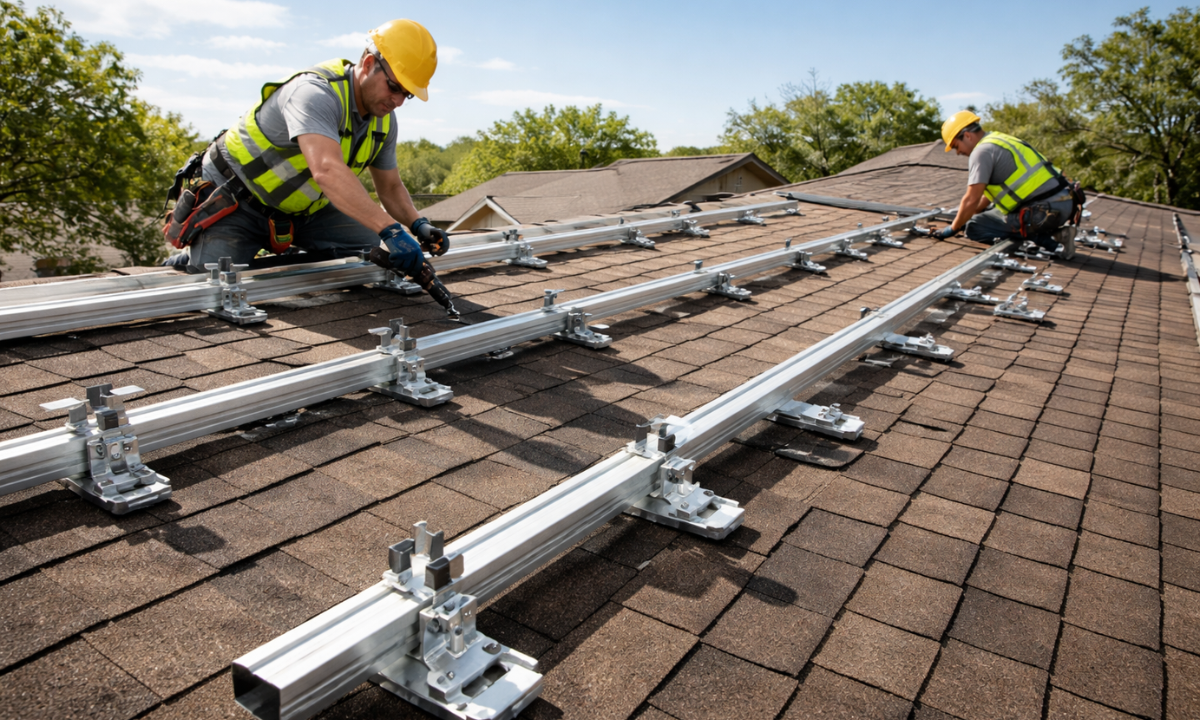
A strong and well-engineered mounting structure is essential to ensure the safety, stability, and long-term performance of the solar system. Proper installation prevents structural stress on the roof and protects the panels from environmental damage.
Mounting systems must be:
- Corrosion-resistant to withstand weather exposure
- Wind-load compliant as per local safety standards
- Securely anchored to the roof structure
- Precisely angled for optimal sunlight capture
Improper mounting can lead to panel misalignment, water leakage, or long-term structural damage.
6. Solar Panel Installation
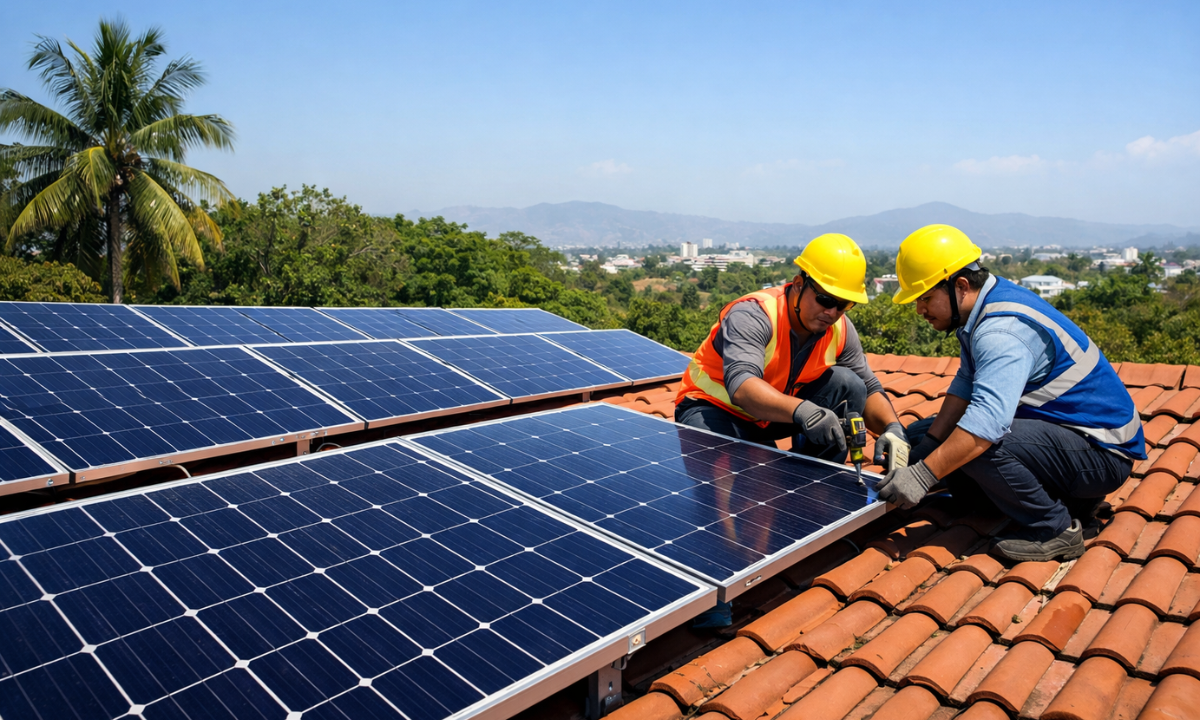
Solar panel installation is carried out with precision to ensure maximum energy generation and long-term system durability. Proper positioning and secure fastening are critical to achieving optimal performance in Indian climatic conditions.
Panels are positioned according to:
- True south orientation (Indian context) for maximum sunlight exposure throughout the day
- Optimal tilt angle (latitude-based) to enhance annual energy yield
- Minimum shading exposure to avoid performance loss
Wiring is routed through UV-resistant conduits to prevent weather-related degradation and ensure electrical safety.
7. Electrical Wiring and Protection Setup
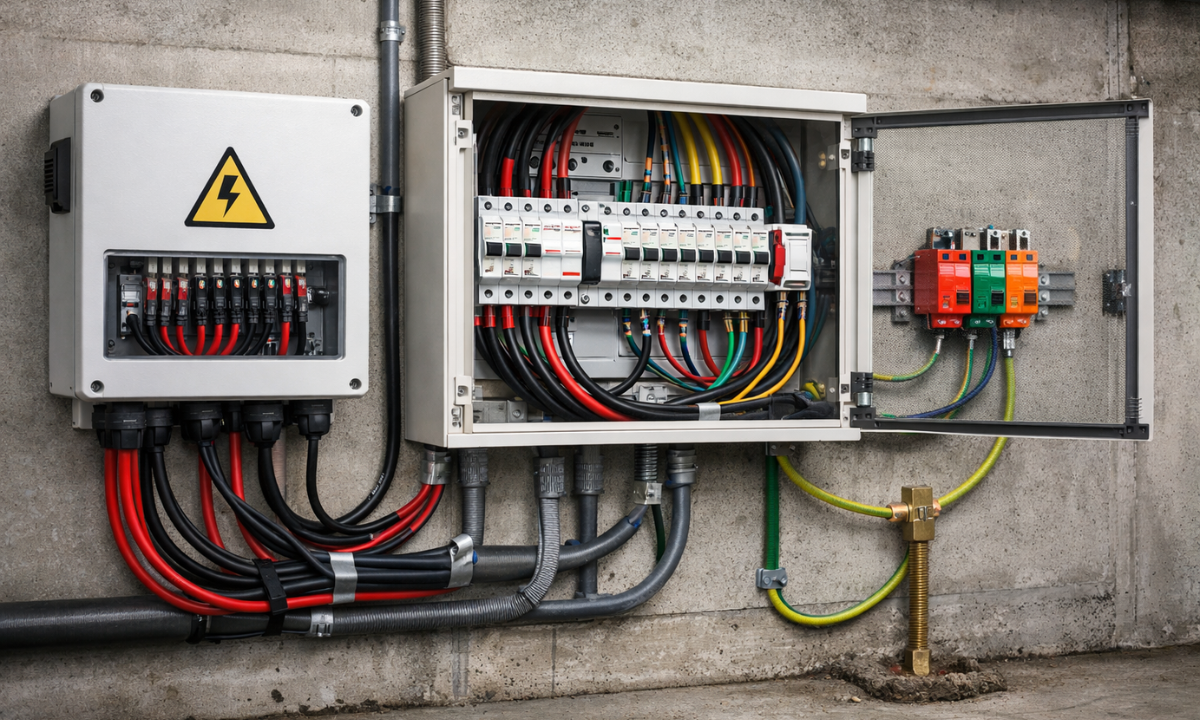
Electrical integration is performed with strict adherence to safety and regulatory standards to ensure stable and hazard-free system operation. Every connection is carefully tested to prevent faults, voltage fluctuations, and fire risks.
Electrical integration includes:
- DC combiner box installation to safely combine panel outputs
- AC distribution board integration for seamless power supply to the building
- Surge protection devices to guard against voltage spikes and lightning impact
- Proper earthing to prevent electrical shock and equipment damage
Safety is non-negotiable. All wiring adheres to Central Electricity Authority (CEA) standards.
8. Inverter Installation and Configuration
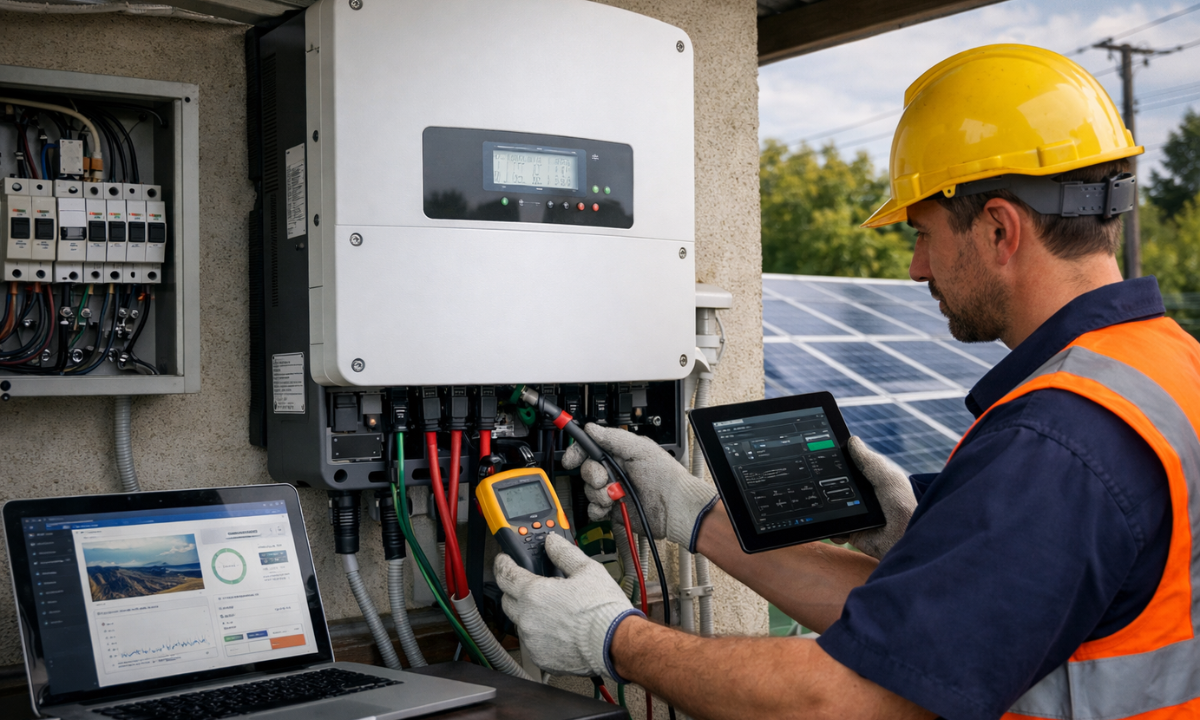
The inverter is installed in a well-ventilated, weather-protected location to ensure safe operation and long service life. Proper configuration and testing are carried out to optimize system efficiency and ensure seamless grid interaction.
We install advanced solar inverters equipped with:
- MPPT tracking to maximize power extraction from solar panels
- Grid synchronization for smooth and compliant power export
- Fault detection to identify and isolate system issues quickly
- Remote diagnostics for real-time monitoring and troubleshooting
Proper inverter calibration ensures stable voltage output, efficient energy conversion, and reliable long-term performance.
9. Monitoring System Integration
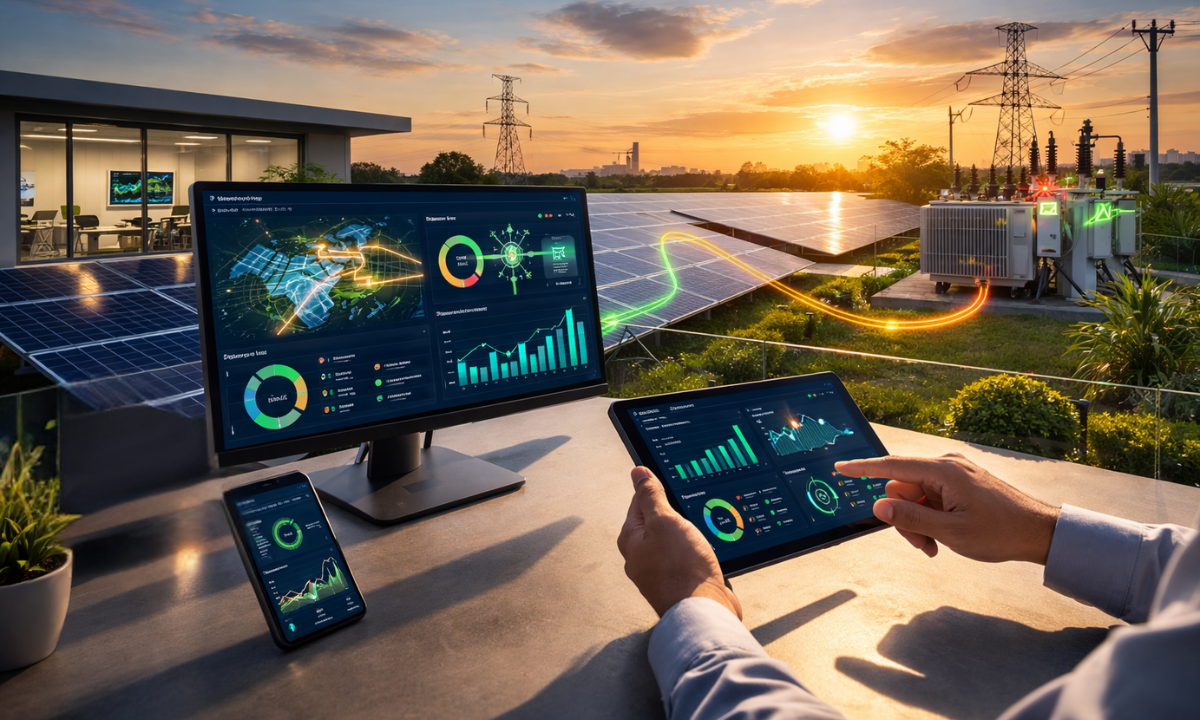
A smart monitoring system is integrated to provide real-time visibility into system performance and energy flow. This enables proactive maintenance, improved efficiency, and complete transparency for the client.
A smart monitoring system allows clients to:
- Track daily generation and overall energy production trends
- Monitor energy export/import under net metering
- Detect faults instantly for quick corrective action
- Analyze monthly performance for ROI evaluation
Remote dashboards and mobile app access improve transparency, performance tracking, and long-term system optimization.
10. Testing and Commissioning
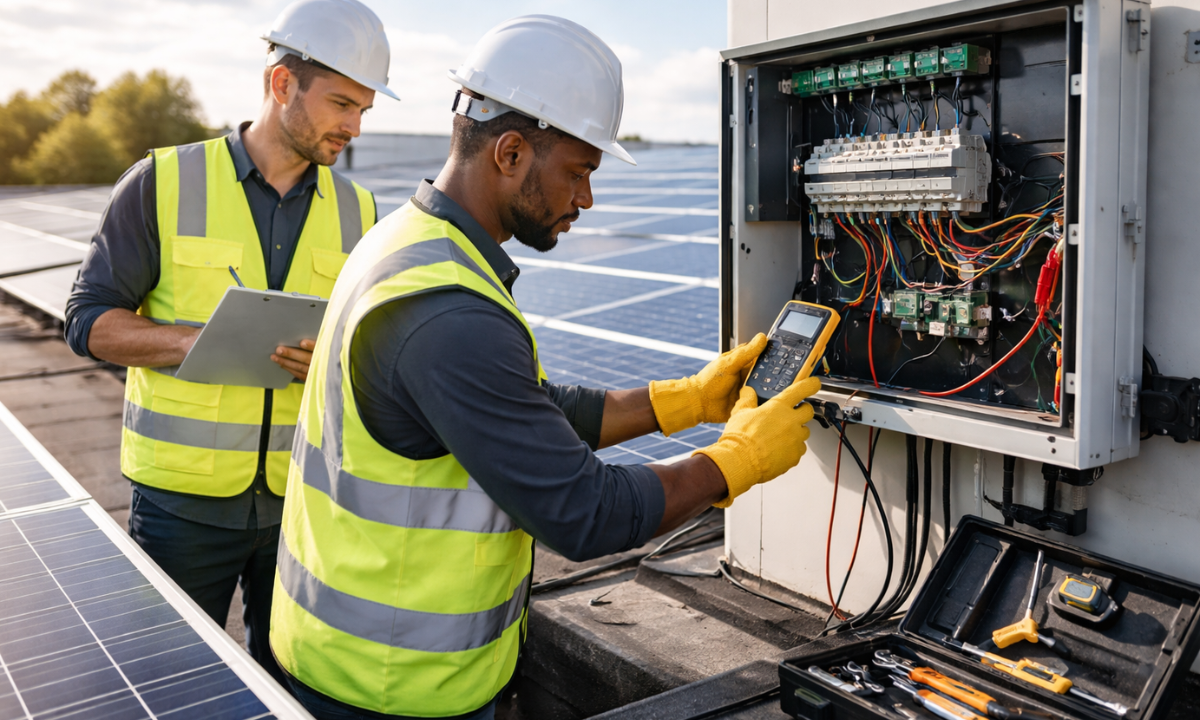
Before final handover, a comprehensive testing process is conducted to ensure the system operates safely, efficiently, and in full compliance with regulatory standards. Each component is inspected and validated to confirm optimal performance under real operating conditions.
Before activation, Sun AP Ecopower performs:
- Insulation resistance testing to detect wiring faults or leakage
- Polarity verification to ensure correct electrical connections
- Voltage stability checks for consistent power output
- Grid synchronization validation for seamless utility integration
Only after complete performance confirmation and safety clearance is the system officially activated.
Regulatory Compliance and Net Metering
For grid-connected systems, regulatory approvals and documentation are essential to ensure legal operation and eligibility for energy credits. We guide clients through every step of the approval process to avoid delays and ensure smooth grid connectivity.
For grid-connected systems, we assist with:
- DISCOM approvals to obtain official permission for grid interconnection
- Net metering application to enable energy export and billing credits
- Inspection coordination with utility authorities
- Documentation submission as per the State and Central Electricity Authority guidelines
Proper compliance ensures uninterrupted operation, smooth billing adjustments, and maximum energy credit benefits.
Maintenance and Performance Optimization
Solar systems require minimal maintenance, but periodic inspection and preventive care are essential to maintain high efficiency and extend system lifespan. Regular servicing helps identify minor issues early and ensures consistent energy generation throughout the year.
Recommended Maintenance Schedule
- Panel cleaning every 2–3 months to remove dust, bird droppings, and debris that can reduce the generation
- Wiring inspection annually to check for loose connections, insulation wear, or corrosion
- Inverter diagnostics review to monitor performance data and detect error logs
- Battery health checks (for backup systems) to assess charge cycles, capacity, and overall condition
Routine maintenance ensures optimal performance, improved ROI, and long-term system reliability.
Why Choose Sun AP Ecopower?
At Sun AP Ecopower, we focus on delivering reliable, high-performance solar solutions backed by technical expertise and regulatory compliance. Our approach combines quality engineering, transparent processes, and long-term customer support to ensure maximum value for every client.
- Certified engineering team
- Compliance-driven installation
- Transparent pricing
- Advanced monitoring integration
- Post-installation support
We treat every solar installation as a long-term energy partnership, not a one-time transaction.
Browse our complete range of solar products online:
Conclusion
The installation of solar power system solutions is a technically structured process requiring engineering precision, regulatory awareness, and component compatibility. When executed correctly, solar installations deliver decades of clean energy and financial savings.
At Sun AP Ecopower, we combine technology, compliance, and customer-focused service to deliver reliable solar solutions tailored to each project’s unique requirements.
Frequently Asked Questions
How long does installation take?
For most residential projects, the complete installation process typically takes between 2 to 5 days. The exact duration depends on system capacity, roof complexity, weather conditions, and whether battery integration is required. Larger commercial systems may take longer due to structural reinforcement, higher panel count, and regulatory inspections. At Sun AP Ecopower, we follow a structured workflow to minimize disruption while ensuring quality and safety.
Do solar systems work during power cuts?
Standard grid-connected systems automatically shut down during power outages for safety compliance with electricity board regulations. However, systems designed with battery backup continue supplying electricity during outages. A hybrid configuration enables seamless switching, ensuring uninterrupted power for essential loads. The right configuration depends on your backup requirements and energy consumption pattern.
Is a government subsidy available?
Government subsidies for rooftop solar installations are available under schemes regulated by the Ministry of New and Renewable Energy. Eligibility, subsidy percentage, and application procedures vary by state and system capacity. Typically, residential systems qualify under specific guidelines. Sun AP Ecopower assists clients with documentation and coordination to simplify the approval process.
What warranty is provided?
Most solar panels come with a 25-year performance warranty, ensuring long-term output reliability. Inverters generally carry a 5 to 10-year manufacturer’s warranty, depending on the model and brand selected. Batteries, if included, have separate warranty terms based on chemistry and usage conditions. At Sun AP Ecopower, we ensure all components supplied are backed by certified manufacturer guarantees for complete peace of mind.
References
- Ministry of New and Renewable Energy (MNRE), Government of India
- Central Electricity Authority Technical Standards
- International Electrotechnical Commission (IEC) Solar Standards
- Bureau of Indian Standards – Electrical Installation Guidelines