As someone who works closely with homeowners, businesses, and institutions every single day at Sun AP Ecopower, I have had countless conversations that start with one simple but crucial question: Which solar system should I choose? Living in a market shaped by evolving energy needs and guided by Solar product dealers in India, I have seen firsthand how the right solar decision can change not just electricity bills but lifestyles.
In this blog, I’m sharing my real-world experience from the seller’s side, what actually works, what people regret, and how you can confidently choose between off-grid vs on-grid solar systems without confusion or sales pressure.
Understanding the Core Difference
When customers walk into our office, the first thing I explain is that solar is not a one-size-fits-all solution. The difference lies in how your system interacts with the electricity supply.
One option works independently, while the other works alongside your local utility. The right choice depends on where you live, how reliable your power supply is, and how much energy independence you truly want.
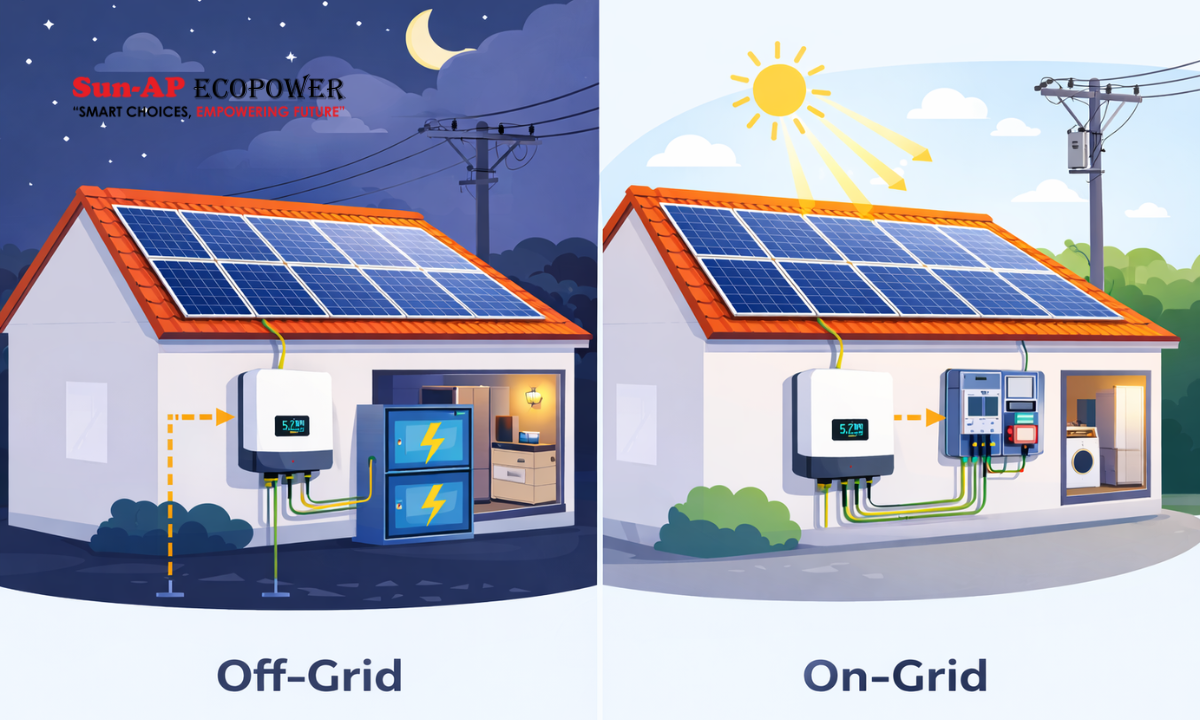
What an Off-Grid Setup Really Means for a Homeowner
An off-grid solar system for the home is designed for complete independence. From my experience, customers usually consider this option when they live in remote areas, face frequent outages, or simply want zero dependence on external electricity sources.
This setup relies on solar panels paired with batteries that store energy for nighttime or cloudy days. Once installed, your home becomes its own mini power station.
Why Grid-Connected Systems Are Still the Most Popular
In cities and towns where the electricity supply is stable, many customers lean toward Grid-Tied Solar Systems. These systems stay connected to the utility grid, allowing you to use solar power during the day and draw electricity when needed.
From a seller’s point of view, this option appeals to those who want quick returns on investment without managing batteries. It’s simple, efficient, and works seamlessly with modern billing mechanisms.
Most homeowners love the fact that excess solar energy doesn’t go to waste; it’s shared back with the grid, reducing overall costs and supporting cleaner energy usage.
The Role of Inverters in Grid-Based Systems
A question I’m often asked is about on-grid solar inverters. These are the brains of grid-connected installations. They convert solar power into usable electricity and synchronise it with the grid’s voltage and frequency.
In my experience, choosing a high-quality inverter makes a massive difference in system lifespan and performance. A reliable inverter ensures smooth operation and protects your system during voltage fluctuations.
When Hybrid Systems Become the Smart Middle Ground
Many customers today don’t want to choose between independence and affordability. That’s where Hybrid Solar Inverters come into play.
These systems combine the best of both worlds: solar panels, battery storage, and grid connectivity. I often recommend this option to families who experience occasional outages but still want the financial benefits of grid interaction.
From a seller’s perspective, hybrid solutions are future-ready. They allow upgrades over time, making them ideal for growing energy needs.
Is a Fully Independent Solar Power Setup Right for You?
A solar power off-grid system is ideal if reliability is your top priority. I’ve worked with customers in rural areas where power cuts last for hours or days. For them, off-grid systems aren’t a luxury; they’re a necessity.
That said, I always emphasise proper load analysis. Overloading an off-grid system can shorten battery life and reduce efficiency. Planning is everything.
Cost, Maintenance, and Long-Term Value
One thing I never hide from my customers is the cost difference. Off-grid systems require a higher upfront investment due to batteries. Grid-connected options are more budget-friendly at the start.
Maintenance also differs. Batteries need monitoring and eventual replacement, while grid-connected systems are comparatively low-maintenance. However, long-term value isn’t just about money; it’s about reliability, comfort, and control.
Final Thoughts
After years of working closely with customers, installers, and solar product dealers in India, my honest advice is simple: choose based on your lifestyle, not trends. At Sun AP Ecopower, we don’t push systems; we design solutions.
Whether you prioritise independence, savings, or flexibility, the right solar choice will serve you for decades. Solar isn’t just an installation; it’s a long-term relationship with energy, and we’re here to guide every step of that journey.
Frequently Asked Questions
1. Which solar system do you recommend most often at Sun AP Ecopower?
We recommend systems based on location, power reliability, and consumption patterns. Urban homes usually benefit from grid-connected setups, while rural homes prefer independent solutions.
2. Can I upgrade my system later if my energy needs increase?
Yes. We design systems with scalability in mind, especially hybrid solutions that allow future battery additions.
3. How long does installation usually take?
For residential projects, installation typically takes 2–5 days after site assessment and approvals.
4. Do you provide after-sales support and maintenance?
Absolutely. Long-term performance matters to us, so we offer ongoing service and system health checks.
5. Is battery storage necessary from day one?
Not always. Many customers start without batteries and add them later based on experience and need.
6. Why should I choose Sun AP Ecopower over others?
Because we sell with honesty, our focus is not just installation but long-term satisfaction, performance, and trust.