Choosing the right solar panels involves more than comparing wattage and price. You also need to consider panel efficiency, technology, roof space, temperature performance, durability, warranties, and compatibility with your solar inverter.
The right choice depends on your installation site, energy requirements, available space, budget, and long-term performance expectations. Comparing these technical factors can help you select solar panels that suit your project and deliver reliable performance over time.
This guide explains the key specifications to check when comparing solar panels for residential, commercial, and other solar installations.
1. Compare the Different Types of Solar Panels
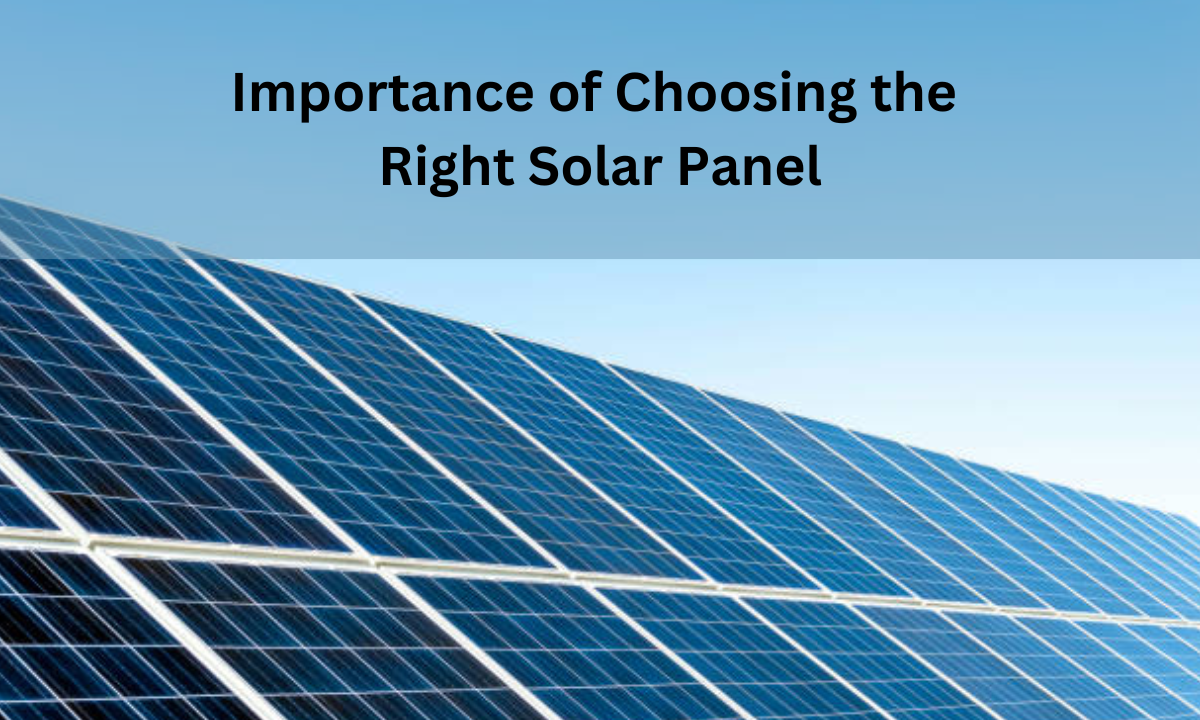
Solar panels use photovoltaic cells to convert sunlight into electricity. However, different panel technologies have different characteristics, costs, and applications.
The main types you may encounter are monocrystalline, polycrystalline, and thin-film solar panels.
| Panel type | Key characteristics | Typical application |
|---|---|---|
| Monocrystalline | Generally offers high efficiency and good power output per unit of roof area | Residential rooftops, commercial buildings, and space-constrained installations |
| Polycrystalline | Performance and efficiency depend on the specific module; suitable products may be available for particular project requirements | Projects where suitable polycrystalline modules are available or specified |
| Thin-film | Lightweight options are available, but efficiency and installation requirements vary by technology | Selected commercial, industrial, and specialised applications |
Monocrystalline panels are commonly considered for rooftop installations where space is limited. However, the best option depends on the specific product’s specifications, price, availability, and suitability for the installation.
When comparing technologies, evaluate the actual module datasheets rather than assuming that every panel within a particular category performs identically.
2. Check Solar Panel Efficiency and Power Rating
Solar panel efficiency indicates how effectively a panel converts the sunlight it receives into electricity under specified test conditions. The power rating, measured in watts, indicates the panel’s rated electrical output under those conditions.
Both specifications matter, but they serve different purposes.
Solar panel efficiency
Efficiency is particularly important when you have limited roof space. A higher-efficiency module can generate more rated power from a given area, depending on the panel’s dimensions and specifications.
Solar panel wattage
Panel wattage helps you calculate the number of modules required to achieve a target system capacity.
For example, a 5 kW solar array could be designed using approximately:
| Panel rating | Approximate number of panels | Total rated capacity |
|---|---|---|
| 400 W | 13 | 5.2 kW |
| 500 W | 10 | 5 kW |
| 550 W | 10 | 5.5 kW |
These examples illustrate how module wattage affects panel count. Actual system sizing must account for available roof area, electrical design, inverter requirements, and the installation’s energy objectives.
Important: A higher-efficiency panel may have smaller physical dimensions for the same rated power, but confirm this using each manufacturer’s datasheet.
Do not compare efficiency percentages without checking panel dimensions and rated output. The objective is to identify a suitable combination of power, efficiency, physical size, and cost.
3. Read the Solar Panel Datasheet Carefully
A manufacturer’s datasheet provides the technical information needed to compare modules accurately. Before purchasing, check the following specifications.
| Specification | What it tells you | Why it matters |
|---|---|---|
| Rated maximum power (Pmax) | Panel power under specified test conditions | Helps determine the number of panels required |
| Module efficiency | Percentage of incident sunlight converted into electricity under specified conditions | Helps assess power output relative to panel area |
| Open-circuit voltage (Voc) | Voltage when the module is not connected to a load | Important for checking maximum system voltage and inverter compatibility |
| Maximum power voltage (Vmp) | Voltage at the module’s maximum power point | Helps determine suitable string operating voltage |
| Short-circuit current (Isc) | Current under short-circuit test conditions | Relevant to electrical design and protection requirements |
| Maximum power current (Imp) | Current at the maximum power point | Helps assess operating-current compatibility |
| Temperature coefficient of Pmax | Change in maximum power output as temperature changes | Helps estimate how output may respond to temperature |
| Operating temperature range | Specified temperature limits for the module | Helps assess suitability for site conditions |
| Product warranty | Coverage for defects and specified product issues | Helps assess product protection |
| Performance warranty | Guaranteed performance under defined terms and conditions | Helps assess long-term output commitments |
Compare these values across the exact models you are considering. Do not rely solely on marketing brochures or general product descriptions when the manufacturer’s technical datasheet is available.
4. Evaluate Temperature Performance and Durability
Solar panels are exposed to sunlight, heat, rain, wind, dust, and other environmental conditions. Their suitability depends on both their electrical performance and their ability to withstand the installation environment.
Temperature coefficient
Solar panel output can decrease as the module temperature rises. The temperature coefficient of maximum power, usually expressed as a percentage per degree Celsius, indicates how the panel’s power changes with temperature under the specified measurement conditions.
For example, a module with a temperature coefficient of −0.30%/°C will generally experience a smaller power reduction per degree of temperature rise than an otherwise comparable module with a coefficient of −0.40%/°C.
This comparison is useful when evaluating panels for hot environments. However, actual energy production also depends on sunlight levels, ventilation, mounting arrangements, shading, and other site conditions.
Mechanical durability
Check the manufacturer’s specifications for mechanical-load ratings and environmental suitability. Depending on the project, relevant considerations may include:
- Resistance to specified wind and snow loads.
- Performance under the environmental conditions expected at the site.
- Suitability for rooftop mounting arrangements.
- Protection against moisture and environmental exposure.
- Applicable testing and certification documentation.
For rooftop installations, the mounting structure and installation quality are also important. A suitable module must be installed according to the manufacturer’s requirements and the project’s structural and electrical design.
5. Check Solar Panel Warranties and Certifications
Warranties provide information about the manufacturer’s commitments if a product develops a covered defect or fails to meet specified performance conditions.
However, different warranties cover different risks.
Product warranty
A product warranty generally covers specified manufacturing defects and product-related issues. Review the duration, exclusions, claim process, and conditions that may affect coverage.
Performance warranty
A performance warranty specifies the panel’s guaranteed power output over a defined period. It commonly describes an allowable rate of degradation and a minimum guaranteed output at a future point.
A longer warranty is not automatically better. You should also check the warranty provider, claim terms, exclusions, and availability of support.
Certifications and testing
Verify that the specific panel model has the certifications and test documentation required for your installation and applicable market regulations.
Depending on the product and application, relevant documentation may include applicable IEC photovoltaic module standards and evidence of required product approvals.
Do not assume that every product sold under a manufacturer’s name has identical certifications. Check the documentation for the exact model being purchased.
6. Compare Price Per Watt and Overall Value
Price per watt is a useful starting point for comparing solar panels with different rated power outputs.
Calculate it using this formula:
Price per watt = Panel price ÷ Rated panel wattage
For example:
| Panel | Example price | Rated power | Price per watt |
|---|---|---|---|
| Panel A | ₹8,000 | 400 W | ₹20/W |
| Panel B | ₹9,500 | 500 W | ₹19/W |
In this example, Panel B has a lower price per watt. However, this does not automatically make it the better choice for every project.
Before deciding, compare the panels’ efficiency, dimensions, electrical specifications, warranties, certification documents, and compatibility with the proposed system.
Also consider the wider project costs, including mounting structures, wiring, installation, inverter requirements, and any additional equipment needed.
A panel with a slightly higher purchase price may offer better value if it is more suitable for the installation. Conversely, paying more for a specification that does not benefit your project may not be worthwhile.
7. Confirm Compatibility With Your Solar Inverter
Solar panels and inverters must be electrically compatible. Choosing a module without checking the inverter’s limits can create design problems or prevent the system from operating as intended.
Before finalising your panels, compare the module datasheet with the inverter’s technical specifications.
Check the following:
- Maximum DC input voltage: Confirm that the string’s open-circuit voltage remains within the inverter’s permitted limit, including the effect of the lowest expected site temperature.
- MPPT operating voltage range: Confirm that the string’s operating voltage falls within the inverter’s supported maximum power point tracking range under expected conditions.
- Maximum input current: Check that the module or string current is compatible with the inverter’s input-current limits.
- Short-circuit current limits: Verify that the design meets the inverter’s permitted short-circuit current requirements.
- Number of panels per string: Calculate the appropriate string configuration using the module and inverter specifications.
- Temperature-related voltage changes: Check voltage changes across the expected site temperature range.
- System configuration: Confirm that the panel arrangement is suitable for the proposed on-grid, off-grid, or hybrid system.
The final design should account for the inverter manufacturer’s requirements, local environmental conditions, applicable electrical standards, and the complete system configuration.
For additional guidance, compare solar inverter types and specifications before selecting the equipment for your installation.
Solar Panel Selection Checklist
Use this checklist when comparing shortlisted solar panels.
| Checkpoint | What to verify |
|---|---|
| Panel technology | Confirm that the module technology suits the project |
| Rated power | Check the manufacturer’s stated wattage |
| Efficiency | Compare efficiency and physical dimensions |
| Roof suitability | Confirm that the available space accommodates the proposed layout |
| Datasheet | Review voltage, current, temperature, and power specifications |
| Temperature performance | Compare temperature coefficients and site suitability |
| Durability | Review mechanical-load ratings and environmental requirements |
| Warranty | Check product and performance warranty terms |
| Certifications | Verify required certifications for the exact model |
| Price per watt | Compare the price relative to rated power |
| Inverter compatibility | Verify voltage, current, and string configuration |
| Supplier support | Confirm documentation, product availability, and warranty assistance |
Completing these checks will help you compare products on a consistent basis and identify panels that suit your installation requirements.
Frequently Asked Questions
1. How do I choose the right solar panels?
Compare panel technology, efficiency, rated power, physical dimensions, temperature performance, durability, warranties, certifications, and price per watt. You should also confirm that the selected panels are compatible with the inverter and the intended system design.
2. Is a higher-wattage solar panel always better?
No. A higher-wattage panel produces more rated power under specified test conditions, but the best option depends on the panel’s dimensions, efficiency, electrical characteristics, cost, and compatibility with the installation.
3. What is a good solar panel efficiency?
There is no single efficiency percentage that is best for every project. Compare the efficiency of currently available modules alongside their rated power, dimensions, price, and other technical specifications.
4. What should I check in a solar panel warranty?
Review the product warranty, performance warranty, coverage period, exclusions, degradation terms, claim process, and the manufacturer’s ability to provide support. Read the actual warranty documentation rather than relying only on a headline warranty duration.
5. How do I know whether a solar panel is compatible with my inverter?
Compare the panel’s open-circuit voltage, operating voltage, maximum power current, and short-circuit current with the inverter’s voltage and current limits. The system designer should also verify string sizing and voltage changes across the expected site temperature range.
6. Should I choose solar panels based only on price per watt?
No. Price per watt is a useful comparison metric, but it does not account for every factor that affects suitability or long-term value. Consider the panel’s specifications, warranties, certifications, installation requirements, and inverter compatibility before making a decision.
Choose Solar Panels That Match Your Project
Selecting solar panels requires balancing electrical performance, available space, environmental conditions, warranty protection, and overall cost. Comparing manufacturer datasheets and checking inverter compatibility can help you make a more informed decision.
Explore the available solar panels and compare their specifications before choosing a suitable model for your installation.
If you need help evaluating system components, you can also compare solar inverter types and specifications or contact Sun-AP Ecopower to discuss your project requirements.
For broader guidance on planning a solar installation, read the Solar Panel for Home Buyers Guide.