Alright, let’s talk about the question that could save you thousands of rupees—or cost you thousands if you get it wrong.
You’re about to invest in solar. You’ve done your research on panels. You’ve compared brands. You’re feeling pretty confident. And then someone mentions “inverter sizing,” and suddenly everything gets confusing.
Here’s what nobody in the solar industry tells you clearly enough: buying the wrong-sized inverter is one of the most common—and most expensive—mistakes homeowners make. Too small, and your inverter clips your system’s output on bright sunny days, wasting clean energy you’ve already paid to produce. Too large, and you’ve spent money on capacity your home will never use.
So how do you get it exactly right? At Sun-AP Ecopower, one of the most experienced solar inverter suppliers in Bangalore, this is the single question we help homeowners answer before they spend a single rupee. Whether you’re exploring options for a solar inverter in India or specifically sizing a system for your home, understanding the right capacity is crucial. Stick with us—by the end of this guide, you’ll know exactly how to choose an inverter that matches your home’s actual power consumption, and you’ll never be confused by inverter sizing again.
Why Getting the Size Right Is the Whole Game
Here’s a thought that might genuinely surprise you. Most homeowners spend hours comparing solar panel brands and almost zero time thinking about inverter sizing — even though the inverter is the component that determines how efficiently your entire system actually performs.
Your inverter must handle your home’s load without bottlenecking energy flow. An undersized inverter clips your system’s output during peak production hours. An oversized one wastes money on capacity you’ll never use. The sweet spot — finding the perfect match between your consumption, your panel array, and your inverter capacity — is where your solar investment actually starts paying off.
Step 1: Let’s Figure Out How Much Power Your Home Actually Uses

Before you buy anything, you need one number: your daily power consumption in kilowatt-hours (kWh).
Grab your electricity bill right now. It shows your monthly consumption. Divide it by 30, and you’ve got your average daily usage. Simple.
For most Indian homes, that number falls between 15 to 20 kWh per day, which typically means a 5 to 7 kW inverter is the right starting point. But don’t stop at the average figure. Go one step further and list your heavy appliances — air conditioners, water heaters, washing machines — along with how many hours they run daily. Add those up. You’ll almost always discover at least one power-hungry appliance you hadn’t fully accounted for.
Step 2: Understand Your “Peak Load” — This Number Is More Important Than Your Average
Now, here’s the part most solar guides skip entirely — and it’s honestly the most critical calculation in the entire process.
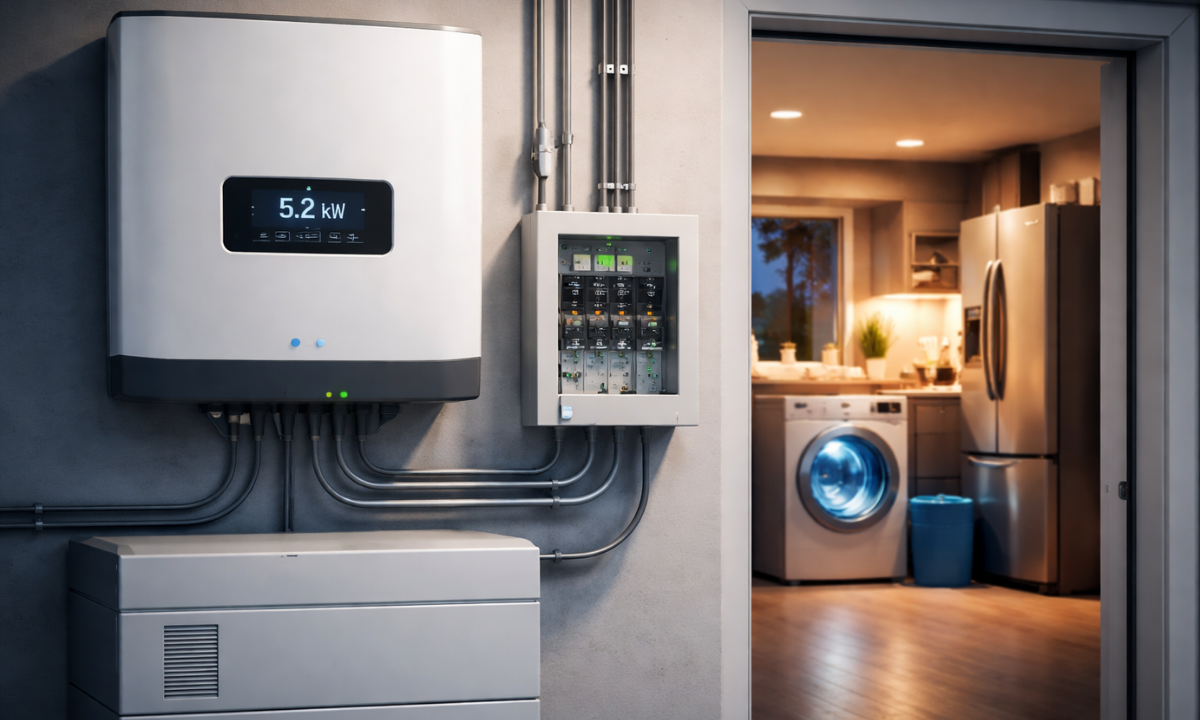
Your average daily consumption tells you how much energy you use over time. But your peak load tells you the maximum power your home demands at any single moment — like when your AC, washing machine, and water pump all switch on simultaneously at 7 PM.
Your inverter must handle that peak load without tripping or shutting down. Always size your inverter to comfortably exceed your peak load — not just your average. And here’s a pro tip: add a 20 to 25% buffer on top of your calculated requirement. That buffer protects you during unexpected demand spikes and gives your inverter comfortable headroom for long-term, reliable operation.
Step 3: Match Your Inverter to Your Solar Panels
Once you know your consumption, it’s time to connect the dots between your panels and your inverter.
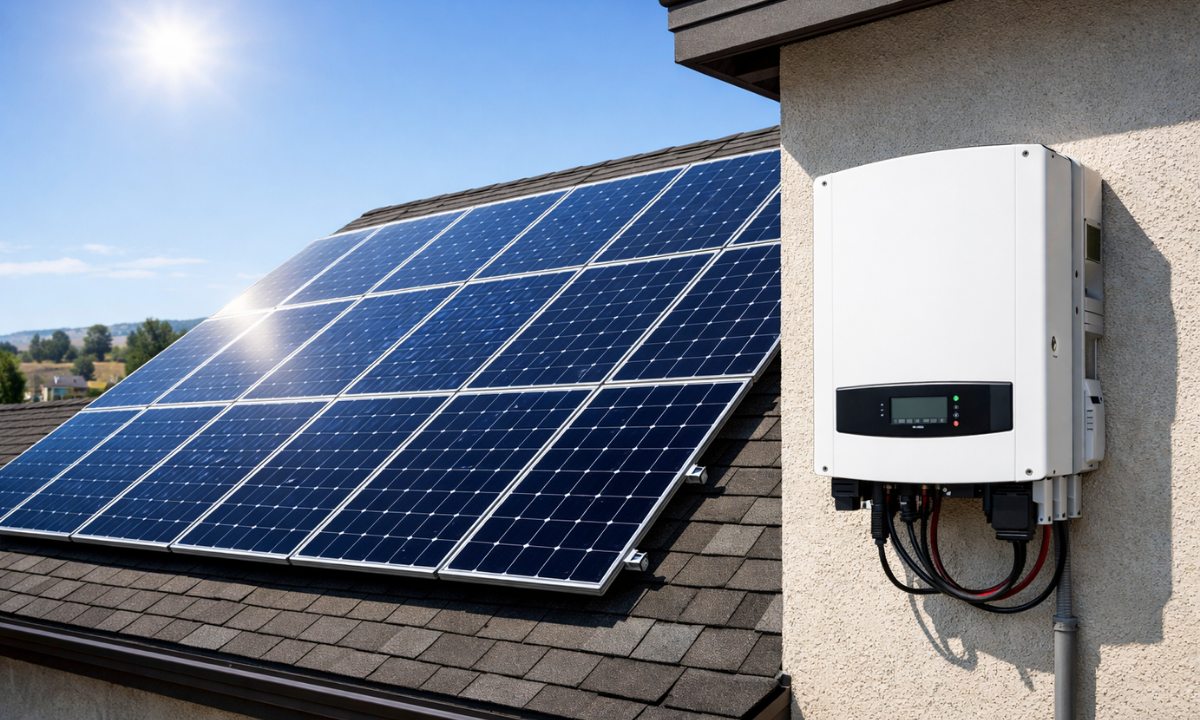
Your inverter capacity should generally match 75 to 100% of your total solar panel capacity. So if you’re installing 6 kW of solar panels, a 5 to 6 kW inverter is ideal.
And here’s an interesting technique called DC oversizing — where you deliberately install slightly more panel capacity than your inverter’s rated input. This works brilliantly in practice because solar panels rarely hit their absolute peak output in real-world conditions. By oversizing your panel array slightly, you ensure your inverter operates at high efficiency more consistently throughout the day, improving your overall system economics without any downsides.
Step 4: Are You Planning Battery Storage? Make This Decision Now
Here’s a question that will completely change your inverter choice — and the answer needs to come before you buy, not after.
Are you planning to add a battery backup system now or in the future?
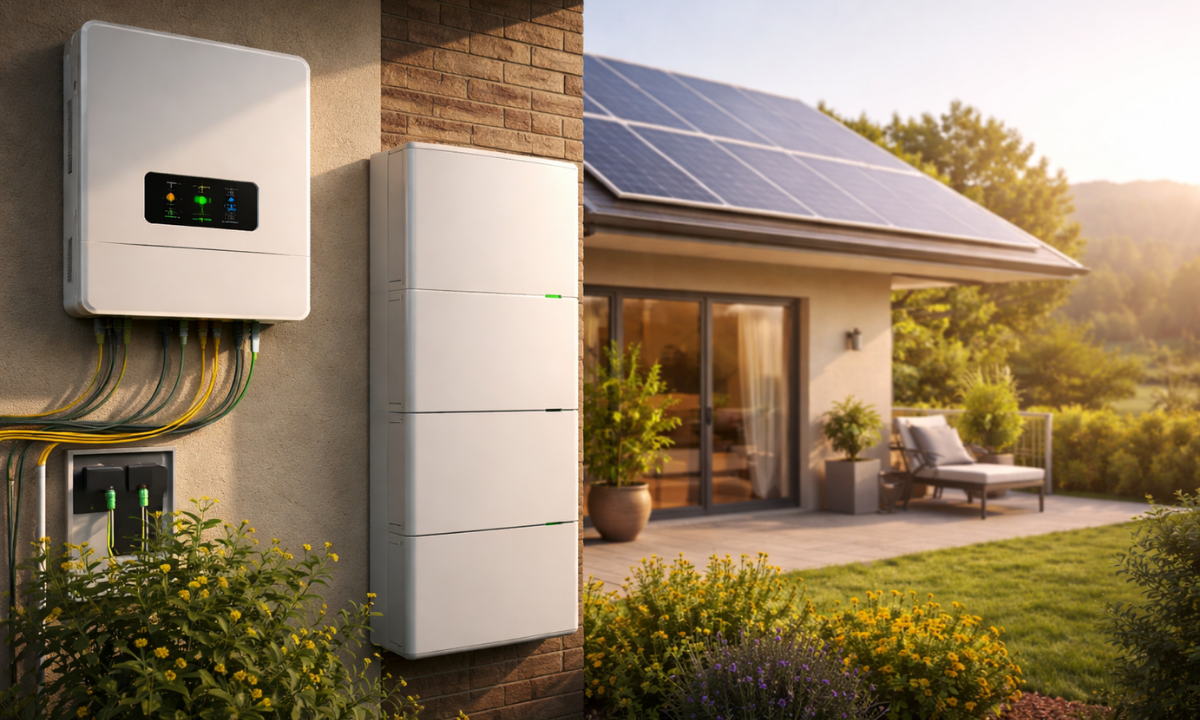
If yes, a standard inverter won’t work for you. You’ll need a hybrid inverter—one specifically designed to manage energy flow between your solar panels, your battery bank, and your home simultaneously. It also seamlessly supports battery storage, ensuring you can store excess energy for use when you need it most. Making this decision upfront saves you from an expensive system overhaul down the road when you eventually add batteries (and trust us—most solar homeowners end up wanting them).
As a full-service solar inverter supplier in Bangalore, Sun-AP Ecopower stocks both standard string inverters and the latest hybrid inverters from leading brands — and our technical team can help you choose the right type for your specific setup before you commit.
Step 5: Plan for the Future, Not Just Today
Think about where your home’s energy needs are headed. Are you getting an EV soon? Planning a home office expansion? Considering a second air conditioner?
Choosing an inverter with slightly more capacity than your current needs means you won’t face a premature replacement when your consumption grows. Future-proofing your inverter is always a smarter investment than squeezing every rupee on purchase day.
Quick Inverter Sizing Reference
| Home Size | Typical Daily Consumption | Recommended Inverter Size |
|---|---|---|
| Small (1–2 BHK) | 8–12 kWh/day | 3–4 kW |
| Medium (3 BHK) | 15–20 kWh/day | 5–6 kW |
| Large (4+ BHK) | 25–35 kWh/day | 7–10 kW |
Frequently Asked Questions
1. How exactly do I calculate what size inverter I need?
Calculate your total daily consumption, identify your peak load, and choose an inverter that exceeds your peak load while matching 75–100% of your solar panel capacity. Add a 20–25% buffer for safety and future demand.
2. Is it safer to go bigger or smaller when I’m unsure?
Always lean slightly larger. An undersized inverter clips your energy output during peak solar hours every single day — those cumulative losses add up to real money over months and years.
3. What’s the right inverter size for a typical home in Bengaluru?
A typical Bengaluru household consuming 15–20 kWh daily needs approximately a 5 to 7 kW inverter. Bengaluru also benefits from excellent solar irradiance, meaning panels produce closer to their rated capacity — which makes precise sizing even more valuable here.
4. What is DC oversizing, and should I try it?
DC oversizing means installing 10–15% more panel capacity than your inverter’s rated input. It maximizes inverter utilization during partial sunlight hours and improves your system’s overall economics without causing any inverter damage when done within manufacturer specifications.
5. Which solar inverter supplier in Bangalore can help me size my system correctly?
Sun-AP Ecopower provides free on-site consultations for homeowners across Bangalore. As an experienced solar inverter supplier in Bangalore, our technical team will calculate your exact sizing requirement, recommend the right inverter model, and handle professional installation end-to-end.
Practical Insights Worth Bookmarking
- Never estimate your consumption — pull your actual electricity bills from the last 12 months for the most accurate annual average
- Look for inverters with efficiency ratings above 97% — even a 2% difference in efficiency compounds into significant energy savings over a 10-year lifespan
- Local solar irradiance matters — in high-irradiance cities like Bangalore, your panels produce closer to their rated capacity, making precise inverter sizing even more impactful
- Quality over cost — a cheaper inverter with lower efficiency can cost you more in lost energy over its lifetime than the upfront savings on purchase price
Conclusion
Choosing the right solar inverter doesn’t have to be overwhelming. Start with your actual daily consumption, understand your peak load, match your inverter to your panel array, decide on batteries upfront, and always build in a forward-looking buffer. Get this single decision right, and your solar system will reward you with maximum efficiency for over a decade. Get it wrong, and you’ll pay for that mistake in lost energy every single day.
If you’re in Bangalore and want expert guidance before you buy, Sun-AP Ecopower — one of the city’s most trusted solar inverter suppliers in Bangalore — offers free sizing consultations and a complete range of premium inverters to match every home and budget.