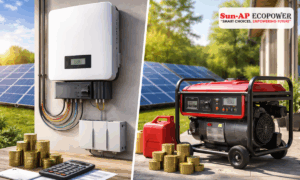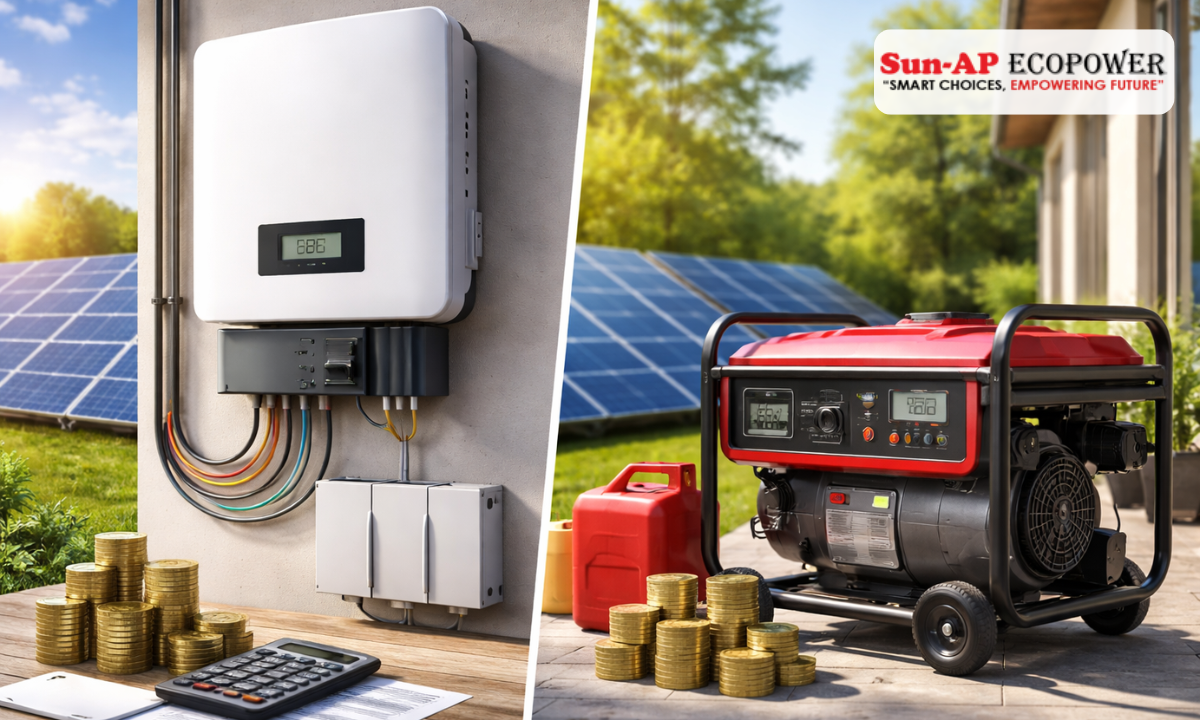
When we think about reliable power backup for the home, the debate between an inverter vs a generator often comes up. With rising electricity costs and frequent outages in many parts of India, choosing the right solution becomes more important than ever.
Today, options like solar power inverters are gaining popularity, especially when we look for the best solar inverter in India for long-term savings and sustainability.
But which option truly delivers better efficiency and cost benefits in the long run? Let’s explore this in detail.
Key Takeaways
- Solar inverters convert sunlight into usable electricity, while generators rely on fuel.
- Solar inverter efficiency is higher in the long run due to renewable energy usage.
- Generators have lower upfront costs but higher running expenses.
- Solar systems offer silent operation and low maintenance.
- Generators are better suited for heavy, short-term backup needs.
- Options like on-grid solar inverter, Hybrid solar inverter, and off-grid solar inverter provide flexibility.
- Solar solutions are eco-friendly, while generators produce emissions.
Understanding the Basics: Solar Inverter vs Generator
Before comparing, we should first understand how both systems work and what makes them different in real-life usage. This helps us choose the right power backup for the home based on our needs.
Solar Inverter
A solar power inverter converts the DC (direct current) electricity generated by solar panels into AC (alternating current) electricity that we can use in our homes. It acts as the brain of the solar system, ensuring that power is safely and efficiently supplied to appliances.
Depending on the setup, it can also store excess energy in batteries for use during power cuts or at night. Systems like On-grid solar inverter, Hybrid solar inverter, and Off-grid solar inverter offer flexibility based on whether we want grid connection, battery backup, or complete independence.
Generator
A generator uses fuel such as diesel or petrol to produce electricity through mechanical energy. It works by running an engine that converts fuel into electrical power, making it useful during sudden outages.
Generators provide instant backup and can handle heavy loads, which is why they are commonly used in both homes and commercial spaces. However, they require regular fuel supply, produce noise, and need ongoing maintenance to function properly.
Efficiency Comparison
Efficiency plays a major role when we choose between an inverter and a generator.
Solar Inverter Efficiency
| Factor | Solar Inverter |
|---|---|
| Energy Source | Sunlight (free) |
| Conversion Efficiency | 95%–98% |
| Losses | Minimal |
| Performance | Consistent during sunlight |
Solar inverter efficiency is quite high because it uses advanced technology to convert energy with minimal loss. Once installed, it provides a steady and reliable power supply.
Generator Efficiency
| Factor | Generator |
|---|---|
| Energy Source | Fuel |
| Conversion Efficiency | 30%–50% |
| Losses | High (heat & noise) |
| Performance | Depends on fuel quality |
Generators lose a significant amount of energy as heat. This makes them less efficient compared to solar systems.
Cost Comparison: Initial vs Long-Term
Cost is often the deciding factor when choosing a backup system.
Initial Investment
| System | Cost Level |
|---|---|
| Solar Inverter | High |
| Generator | Moderate |
A solar setup requires investment in panels, an inverter, and installation. A generator is cheaper initially but does not include fuel costs.
Running Cost
| Factor | Solar Inverter | Generator |
|---|---|---|
| Fuel Cost | ₹0 (sunlight) | ₹80–₹120/hour |
| Maintenance | Very Low | High |
| Lifetime Cost | Low | Very High |
Generators require continuous spending on fuel, which increases over time. Solar systems, on the other hand, use free sunlight.
Average Cost Estimate: Solar Inverter vs Generator
When we compare an inverter vs a generator, understanding the real cost breakdown helps us make a smarter decision. Let’s look at the average pricing in India.
Solar Inverter Cost (India)
1. Basic Solar Inverter Price
| Type | Capacity | Average Cost |
|---|---|---|
| Off-grid solar inverter | 1–3 kVA | ₹6,500 – ₹25,000 |
| Hybrid solar inverter | 3–5 kVA | ₹18,000 – ₹40,000 |
| On-grid solar inverter | 1–5 kW | ₹20,000 – ₹85,000 |
Most residential users spend around ₹20,000 – ₹60,000 for a good-quality solar inverter.
2. Complete Solar System Cost (with panels)
| System Size | Suitable For | Total Cost |
|---|---|---|
| 1 kW | Small homes | ₹60,000 – ₹100,000 |
| 3 kW | Medium homes | ₹1.2 – ₹1.8 lakh |
| 5 kW | Large homes | ₹2.5 – ₹4 lakh |
On average, solar systems cost around ₹40,000 – ₹60,000 per kW in India.
Generator Cost (India)
| Type | Capacity | Average Cost |
|---|---|---|
| Portable generator | 1–2 kVA | ₹15,000 – ₹30,000 |
| Mid-size generator | 3–5 kVA | ₹30,000 – ₹80,000 |
| Heavy-duty generator | 5–10 kVA | ₹80,000 – ₹2 lakh |
Generators may look cheaper initially, but fuel costs add up significantly over time.
Types of Solar Inverters
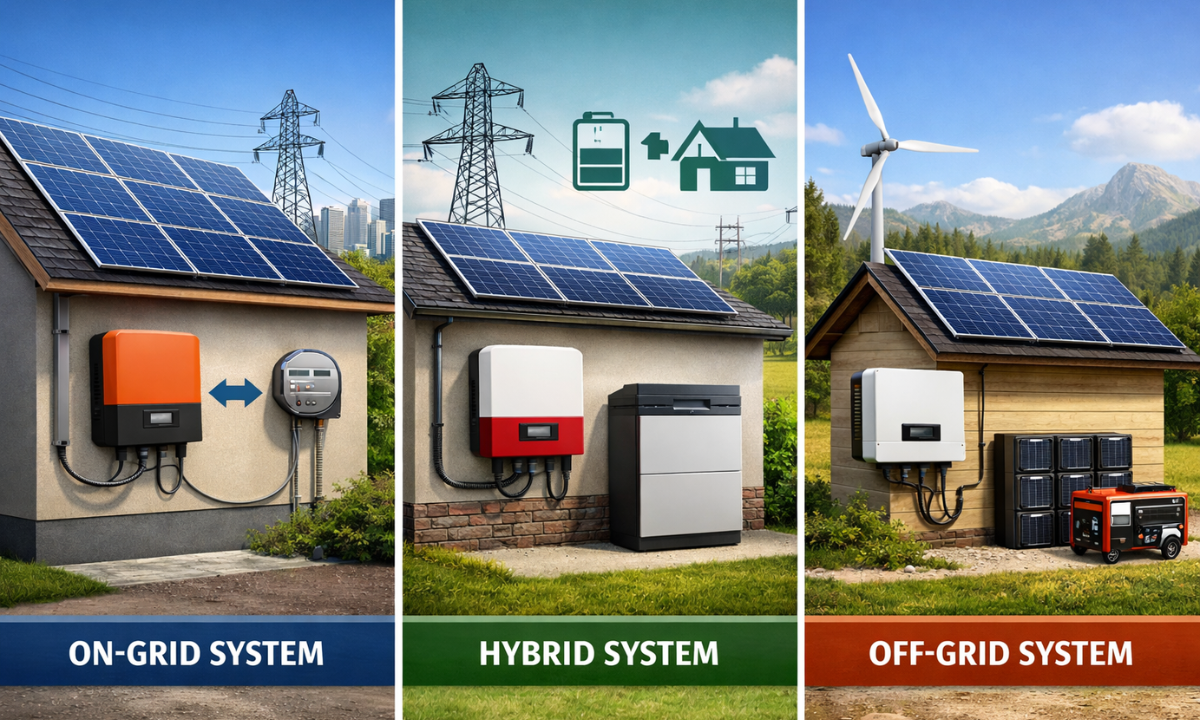
Understanding the types helps us choose the right system based on our electricity usage, budget, and backup needs. Each type of solar power inverter is designed for a specific purpose, so knowing the difference can make our investment more effective.
1. On-Grid Solar Inverter
A solar inverter On-grid connects directly to the main electricity grid and works without batteries. It uses solar energy during the day and automatically draws power from the grid when needed.
One of its biggest advantages is that it allows us to export excess electricity back to the grid through net metering, helping reduce electricity bills. However, it does not provide backup during power cuts, making it ideal for areas with a stable electricity supply.
2. Hybrid Solar Inverter
A Hybrid solar inverter combines the benefits of both grid connection and battery storage. It allows us to store excess solar energy in batteries and use it during power outages or at night.
This type is perfect for homes that face frequent power cuts but still want to stay connected to the grid. It offers better control over energy usage and ensures uninterrupted power backup for the home.
3. Off-Grid Solar Inverter
An Off-grid solar inverter works completely independently of the electricity grid. It relies entirely on solar panels and battery storage to supply power.
This system is best suited for remote areas where grid electricity is not available or is highly unreliable. While it offers full energy independence, it requires proper system sizing and battery capacity to ensure a continuous power supply.
Environmental Impact
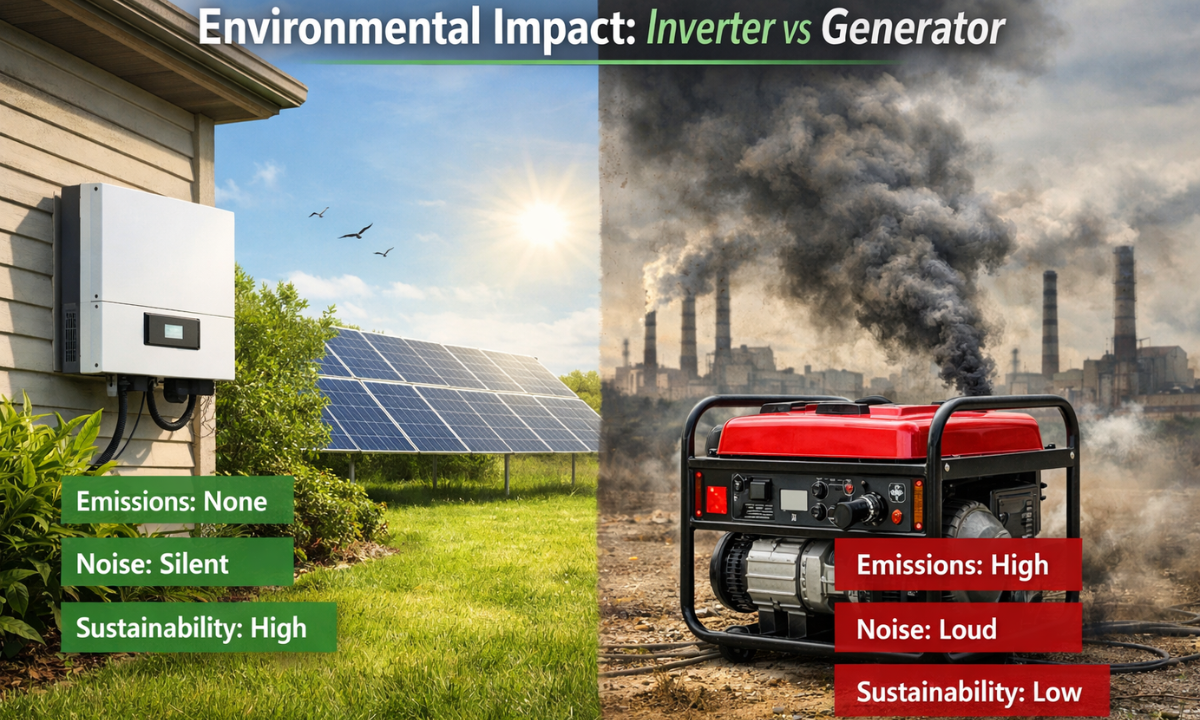
When we compare an inverter vs a generator, the environmental impact is an important factor to consider. The way electricity is produced can affect air quality, noise levels, and overall sustainability.
Solar energy is a renewable and clean source, while generators depend on fossil fuels that harm the environment over time. Choosing the right option can help us reduce our carbon footprint and support a greener future.
| Factor | Solar Inverter | Generator |
|---|---|---|
| Emissions | None | High |
| Noise | Silent | Loud |
| Sustainability | High | Low |
Solar systems are clean and green. Generators release harmful gases and contribute to pollution.
Maintenance and Lifespan
When choosing between an inverter vs a generator, maintenance and durability play a big role in long-term convenience and cost. A system that requires less upkeep not only saves money but also reduces effort over time.
It’s important to understand how often each system needs servicing and how long it can reliably perform before replacement. This helps us plan better and avoid unexpected expenses.
Solar Inverter
- Requires minimal maintenance
- Long lifespan (10–25 years)
- No fuel dependency
Generator
- Requires regular servicing
- Shorter lifespan
- Fuel storage and handling are needed
Reliability and Usage
When we compare an inverter vs a generator, reliability depends on how and when we need power the most. Different situations require different solutions, so choosing the right system depends on our daily usage patterns and backup needs.
Some systems are better for continuous use, while others are designed for handling sudden or heavy power demands. Understanding this helps us make a more practical and efficient choice for our home.
| Scenario | Better Option |
|---|---|
| Daily power usage | Solar inverter |
| Long outages | Hybrid solar inverter |
| Heavy load appliances | Generator |
| Eco-friendly living | Solar inverter |
Generators are useful for heavy loads like ACs and industrial machines. However, for everyday home use, solar systems are more practical.
When Should We Choose Solar Over a Generator?
We should consider a solar inverter when:
- We want long-term savings
- We prefer clean and renewable energy
- We want a silent operation
- We plan to reduce electricity bills
Generators are suitable when:
- We need instant backup for heavy loads
- Power cuts are rare but intense
- The budget is limited initially
Smart Buying Tips
If we are planning to switch, here are some simple tips:
- Always compare solar inverter efficiency before buying
- Choose the right type: On-grid, hybrid, or off-grid
- Check warranty and service support
- Calculate long-term savings, not just upfront cost
- It’s always safer to buy solar products online from trusted providers
Final Thoughts
When we compare an inverter vs a generator, it becomes clear that solar solutions offer better efficiency, lower running costs, and long-term benefits. While generators still have their place for heavy-duty and emergency use, solar systems are a smarter and more sustainable choice for modern homes.
If we are planning to invest in the best solar inverter in India, it’s important to choose a reliable provider like Sun AP Ecopower that offers quality products and expert guidance. By making the right choice today, we not only save money but also contribute to a cleaner and greener future.
Frequently Asked Questions
1. Is a solar inverter better than a generator?
Yes, in most cases, a solar inverter is a better long-term solution compared to a generator. It uses renewable energy, which means there is no fuel cost and very little maintenance required. Over time, this makes it more cost-effective and environmentally friendly. While generators are useful for heavy or emergency use, solar inverters provide a cleaner, quieter, and more sustainable option for everyday power needs.
2. Can a solar inverter run all home appliances?
A solar inverter can run most home appliances, but it depends on the system size and capacity. Basic systems can handle lights, fans, and small appliances, while larger or hybrid systems with batteries can support heavier loads like refrigerators or washing machines. Proper system design is important to ensure all essential appliances are covered without overloading the inverter.
3. What is the lifespan of a solar inverter?
Most solar inverters typically last between 10 and 15 years, depending on the brand, usage, and maintenance. High-quality systems may last even longer with proper care. Solar panels, however, usually have a lifespan of 20 to 25 years. Regular checks and timely servicing can help maintain performance and extend the overall life of the solar power system.
4. Are generators cheaper than solar systems?
Generators are generally cheaper at the time of purchase, which makes them seem like a budget-friendly option initially. However, they require continuous spending on fuel, regular servicing, and maintenance. Over time, these ongoing costs add up significantly. In contrast, solar systems involve a higher upfront investment but have very low running costs, making them more economical in the long run.
5. Which is the best solar inverter in India?
The best solar inverter in India depends on several factors, such as your energy requirements, budget, and whether you need battery backup. Options like on-grid, hybrid, and off-grid inverters serve different purposes. It is always recommended to choose a reliable brand with good efficiency, warranty, and service support to ensure long-term performance and value for your investment.