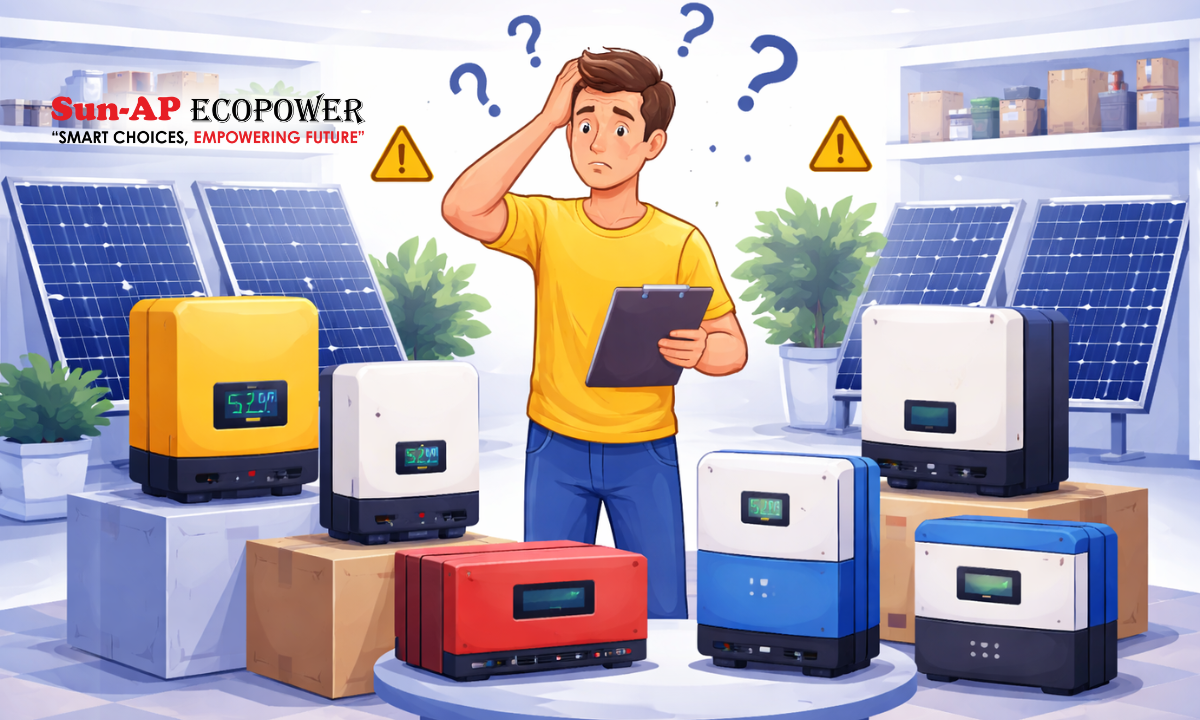
As a seller and consultant at Sun AP Ecopower, I’ve spent years speaking directly with homeowners who are excited about switching to clean energy but also confused. In the first few conversations, I often hear the same assumptions and misunderstandings. Choosing a solar power inverter for house use is not just a technical decision; it’s a long-term investment that affects safety, savings, and system performance. I’m writing this blog from real, on-the-ground experience to help you avoid costly mistakes that many homeowners make during the selection process.
Right at the start, I also want to highlight something many people overlook: the quality of guidance you receive matters as much as the product itself. That’s why working with experienced solar product dealers in India can make a measurable difference to your solar journey.
Understanding Why the Inverter Matters More Than You Think
Most homeowners focus heavily on solar panels, but in reality, the inverter is the brain of your system. It controls how electricity is converted, monitored, and used inside your home. A wrong choice here can lead to energy losses, frequent breakdowns, or limited expansion in the future.
From my experience at Sun AP Ecopower, nearly 40% of service complaints we get are due to poor inverter selection not product defects, but mismatched expectations.
Mistake #1: Choosing an Inverter Without Understanding Your Power Needs
One of the most common errors is buying a solar power inverter based only on price or panel capacity. Every home has unique consumption patterns, daytime usage, appliance load, and backup requirements.
If your household runs heavy appliances during the day, your inverter sizing strategy will differ from someone who consumes most power at night. Ignoring this leads to underperformance and customer dissatisfaction later
Mistake #2: Confusing Inverter Types Without System Clarity
Many homeowners mix up inverter categories and system designs. For example, a solar pv inverter works differently depending on whether it’s connected to the grid or operates independently.
Similarly, people often assume all Solar inverters function the same way. In reality, each inverter type is designed for a specific energy flow logic. Selecting one without clarity on your system architecture can restrict functionality or violate local grid regulations.
Mistake #3: Overlooking Grid Compatibility and Regulations
If your home is connected to a utility supply, regulatory compliance becomes critical. On-grid solar inverters must meet safety standards, grid synchronisation rules, and anti-islanding requirements.
At Sun AP Ecopower, we’ve seen customers purchase equipment online only to discover later that it cannot be approved by their local electricity board. This causes delays, extra expenses, and unnecessary frustration.
Mistake #4: Assuming Hybrid Automatically Means Better
There’s a growing buzz around hybrid solar inverters, and while they’re powerful, they’re not always necessary. Hybrid systems are ideal when battery integration is planned, but if your area has a stable grid supply and no backup requirement, a simpler system may offer better value.
Buying advanced technology without a real use case often increases cost without increasing returns.
Mistake #5: Ignoring Battery Strategy in Advance
Even if you don’t plan battery installation today, future-readiness matters. Many homeowners later regret not planning for battery compatibility, especially when electricity tariffs rise or outages increase.
If your long-term vision includes energy independence, the inverter must support storage expansion. This is especially important for anyone considering a solar power off-grid system in phases.
Mistake #6: Focusing Only on Brand, Not Support
A popular brand doesn’t always mean local service availability. I’ve personally handled cases where customers waited weeks for minor repairs because the service network was weak.
At Sun AP Ecopower, we always advise customers to evaluate after-sales support, spare availability, and technical assistance before finalising any inverter. Solar is a 20–25 year commitment—support matters.
Mistake #7: Underestimating Monitoring and Smart Features
Modern inverters offer real-time monitoring, fault alerts, and performance analytics. Homeowners who skip these features lose visibility into their energy production and savings.
From a seller’s perspective, customers who can track their system performance are more confident, satisfied, and proactive about maintenance.
Final Thoughts
Selecting the right inverter is not about chasing trends or choosing the cheapest option; it’s about alignment with your home, lifestyle, and future energy goals. At Sun AP Ecopower, we believe education is as important as installation. When homeowners understand what they’re buying, the system performs better, lasts longer, and delivers true value.
If you are planning your solar journey, work with trusted solar product dealers in India who prioritise consultation over quick sales. The right guidance today can save you years of regret tomorrow.
FAQs
1. What Is A Solar Inverter?
A solar inverter converts the electricity generated by panels into usable power for household appliances. It also manages safety, monitoring, and system efficiency.
2. What Is The Role Of A Solar Inverter In A Solar Energy System?
It acts as the control centre—regulating voltage, ensuring grid safety, and optimising energy output for daily use.
3. What Is A Grid-Tied Solar Electric System?
This system connects your solar setup directly to the utility grid, allowing you to use solar power during the day and grid power when needed.
4. You Use An Inverter For Both Solar And Grid Power?
Yes, modern inverters are designed to seamlessly switch between solar generation and grid supply based on availability.
5. What Types Of Solar Inverters Are Best For Your Home?
The best option depends on your energy usage, grid reliability, and plans. A professional assessment ensures the right fit.
6. Why Should I Buy My Inverter Through Sun AP Ecopower?
Because we don’t just sell equipment—we design solutions, provide long-term support, and guide you honestly based on real-world experience.