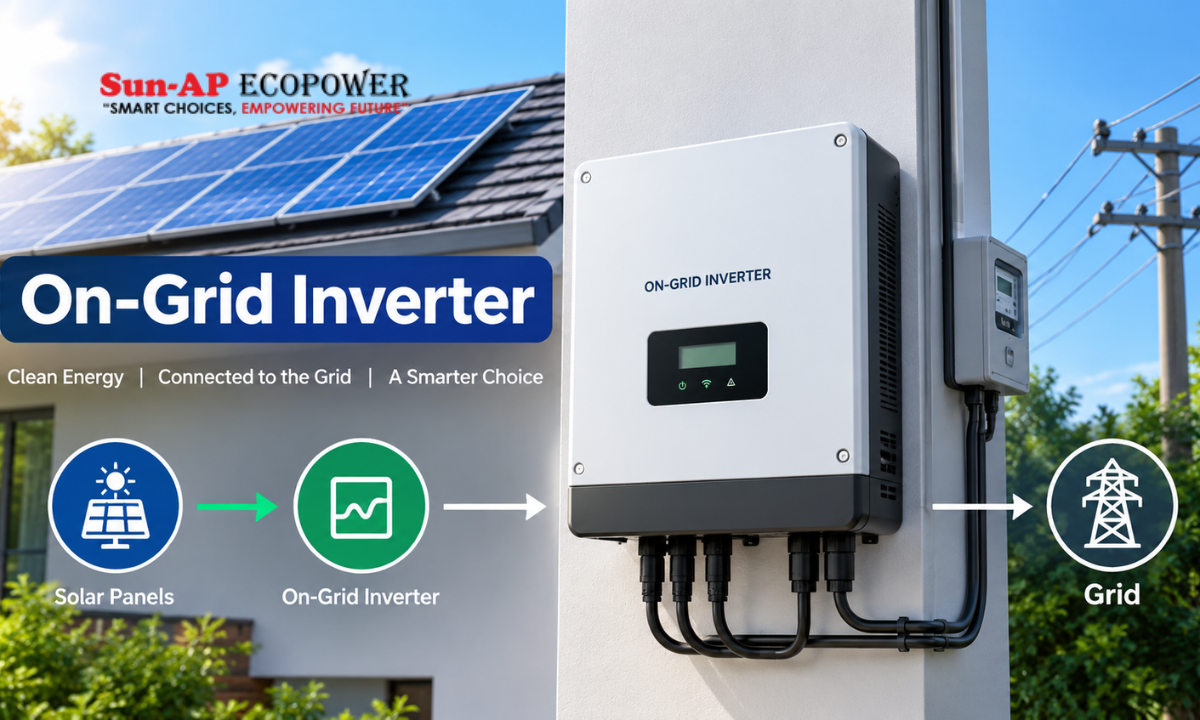
An on-grid solar inverter is the component that connects your solar panels to the utility grid. It converts the DC electricity generated by your panels into AC power for your home or business, synchronizes it with the grid, and lets you export surplus energy under net metering. Because it works continuously for years, the quality of the inverter and the reliability of the supplier both shape your long-term savings.
Many buyers focus only on price, but the dealer you choose affects product authenticity, installation quality, warranty support, and even how smoothly your net metering application is approved. This guide explains what to look for when evaluating on grid solar inverter dealers, so you can buy with confidence.
Why Dealer Selection Matters
An on-grid system typically runs for 20 to 25 years with panels, while the inverter is expected to last around 10 to 12 years. During that time you may need technical guidance, warranty claims, or servicing. Among solar product dealers in India, capability varies widely. Some offer end-to-end support, while others simply sell equipment and disappear after delivery. Choosing well at the start prevents costly problems later.
1. Check Authorization and Brand Credibility

Start by confirming that the dealer is authorized to sell the brands they offer. Authorized dealers source directly from manufacturers or official distributors, which ensures genuine products and valid warranty coverage.
- Ask for an authorization certificate or distributor letter
- Verify that the inverter serial number matches the warranty card
- Confirm the brand has a service presence in your region
- Be cautious of unbranded or unusually cheap units
Reputable brands usually publish dealer networks on their websites, making verification straightforward.
2. Evaluate Technical Knowledge
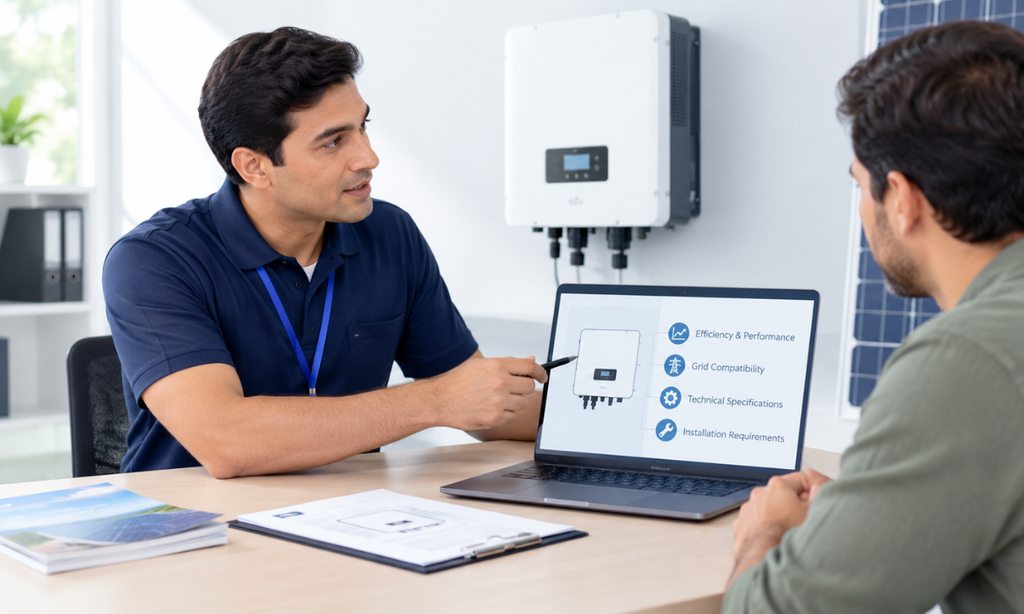
A good dealer acts as an advisor, not just a seller. They should assess your electricity consumption, sanctioned load, roof area, shading, and budget before recommending a capacity.
Questions to test their expertise:
- How did you calculate the recommended inverter size?
- What is the ideal DC-to-AC ratio for my panel configuration?
- Is a single-phase or three-phase inverter suitable for my connection?
- How many MPPT inputs do I need given my roof layout?
Clear, specific answers indicate real experience. Vague replies or pressure to buy a larger system than you need are red flags.
3. Compare Product Specifications
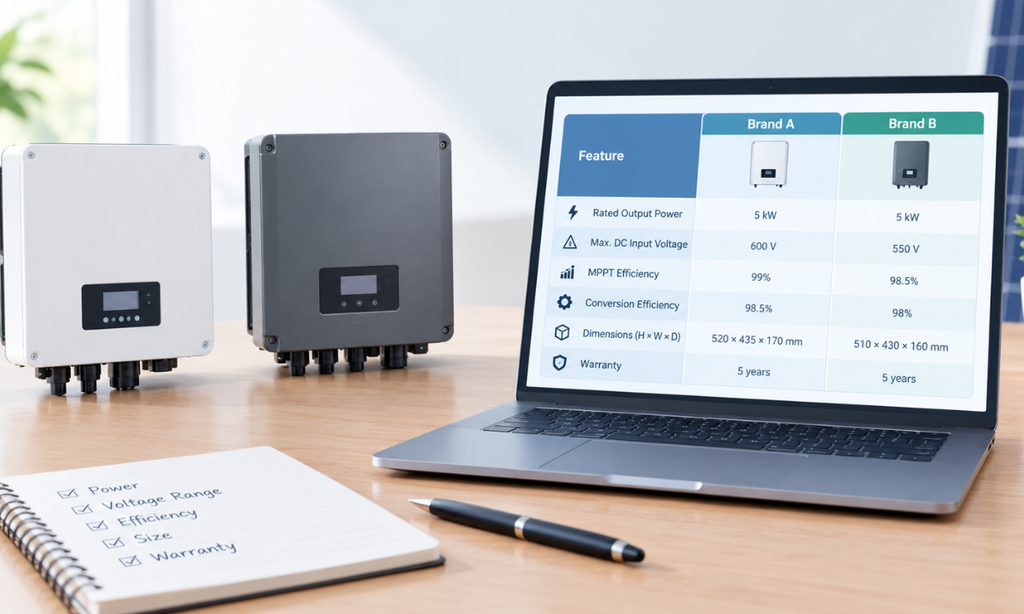
When reviewing an on grid solar inverter, look beyond the capacity rating. Key parameters include:
- Efficiency: Higher conversion efficiency means more usable power from the same panels.
- MPPT range: A wider voltage window improves performance in changing sunlight.
- Protection features: Overvoltage, short-circuit, anti-islanding, and surge protection are essential for safety and grid compliance.
- Grid compatibility: The inverter should meet your DISCOM’s technical requirements.
- Monitoring: Wi-Fi or app-based tracking helps you monitor generation and detect faults early.
Ask for the datasheet and compare it with the quotation to make sure the listed model matches what you will receive.
4. Understand Warranty and Service Terms
Warranty coverage differs across brands and dealers, so get the details in writing. Clarify:
- The warranty period and whether extended warranty is available
- Whether the unit is repaired or replaced during the warranty period
- Who handles claims, the dealer or the manufacturer
- What conditions could void the warranty
Also ask about after-sales service, including technician availability, typical response time, spare parts access, and annual maintenance options. Strong service infrastructure is often what separates dependable dealers from average ones.
5. Review Installation Capability
Even a high-quality inverter underperforms if installed poorly. Ask whether the dealer has trained installers, what the quote includes, and how commissioning is handled. A complete installation scope should cover mounting structures, DC and AC cabling, earthing, lightning and surge protection, and system testing. Request an estimated timeline and ask whether a post-installation inspection is included.
6. Ask About Net Metering and Subsidy Support
On-grid systems depend on grid connectivity, so paperwork matters. Regulations and procedures vary by state and DISCOM. Experienced dealers should be able to explain:
- Net metering or net billing eligibility in your area
- Documents required for application
- Subsidy schemes you may qualify for, including rooftop solar programs
- Who coordinates with the electricity board for inspection and meter installation
Dealers who manage this process save you time and reduce delays in getting your system commissioned.
7. Insist on a Transparent Quotation
A trustworthy quotation is itemized. It should list the inverter, panels, structure, cables, installation charges, net metering fees (if applicable), and taxes. Be cautious of unusually low quotes that may leave out essential components or use lower-grade materials. Comparing at least three quotations helps you understand fair market pricing and what each dealer actually includes.
8. Look for Proof of Experience
Ask for references, completed project photos, or case studies similar to your requirement. Speaking with past customers gives you honest insight into delivery timelines, service quality, and responsiveness. Online reviews, ratings, and testimonials offer additional validation. A dealer with years of experience in the solar industry is more likely to understand local regulations and technical challenges.
9. Assess Communication and After-Sales Attitude
Pay attention to how the dealer treats you before the sale. Do they answer questions patiently, share documents promptly, and explain trade-offs honestly? The way a dealer communicates during the sales process often reflects how they will respond when you need support later.
Quick Checklist for Choosing On-Grid Inverter Dealers
- Authorized for the brands they sell
- Provides capacity recommendations based on your load and roof
- Shares datasheets and clear specifications
- Offers written warranty and defined service support
- Has trained installers and a clear installation scope
- Assists with net metering and subsidy paperwork
- Provides an itemized, transparent quotation
- Can show references and past projects
Final Thoughts
Choosing the right dealer is as important as choosing the right product. A reliable partner helps you size your system correctly, supplies genuine equipment, installs it to standard, and supports you throughout its life. Take time to compare options, ask detailed questions, and prioritize transparency over the lowest price.
If you are looking for dependable solar product dealers in India, explore the range at Sun-AP Eco Power to find solutions suited to your home or business.